
4. Francois Pienaar (South Africa)
Francois Pienaar’s place in rugby history goes far beyond tactics, trophies, or Test victories. As captain of South Africa during the 1995 Rugby World Cup, he became the face of a nation attempting to heal itself after decades of apartheid.
A tough and uncompromising flanker, Pienaar embodied the traditional values of Springbok rugby — physicality, resilience, and pride. But what elevated him into sporting immortality was his ability to unite people during one of South Africa’s most fragile moments. His relationship with Nelson Mandela transformed the Springboks from a divisive symbol into a source of national unity.
The image of Mandela handing Pienaar the Webb Ellis Cup after South Africa defeated New Zealand in the 1995 final remains one of the most iconic moments in sporting history. It wasn’t simply a rugby victory; it was a moment that showed sport’s power to bring people together.
On the pitch, Pienaar was an inspirational leader who demanded total commitment from his teammates. He captained the Springboks through intense pressure, carrying the hopes of an entire nation while facing the strongest teams in the world.
His leadership legacy has endured for decades because it transcended rugby itself. Pienaar proved that captains can represent far more than their team — they can become symbols of change, reconciliation, and belief.
3. Richie McCaw (New Zealand)
Few players in rugby history have embodied excellence like Richie McCaw. The legendary All Blacks flanker spent over a decade setting standards that most professionals could never dream of reaching, becoming the most successful captain the international game has ever seen.
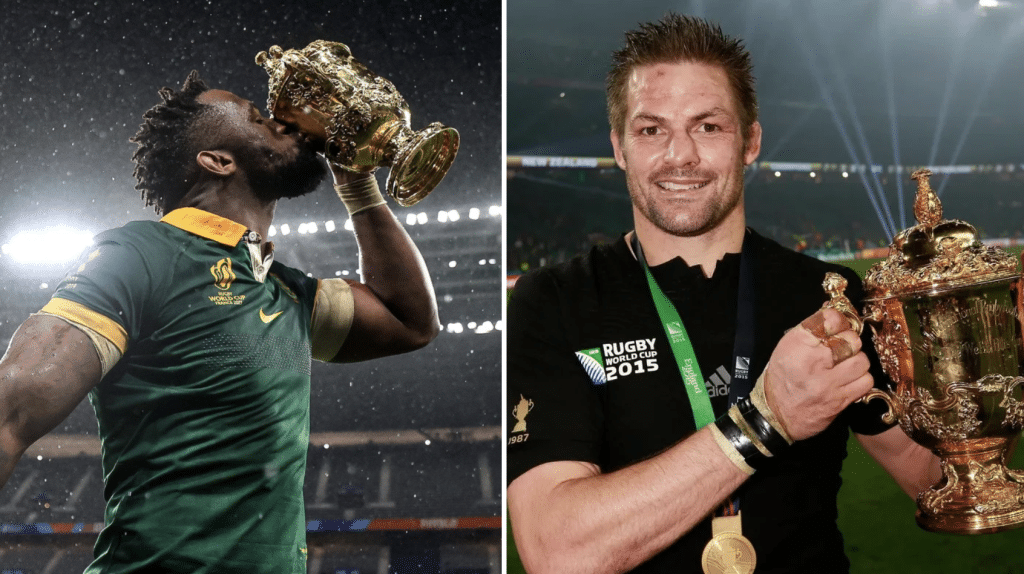
McCaw captained New Zealand in 110 Tests, winning an astonishing 88 percent of those matches while leading the All Blacks to Rugby World Cup triumphs in both 2011 and 2015. For years, New Zealand carried the burden of underachieving at World Cups despite dominating the sport, but McCaw helped erase that narrative forever.
What made McCaw exceptional was his relentless consistency. Whether it was a World Cup final or a wet night against lower-ranked opposition, he approached every match with the same intensity and preparation. His ability at the breakdown became legendary, frustrating opponents and swinging momentum in New Zealand’s favour time and time again.
Yet McCaw’s greatness was never solely about his rugby ability. He created a culture within the All Blacks built around accountability, humility, and constant improvement. Younger players entering the squad understood immediately what standards were expected because McCaw lived them every single day.
Opposition fans often hated facing him because he combined ruthless competitiveness with supreme intelligence. But even rivals acknowledged the respect he commanded. By the time he retired in 2015, McCaw had become more than just a captain — he had become the defining player of rugby’s professional era.