
By Andrew Fidel Fernando
Overall: 943 wickets at 21.00 ave, 2.88 econ
When Murali had got into a spell, I’d be standing at slip and Sanga [Kumar Sangakkara] would be keeping. Sanga would turn around, put his glove in front of his face, and tell me in Sinhala: “Get ready, it’s coming.” The drift was there, the pace was there, he was giving the ball air, and he was revving it. Murali had perfectly set the batter up. We both knew that one of the next few balls would be it. He was going to either spin it one way and get the bowled or lbw, or spin it the other way and get the edge.
It was amazing to see that level of mastery up close. If you ask Sanga as well, he’d tell you the same. When Murali was working his magic, it was just a privilege for us to be there. For ten or 12 years, we got to have that.
He developed the doosra probably in about 1999, and he spent a long time – over a year – to get it right, and to use it in a match. He also needed to start coming around the wicket to prevent the right-handers from just padding up outside the off stump. It took a while for him to get that angle right – it didn’t just come naturally for Murali. He’s not a normal bowler, and the way his action opens up front-on is quite different. So that angle was tricky for him and he had to work on getting drift, speed, and spin from there.
I saw how much he put in to get it right. He wasn’t happy with just doing it, he wanted to get it perfect. He said, “If I can land it in that spot consistently, and not give loose balls, it will be very hard for a batsman to hit me.”
If you look at his accuracy when he was at his peak, it was phenomenal. He’d bowl the same line and length and then when it landed, it would spin in either direction. That was his mystery. People found it difficult to read his wrist, and because he’s so accurate, they couldn’t go on the back foot and just play off the wicket. Because he’s so different, he was also a self-built mechanism.
Mentally, the way he thought about things and I thought about things were different. I have to be honest – we had our differences when it came to planning, and on the field as well. He was of the view that if we set a defensive field, people could not attack him. He knew that if he could bowl five overs at a batter, he could create a chance. He knew he could control the batters. He didn’t want to give up the single. He just wanted to starve them.
As a captain, I wanted a batter to take a risk, especially if they weren’t picking Murali. I felt you created more chances in those five overs. That was a constant battle that we had. I think a mix of our approaches worked. A lot of times we negotiated on the field. It was also really important to give him the freedom to bowl as he wanted. A little later he came around a little more to my way of thinking. We respected each other on that journey.

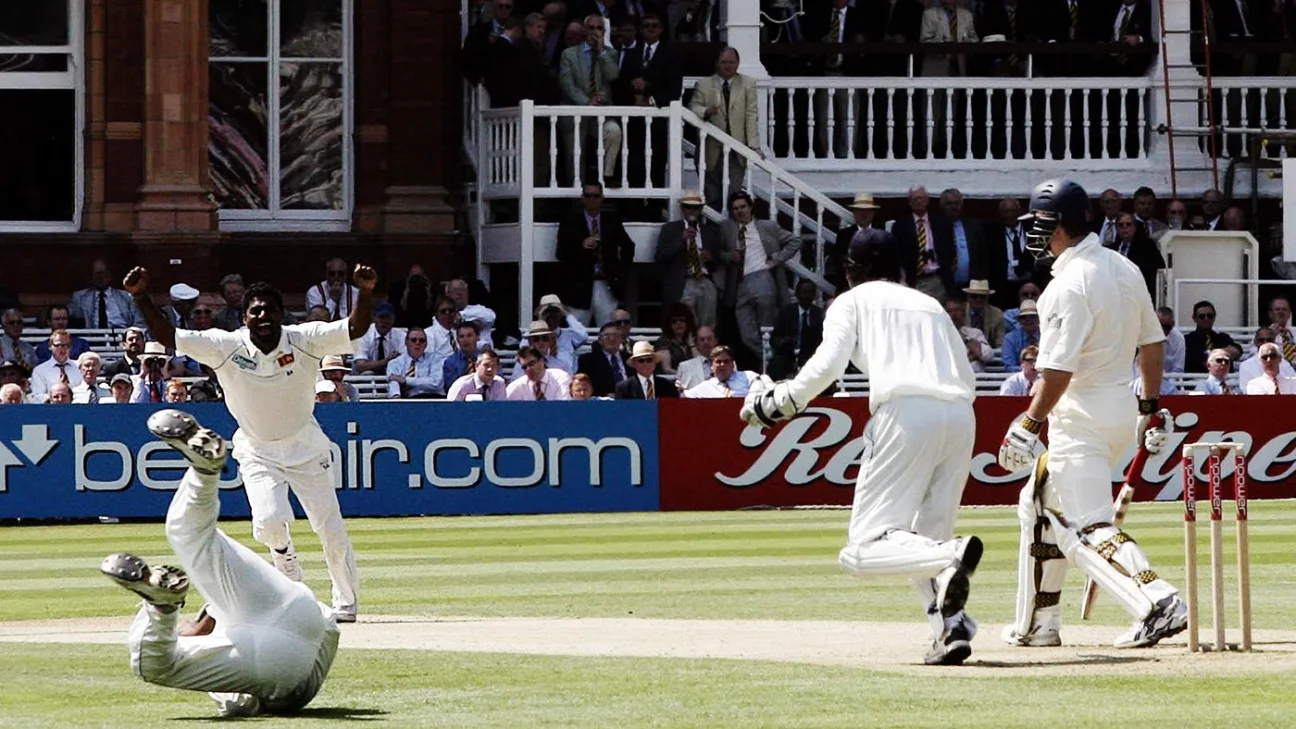
All eyes on Murali, and still no way to tell what the ball would do once it left his hand•Deshkalyan Chowdhury/AFP/Getty Images
Murali would never shy away from a battle. He was always doing something special in pressure situations, especially in one-day cricket. Early on in his career, he was probably doing a lot on his own – he and Chaminda Vaas. But when we got a decent group of bowlers around him – Lasith Malinga, Ajantha Mendis, and Dilhara Fernando – that pressure was off him a little bit. He was able to relax and enjoy it a bit more.
For one of the greatest players to ever play the game, he spent a lot of time around our junior players. When I came into the team, he was the first to take me out for a meal. Two or three days out from my debut, he said, “You’re coming out for a meal with me,” and he took me to a vegetarian restaurant.
Hanging out with Murali was quite fun, and back then we’d hit the clubs – there was a whole other side to him. When I became more senior, he kept spending time around the younger players in the team, and I would tease him about that, and he’d just say, “No, they keep me young.” It was true. He’d order the youngsters around sometimes and tell them: “You’re coming to dinner with me.” Some boys didn’t have a choice!
It was a brilliant mechanism to welcome the younger guys into the group quicker, and get them comfortable. That happened very organically in our set-up, and Murali was the architect. It was always fun, and there’d be stories and laughter, and he’d tell the younger guys about yesteryears, from when he was first in the team – about Aravinda de Silva and Roshan Mahanama and others. The guys loved hearing all that.
There are too many special Murali spells to mention. But I do recall when I first saw him absolutely destroy an opposition batting order was in the Oval Test in 1998. I was fielding at short leg for most of that game, and you could see in the eyes of the English batters how baffled they were, especially in the second innings. He did that over and over again right until he retired.
As told to Andrew Fidel Fernando
Stats are for the 2000-2025 period
Sri Lanka captain Mahela Jayawardene is the country’s leading Test run-scorer