
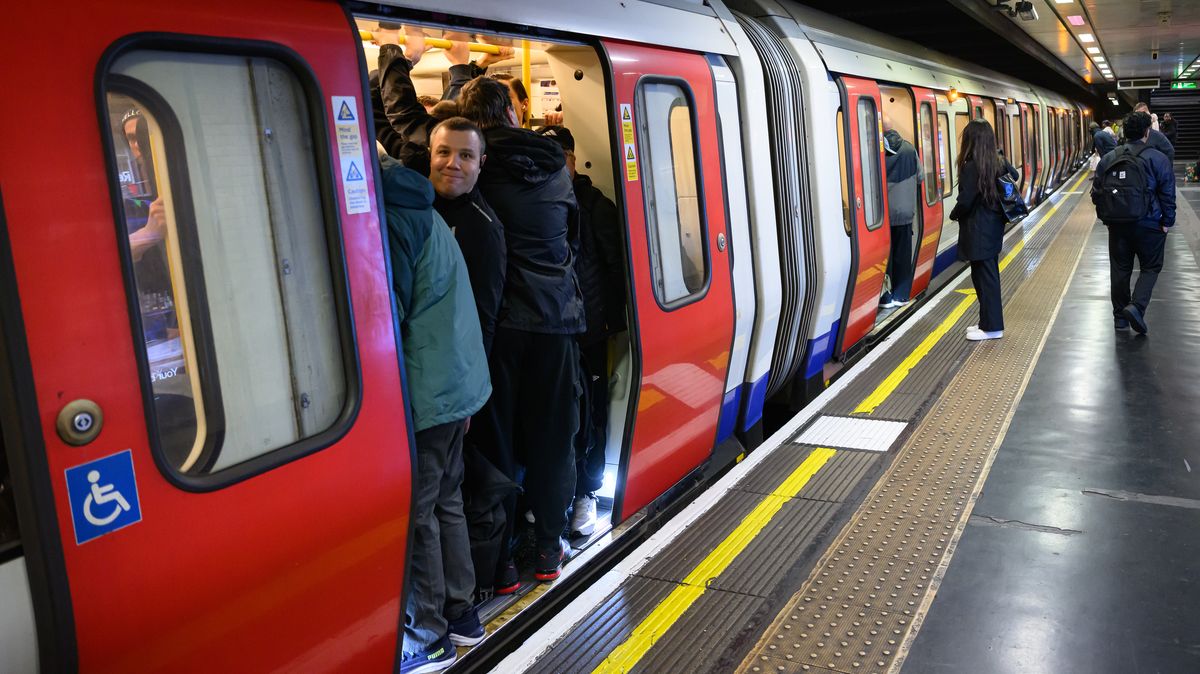
Londoners can expect more transport disruption in the coming week with fresh strikes set to cripple Tube services. The Rail, Maritime and Transport Union (RMT) is carrying out two 24-hour strikes on Tuesday, June 2 and Thursday, June 4 as part of an ongoing dispute over plans to introduce a voluntary four-day week for drivers.
Some Tube lines will be forced to shut if the walkout goes ahead, while all others will operate with either severe or minor delays. Disruption could particularly affect parents who are returning to work following the May half-term break.
The union called off its planned strikes in May at the eleventh hour following a breakthrough in talks. RMT officials said Transport for London (TfL) had “shifted its position” on the four-day week proposal but the authority since told MyLondon its stance hasn’t budged throughout the dispute.
This gave both sides more time to talk but the union said the strikes on Tuesday and Thursday are still set to go ahead. TfL said it hopes the points raised by the RMT can worked out over time, asking for the walkout to be cancelled so more detailed discussions can be carried out.
The union however claims TfL has continually refused to engage meaningfully with their concerns about the voluntary four-day week arrangements.
Last ditch talks will be held on Monday in a bid to avert strikes by London Underground drivers in a dispute over the working week.. At this point, here’s everything you need to know about the potential disruption.
What days are affected?
The June strikes will involve one key difference compared with the most recent walkouts. Unlike the April strikes, when industrial action began at midday, the 24-hour walkouts this time will run from midnight to 11.59pm on Tuesday, June 2, and again from midnight until 11.5pm on Thursday, June 4. This means disruption is expected to hit the morning rush hour hard, while the previous strikes had a more immediate impact on afternoon and evening journeys.
TfL said it hopes the points raised by the RMT can worked out over time, asking for the walkout to be cancelled so more detailed discussions can be carried out. The union however claims TfL has continually refused to engage meaningfully with their concerns about the voluntary four-day week arrangements.
With neither side coming to an agreement two days out from the strike, here’s everything you need to know about the potential disruption.
How are the negotiations going?
Claire Mann (Transport for London COO) and Eddie Dempsey (RMT union General Secretary)(Image: Getty Images/Tfl/RMT)
The dispute is centred on TfL’s wish to introduce a voluntary four-day week for drivers. They currently earn about £80k and work 36-hour weeks spread across five days, but the transport authority wants them to work 35 hours across four days.
Instead of this, the RMT wants drivers to work 32 hours across four days. TfL chief operating officer Claire Mann said this would be “unaffordable” for London, and that it would cost “in the tens of millions”.
After the last walkout between Tuesday, May 19 and Friday, May 22 was cancelled one day before it was due to start, both sides appeared close to reaching an agreement. The RMT seemed happy that TfL is “willing to compromise on rosters, fatigue and safety issues’, although TfL told MyLondon it had not changed its position since the start of the dispute.
The transport authority reiterated that Tube drivers can choose not to opt in to the new pattern and can continue working the current five-day week across 36 hours.
TfL added that staff are monitoring the success of the four-day week trial currently being held on the Bakerloo line before developing an agreement for drivers across the Tube network, and called for the RMT to call off the strike as it could hinder ongoing discussions.
Rival drivers union ASLEF has already accepted the four-day week proposal calling it the “biggest improvement in working conditions for decades”, which slightly weakens the RMT’s position as ASLEF drivers would still turn up for work during the strike.
Providing an update on the current status of talks, TfL boss Claire Mann said: “We still believe that the points they have raised can be worked out in time, through more detailed discussions and we are continuing to talk to the union’s representatives to find a way to avoid disruption to London.”
The RMT claims TfL has continued to not engage meaningfully with the union’s concerns about the proposed four-day week. “Our members have raised serious concerns around fatigue, longer shifts, reduced flexibility and the impact these proposals could have in a safety-critical role,” a spokesperson said.
“RMT remains available for meaningful talks, but London Underground cannot push ahead with changes to drivers’ working conditions while refusing to properly address legitimate safety and workplace concerns.”
What lines will be impacted?
TfL expects there to be no service on the Piccadilly and Circle lines, while the Metropolitan line will likely shut between Baker Street and Aldgate and the Central line between White City and Liverpool Street. The Piccadilly line has the highest proportion of drivers who are members of the Rail, Maritime and Transport Union (RMT) out of all lines, while the Circle line and parts of the Metropolitan and Central line will likely close so TfL can protect services on busier parts of the network.
In April, the Piccadilly line was able to run with severe delays. The Victoria and Northern lines – the busiest on the Tube network – operated with minor delays during the walkout. Most lines are expected to shut early due to staffing shortages caused by the strike.
Timeline of recent London transport strikes
Strikes which went ahead are in bold
2022 (June–August): Multiple Tube and rail walkouts over pay and job security during a wave of national strikes across the UK.2023 (March & July): Tube drivers staged 24-hour strikes over pensions, pay freezes, and working hours.2024 (January): Sir Sadiq Khan averts RMT strike after finding £30m for pay offer.2024 (April): Planned strike by ASLEF was cancelled after improved pay offer.2024 (November) – RMT and ASLEF strike called off at the last minute due to improved pay offer.September 2025: Seven-day Tube strike and DLR strike action over fatigue, shift patterns, and wage disputes.March 2026: Two 24-hour strikes were suspended by the RMT after the union claimed TfL was willing to negotiate about plans to impose a four-day week. Two extra strike dates were added in MarchApril 2026: Two 24-hour strikes took place while the RMT is pushed for a 32-hour working week spread over four days, instead of the proposed 35 hours week.May 2026: Two 24-hour strikes were suspended at the eleventh hour after the RMT said TfL was willing to ‘compromise on rosters, fatigue and safety issues’.June 2026 (planned): Two 24-hour strikes took place while the RMT is pushed for a 32-hour working week spread over four days, instead of the proposed 35 hours week.
Sign up for our London Underground newsletter for the latest travel updates to make your commute easier, plus a weekly fix of Tube trivia! Sign up HERE.