
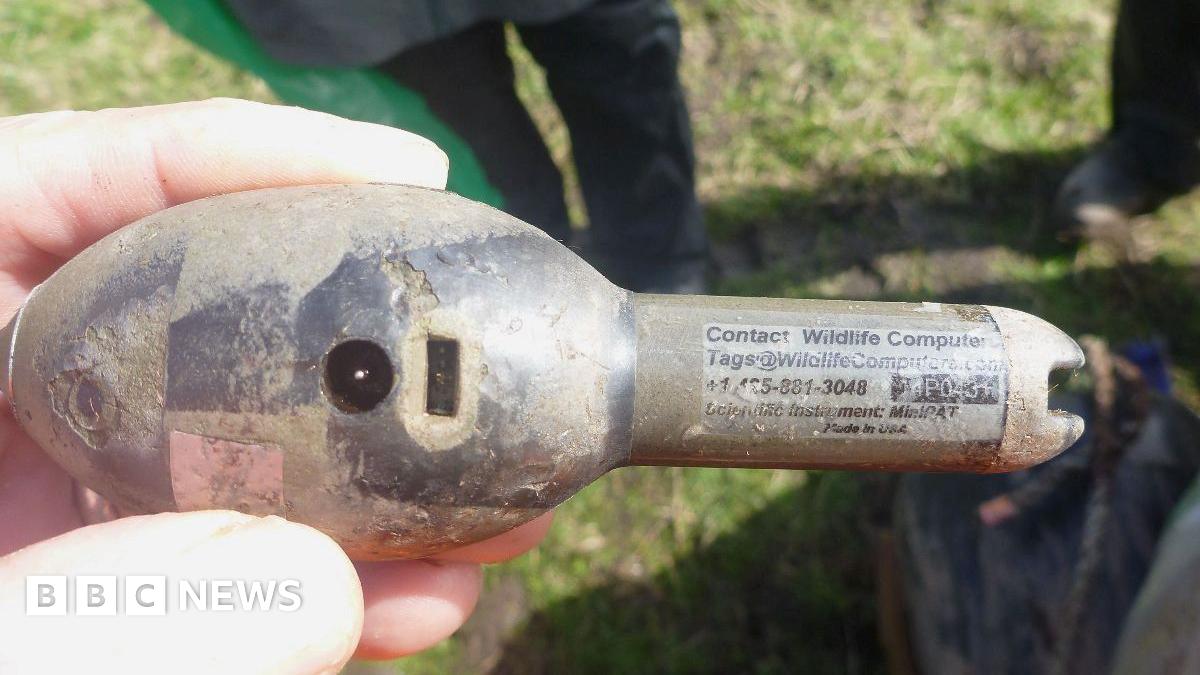
The equipment, which has been returned to the Spanish research team, was a MiniPAT pop-up archival transmitting tag – also known as a PSAT.
It is used to track the movements and behaviour of fish and other marine animals.
The tag collects information on water depth and temperature and light levels and can be programmed to release itself on a preset date.
Once it surfaces, a summary of the data is transmitted back to base via satellite.
If the tag is subsequently recovered the full archive held in its memory can be downloaded.
Christina Rodriguez Cabello, who is part of the research team, said the information from the Galloway beach find could turn out to be useful to their studies.
“Based on the data collected and transmitted, we can estimate the shark’s route,” she said.
From that, they can find out how far it travelled and the routes it took which can, in turn, improve management and conservation efforts.