
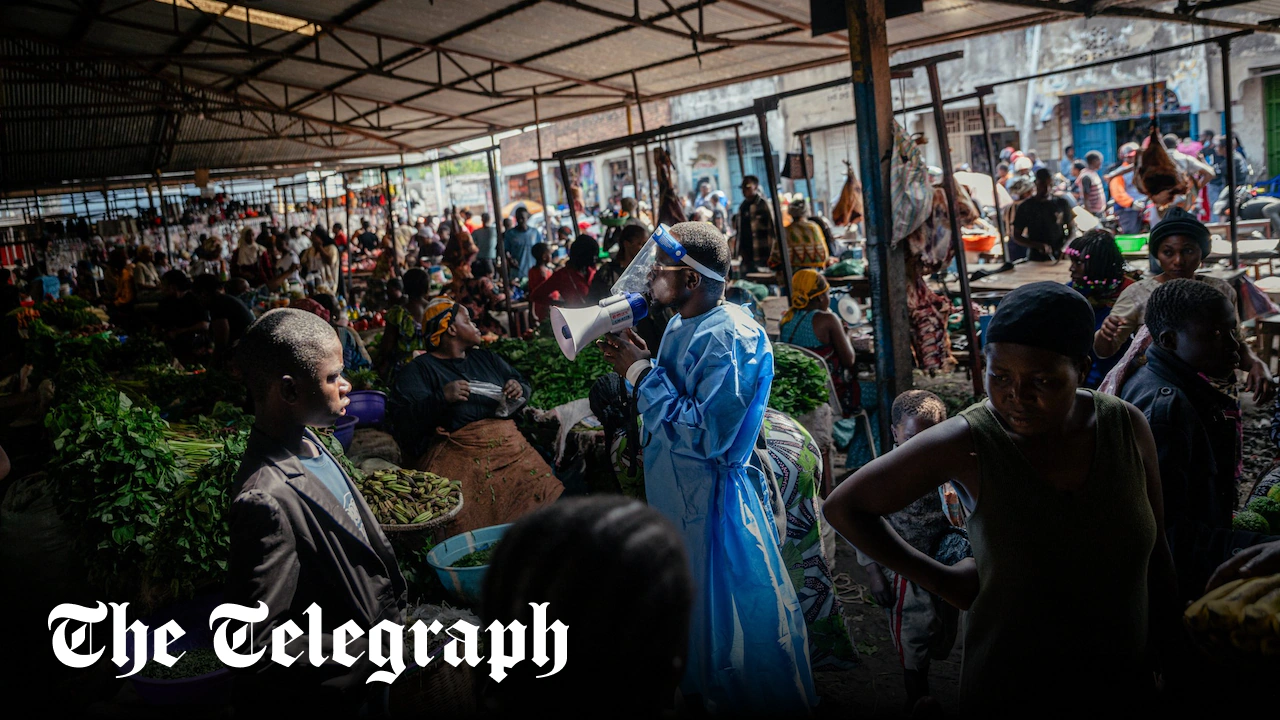
The World Health Organization (WHO) had previously said they believed the index case was a healthcare worker in Bunia, who developed symptoms of Ebola on April 25 and later died.
The detection lag would have serious implications for health teams trying to contain the spread of the Bundibugyo species, which currently has no licenced vaccines or treatments and is proving notoriously difficult to control.
Only 20 per cent of people known to have close contact with Ebola patients in the DRC have been traced, with thousands still unaccounted for.
If the outbreak started in January, many thousands more potential contacts would have been exposed.
Containment efforts have been further complicated by a combination of conspiracy theories, mistrust, and a volatile security situation that has fuelled a significant wave of violence against healthcare workers and facilities treating infected people.
Last week, a treatment centre in Rwampara run by MSF was attacked by a group of people in an attempt to retrieve the bodies of their relatives who had died of Ebola.
“The true scale of this Ebola outbreak is likely far worse than official figures suggest,” Rachel Howard, Senior Technical Emergency Health Advisor at the IRC, said.
“When four out of five contacts are not being traced, it becomes incredibly difficult to contain the outbreak or even understand its true scale. We’re especially concerned about the virus spreading to other countries like Burundi or South Sudan,” Ms Howard added.