
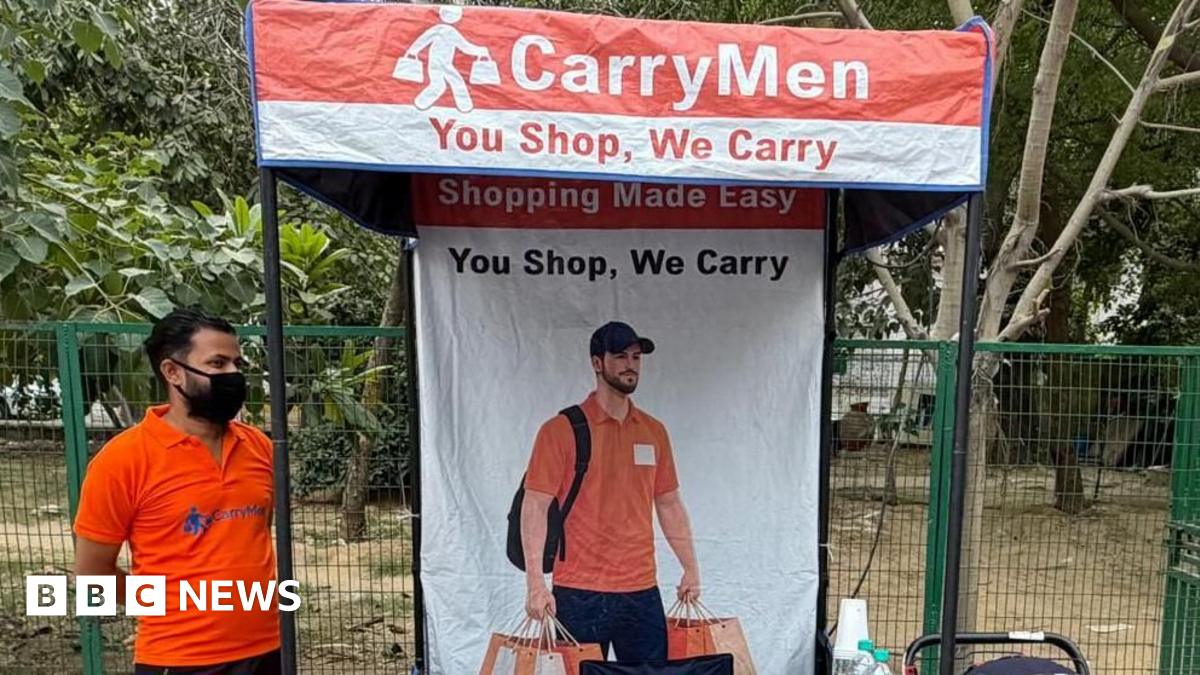
This was the Sabharwals’ first time hiring an assistant though they live in the neighbourhood. Jatinder said he heard about CarryMen from his wife who learnt about the service from Instagram.
Anand, who accompanied them, led them to their first stop – a chemist because Anita had developed a migraine headache and wanted to buy a painkiller. As the Sabharwals went into the store, he waited outside with their bags.
Once they came out, he handed them their water bottle for Anita to take the tablet.
“He’s helping us navigate too. We didn’t know where the pharmacy was. I think this is a very good service. With him around, we’re getting some help and can shop comfortably,” said Jatinder.
“Now we can move freely, unencumbered by baggage,” added Anita.
The couple said they were not convinced by the debate around entitlement and exploitation.
“I think people who can manage their bags should carry them. And those who can’t can avail of the service. I think it’s a very good service for people like us. It should be available in every market,” said Jatinder.
Ritu said they plan to expand the service – in July, they would be setting up CarryMen in the busy Chandni Chowk market. It would gradually cover other markets in the city and across India, she added.
Labour activist Bhatia pointed out that to expand, CarryMen would require funding, which could determine how long the service would be sustained.
At the moment, CarryMen is a very small set-up with seven employees who are full-time staff.
“But would they be able to follow the same system once they scale up? A lot of gig work and platform work started off with high payouts, with start-ups promising lots of benefits, but then it fizzled out,” said Bhatia.
“And in India, with such an abundance of cheap labour and a lack of unionisation, companies are able to continue squeezing workers. Which way would CarryMen go, we’ll have to see.”