
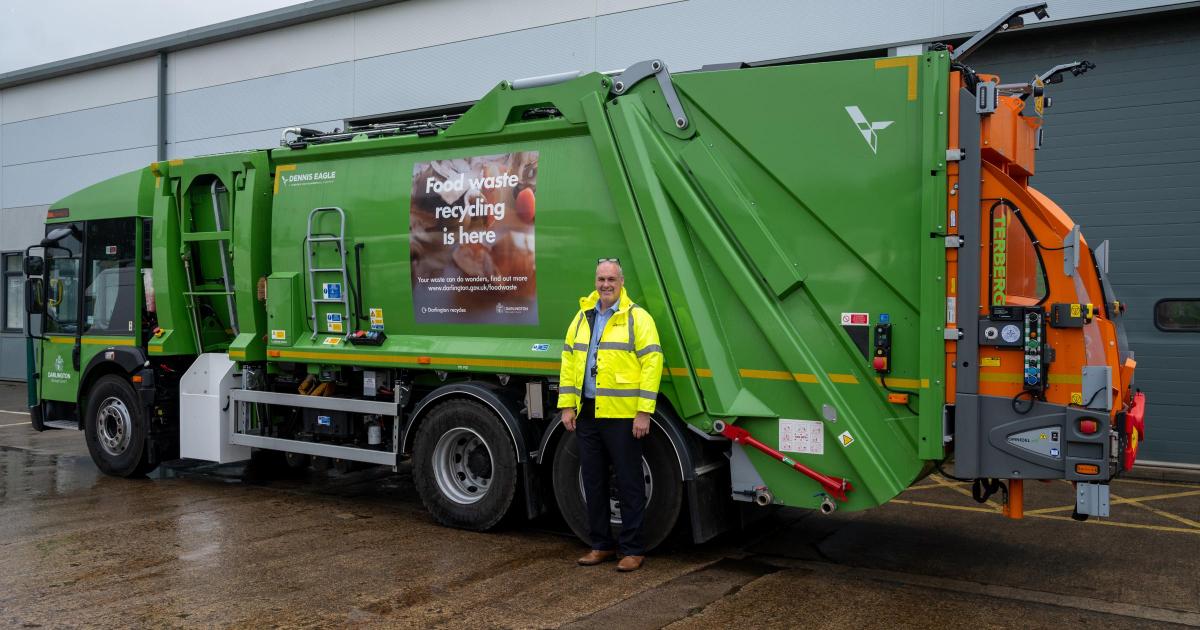
New bins, caddies and recycling bags have been delivered to every property across the borough ahead of the scheme starting on Tuesday (June 2).
It is part of a nationwide Government push to improve recycling rates and reduce waste contamination.
The scheme had been due to start by March 31 but was delayed after Darlington Borough Council said it had been “let down” by a supplier.
Local authorities across the North East have also faced problems, as County Durham delayed the start of the new scheme due to “challenges” obtaining bins and vehicles. The rollout in Stockton was branded “chaos”, while North Yorkshire has been granted a dispensation until 2043.
But council leaders in Darlington have insisted that the authority is prepared and ready to roll out the new scheme.
It means each household now has up to six bins – with £1.5 million of government funding paying for new specialist collection wagons.
Under the new proposals, every property will receive a small, sealable food waste caddy to be kept in the kitchen, a larger food waste bin for outside and a roll of 52 biodegradable caddy liners.
Residents will be asked to put food waste, such as peelings, leftovers, out-of-date items and tea bags, in the lined caddy and put it in the outside food waste bin.
The food waste bin will be collected once a week along with the general recycling bin and green glass box.
Warning stickers will be issued to Darlington households not complying with the new food waste and recycling collection scheme.
Darlington Borough Council said its crews may not be able to take recycling if the wrong thing is in the wrong bin, as whole wagons can become contaminated by mixed recycling/waste.
But the local authority ruled out issuing fines to residents who dispose of their waste incorrectly.
Ben Grabham, the council’s assistant director for environmental services and community safety, said: “We will look at educating people as much as possible.
“We have sent out easy-to-read information, so people can understand what they have got to do.
“If, for any reason, residents aren’t presenting waste in the right ways, we will look at issuing contamination stickers so we can outline to the resident what is in the bin that shouldn’t be there.
“We want people to recycle as much as possible, and we need to help them do that.”
General household waste will still be collected fortnightly.
An information pack explaining the new service, which includes details of specific recycling collection days, has also been distributed to households.
Anyone who has not received their bin or caddy should contact the council.
General recycling has also been simplified. For most residents, this will mean cardboard, paper, tins and plastic are all put together in the existing recycling bin, with cartons and Tetra Paks, which can now also be recycled.
Glass will continue to be put in the green box. This means the cardboard and paper caddy inside the bin is no longer needed and can be kept and used for something else.
If you are on scheme B (you don’t have a recycling bin), you should put cardboard, paper, tins and plastic in your green box with cartons and Tetra Paks. Glass will continue to be separated and put in the second green box. This means the blue bag for paper and card is no longer needed, but you can use it if your green box is full.
Libby McCollom, cabinet member for local services, said: “I am delighted that we can now start the food waste recycling service. Reducing and recycling food waste is good for the planet and can save you money.
“We are committed to tackling climate change, as detailed in the Council Plan, and by simplifying recycling, increasing the types of material we recycle, and introducing food waste collections, we hope to encourage more people to recycle right more often.”