
What’s the police anti-racism guidance that is being criticised?published at 12:58 BST
12:58 BST
 Cachella Smith
Live reporter
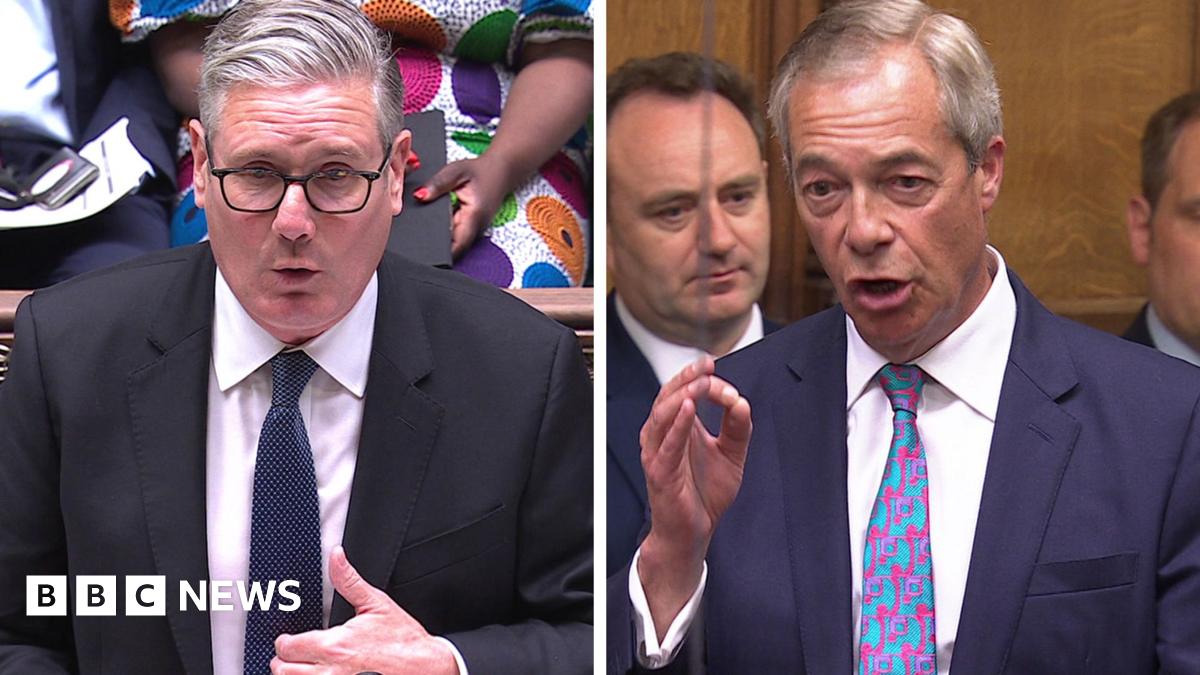
Reform UK Leader Nigel Farage used his question at PMQs to urge the prime minister to consider that Britons are “living under two-tier policing”.
Farage made reference to the police anti-racism guidance, which he said is “clear and written down in ink”, that police officers “must treat different ethnic groups in different ways”.
His comments come after the National Police Chiefs’ Council (NPCC) said on Tuesday it would review the language used in a document outlining anti-racism commitments, after shadow home secretary Chris Philp raised concerns.
Called the “Police Anti-Racism Commitment”, the document sets out broad aims, including being “transparent” about police actions and making sure everyone in policing feels confident challenging racism.
One part that has caused debate in the last 24 hours is a commitment to achieving equality of “policing outcomes”. The document says: “It does not mean treating everyone ‘the same’ or being ‘colour blind’ (racial equality),” with the reason given below:
Quote Message
Producing equality of policing outcomes for people from different ethnic groups by responding to individuals and communities according to their specific needs, circumstances and experiences, with understanding that these will be racialised and with the aim of reducing harm.
Police Anti-Racism Commitment
The document, published last year, comes from the Police Race Action Plan which was announced in 2020 and first published in 2022.
The plan said it followed policing’s “difficult history in its relationships with Black communities” – referencing the murder of George Floyd and the Stephen Lawrence inquiry.
Policing Minister Sarah Jones called it a “values document” this morning, not a training document. The NPCC says it sets out the “overarching ambition of the plan for a police service that was anti-racist and trusted by Black people”.