
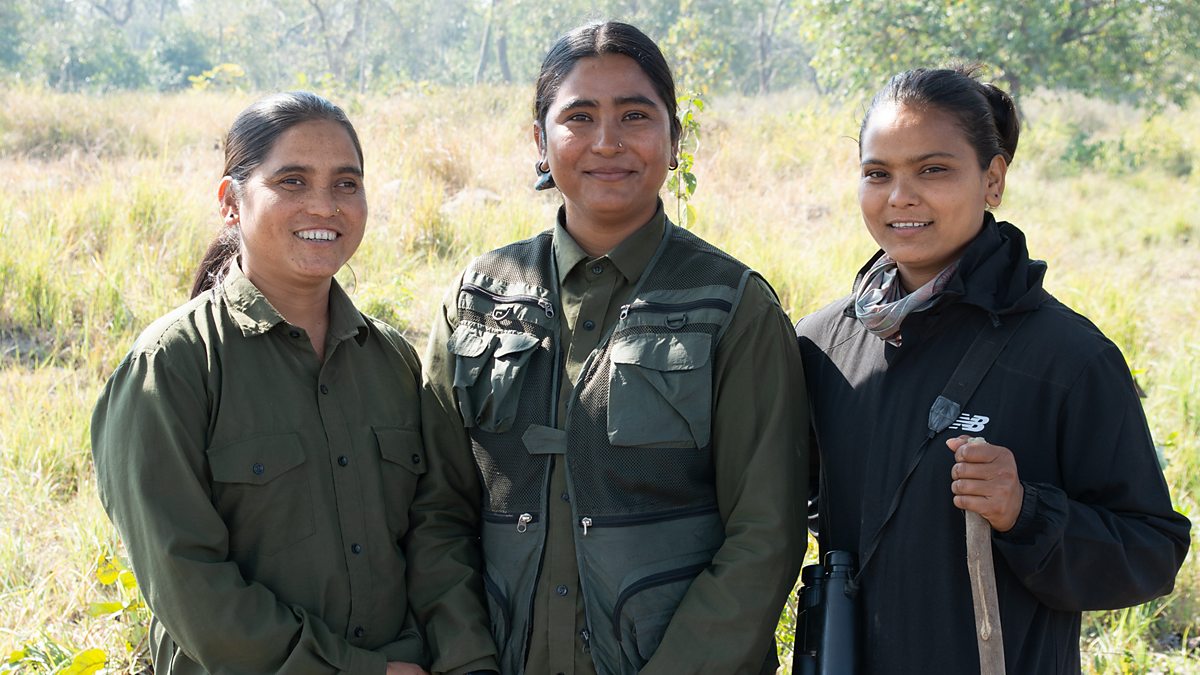
The sisters’ knowledge of the individual tigers who reside in their community forest was essential in allowing the film crew to identify the tigers’ patterns, get to know them as characters, and capture intimate and never-seen-before behaviours. During the shoots the sisters were able to expand their field observations by spending many hours watching specific tigers and witnessing their nocturnal behaviour for the first time with the help of thermal imaging cameras and drones.
The sisters’ knowledge of the individual tigers who reside in their community forest was essential
Sushila led ground expeditions, keeping the crew safe while approaching the tigers, while Manju honed her drone skills as a key member of the aerial cinematography team. Manju was often the first to locate key characters and flew complex drone relays with multiple pilots to stick with the tigers day and night, eventually capturing her first tiger hunt. The sisters received drone training from the BBC team as part of the Natural History Unit’s Songbird Initiative to develop in-country talent.
Their favourite tiger is Goma, an experienced mother whom they admire for being a great teacher and very clever.
“She’s changed my life,” says Sushila. “She gave me the chance to work with this documentary.”
Living alongside tigers and other wildlife brings jobs and tourism to the local communities, but it also comes with challenges. One of Sushila and Manju’s goals as tiger guides is to help prevent human-wildlife conflict by raising awareness of tiger behaviour and how people can forage and farm safely to prevent attacks.