
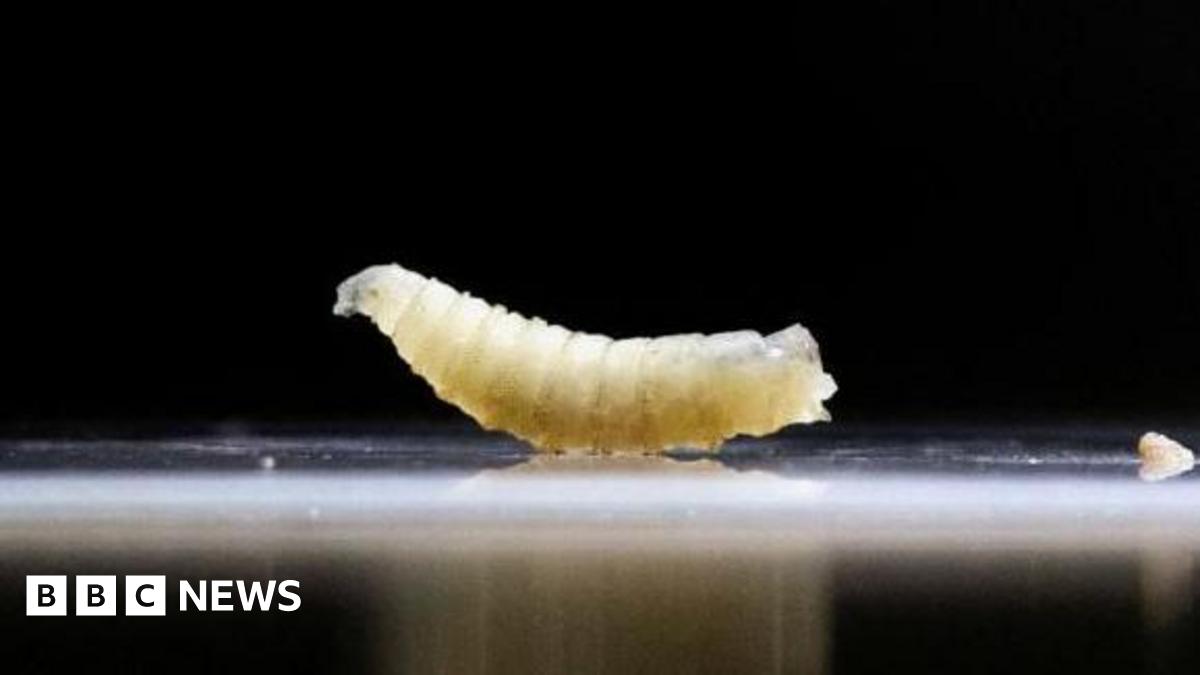
One way to fight back is by releasing hundreds of millions of sterile screwworm flies, as the females only mate once in their lifetime, and any eggs they lay will be unfertilised and will not hatch.
This method, known as the Sterile Insect Technique, has been in use for many years to control a variety of insect populations, including fruit flies and mosquitos. It works by hatching flies in an enclosed space, and then exposing them to radiation to make them sterile before releasing them into the wild.
However, officials say that they will need to breed up to 600 million sterile screwworms flies each week in order to fight back the outbreak.
Currently, facilities in the US and Mexico are only capable of producing about 100 million sterile flies per week.
US Secretary of Agriculture Brooke Rollins told reporters on Thursday that since the discovery of the infected calf, officials have released four million sterile flies by ground, in addition to another four million that they have been releasing by plane on a weekly basis since February.
“There is no reason to believe that this incursion will result in any sort of establishment of the pests,” said Rollins.
But critics, including cattle farmers in Texas, are worried it’s not enough and some have accused the Trump administration of not taking the problem seriously.
The last outbreak that came close to threatening American cattle was in the 1970s, but at that time no screwworms were ever found inside the US.
The use of sterile flies pushed the screwworms south below the Darien Gap, Panama’s heavily-forested border region with Colombia. At the time, officials were deploying around 500 to 700 million sterile flies across Central America per week, according to Sonja Swiger, an entomologist for Texas A&M University.
But in recent years, the screwworms have rampaged back north. In 2022, Panama reported a large increase in cases, followed by countries across Central America. By 2024, they had been reported in Mexico, and were creeping north towards the US.
This latest outbreak has so far resulted in 2,070 cases of screwworms in humans, according to the US Centers for Disease Control and Prevention (CDC).