
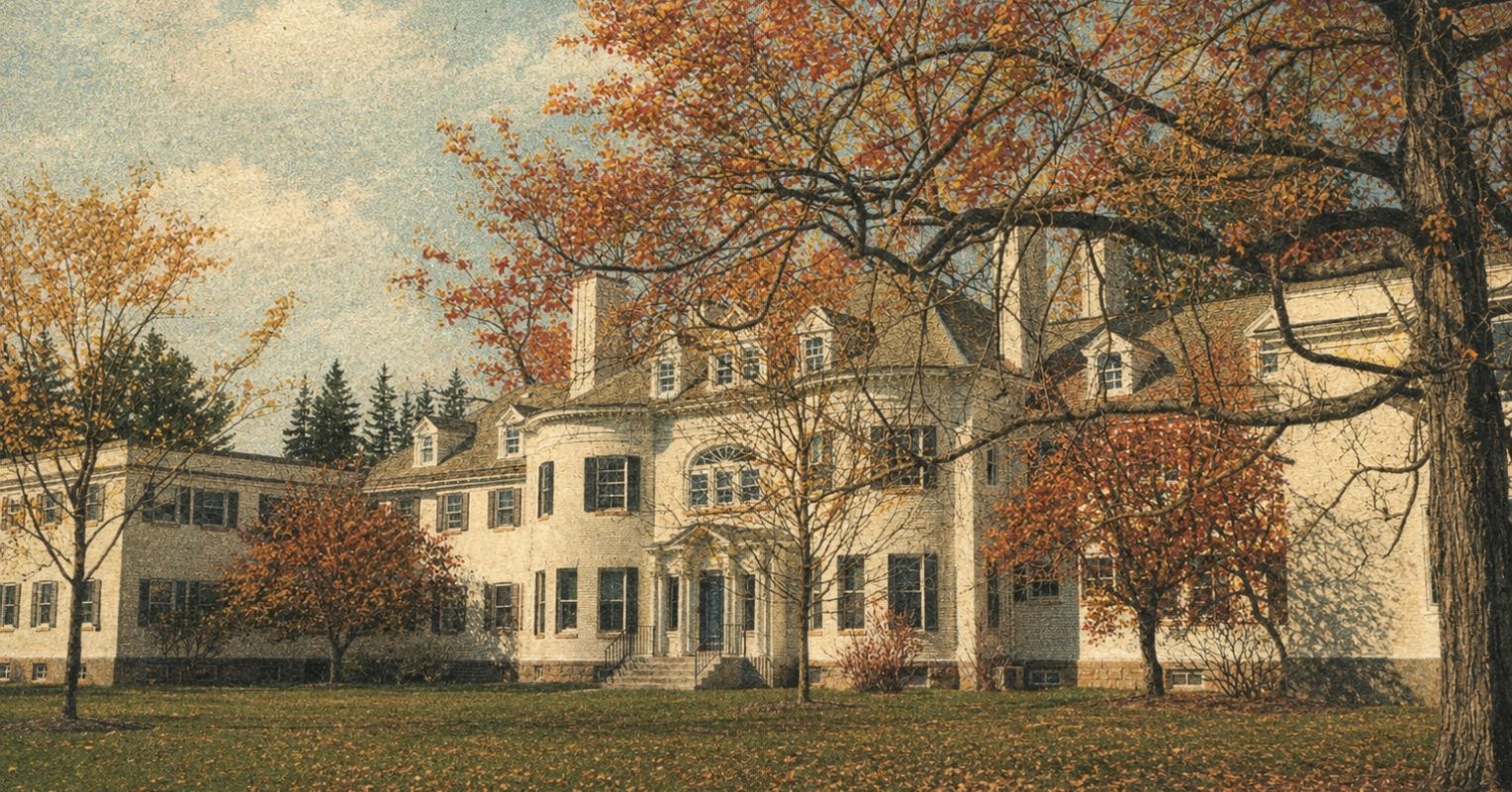
When most people think of psychoanalysis, they probably imagine a patient lying on a couch in a private office. Yet for much of the twentieth century, some of the most influential psychoanalytic work occurred not in outpatient practice but within psychiatric hospitals. These institutions attempted something that now seems almost unimaginable: the treatment of severe mental illness through long-term therapeutic relationships, intensive psychotherapy, and carefully constructed therapeutic communities.
Although psychoanalytic hospitals varied considerably in their approaches, they shared a common conviction that symptoms have meaning and that understanding the person behind the diagnosis is essential to treatment. At their best, these institutions became world-leading centers for the study of psychopathology and training grounds for generations of psychiatrists, psychotherapists, and psychoanalysts.
The rise of psychoanalytic hospitals reflected the broader influence of psychoanalytic thinking in American psychiatry during the mid-twentieth century. As biological psychiatry and managed care came to dominate the field in the latter decades of the century, many of these institutions either closed, transformed themselves, or abandoned their original missions. Yet their legacy continues to influence contemporary psychoanalysis.
Among the most important psychoanalytic hospitals in the United States were the Menninger Clinic in Topeka, Kansas (now Houston, Texas); Chestnut Lodge in Rockville, Maryland; and the Austen Riggs Center in Stockbridge, Massachusetts. Each developed a distinctive model of treatment while sharing a commitment to understanding patients as people rather than mere collections of symptoms.
The Menninger Clinic
Founded in Topeka, Kansas, in 1925 by Charles Menninger and his sons Karl and William, the Menninger Clinic became one of the most influential psychiatric institutions in the world. The Menningers sought to create what they called “a better kind of medicine,” one that integrated scientific psychiatry with a humanistic understanding of emotional suffering.
The clinic played a central role in establishing psychoanalytic psychiatry in the United States. During the mid-twentieth century, it served as a major training center and helped shape generations of American psychiatrists. At its peak, the Menninger School of Psychiatry trained a substantial proportion of the nation’s psychiatric workforce. The renowned psychiatrist Otto Kernberg joined the Clinic in 1960 and became its director until 1965.
What distinguished Menninger was its effort to integrate psychoanalytic ideas into a broader psychiatric system. Rather than viewing psychodynamic understanding and medical treatment as antagonistic paradigms, the Menningers attempted to combine them. The institution became internationally known for its clinical innovation, educational programs, and commitment to understanding severe psychopathology in depth.
Today, the Menninger Clinic is affiliated with Baylor College of Medicine and is located in Houston, Texas. It continues to publish the Bulletin of the Menninger Clinic, one of the nation’s longest-running mental health journals, and contributes to Psychology Today.
Chestnut Lodge
If Menninger represented the institutional center of psychoanalytic psychiatry, Chestnut Lodge became its most famous setting for the treatment of the psychoses. Located in Rockville, Maryland, the hospital gained international recognition for its long-term psychotherapeutic treatment of patients with schizophrenia and other severe mental disorders.
Chestnut Lodge attracted many of the most influential figures in psychoanalytic and interpersonal psychiatry, including consultant Harry Stack Sullivan and psychiatrist Harold Searles, whose pioneering work with patients diagnosed with schizophrenia helped shape generations of clinicians. The hospital fostered a culture in which therapists attempted to enter the patient’s subjective world and construct meaning from experiences that often appeared incomprehensible to others.
Psychoanalysis Essential Reads
The Lodge was also the site of important outcome studies and enduring debates about the role of psychotherapy in schizophrenia. While critics questioned whether psychoanalytic approaches were sufficient for severe psychotic disorders, supporters argued that the institution demonstrated the therapeutic value of sustained human relationships. The hospital ultimately closed in 2001, but it remains one of the most iconic institutions in the history of dynamic psychiatry.
The Austen Riggs Center
Among the surviving descendants of this tradition, the Austen Riggs Center occupies a unique place. Founded in Stockbridge, Massachusetts, in 1919, Riggs evolved into one of the nation’s leading psychodynamic treatment centers. Unlike most psychiatric hospitals, it developed an “open setting” model in which patients are treated voluntarily and are afforded considerable freedom and responsibility.
Under the leadership of figures such as Robert Knight and Otto Will, Riggs became known for its therapeutic community approach and its commitment to intensive psychotherapy for individuals with complex and treatment-resistant psychiatric conditions. The institution was especially influential in the study and treatment of borderline personality, with Knight helping to clarify the concept long before the disorder entered official diagnostic nomenclature. Rather than emphasizing symptom control alone, the institution focused on helping patients understand recurring patterns in their relationships, emotions, and sense of self.
Perhaps more than any other major psychiatric institution, Riggs has maintained continuity with the classical psychodynamic tradition while adapting to contemporary psychiatry. In an era dominated by brief hospitalizations and symptom-focused interventions, it continues to emphasize the therapeutic relationship as a central instrument of change.
A Vanishing Tradition
The story of the psychoanalytic hospital is, in many respects, the story of twentieth-century American psychiatry. These institutions emerged during a period when clinicians sought to understand mental illness through careful attention to meaning, personality, and human relationships. While many of their assumptions have been revised, and some of their methods remain debated, their commitment to understanding the inner lives of patients continues to offer important lessons.
Today, as psychiatry increasingly emphasizes neuroscience, brief treatment, and standardized interventions, the psychoanalytic hospital serves as a reminder that severe psychological suffering cannot always be reduced to symptoms alone. The Menninger Clinic, Chestnut Lodge, and Austen Riggs Center each embodied a vision of psychiatry that placed the person, not merely the diagnosis, at the center of treatment.