
cricket
Recent double standard decision-making on selection and fitness guidelines by SLC Transformation Committee raise confusion
View(s):
The newly appointed Sri Lanka Cricket (SLC) interim administration, led by Eran Wickremaratne, came into office promising a fresh start with a cleanup act. They moved swiftly. Work has already begun on drafting a new constitution which they promised would be completed within six months. A forensic audit is being conducted to identify the real issues in the finances.
The urgency to restore order after years of chaos is understandable. Sri Lankan cricket desperately needs restructuring, accountability and direction. This is exactly what is expected of a group of professionals now running SLC. But some of their own actions have already created confusion.
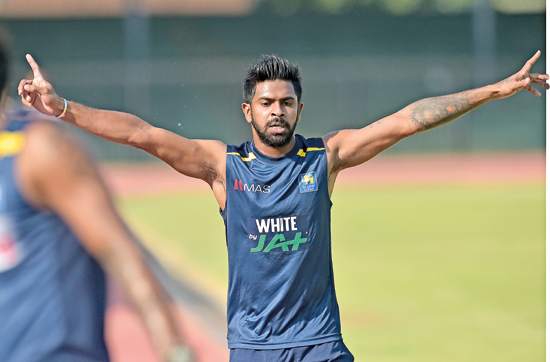
At nearly 33 years of age, Dickwella is hardly a player being groomed for the future, but he’s in the ‘A’ side named to play against India ‘A’
Their first major move was to appoint new selectors. In principle, there is nothing wrong with that. Every administration has the right to appoint people they trust into key positions. However, there is confusion over the manner in which the change was carried out.
The previous selection committee, headed by Pramodya Wickramasinghe, had not even completed six months in office. More importantly, there was no clear indication that their services had been formally terminated before the new committee was announced. It created uncertainty and unnecessary controversy.
Soon after, the squads for the West Indies series were announced. The new chief selector, Kapila Wijegunawardene, stated that his committee did not select the squad. Understandable. They were only a few days into the job when the team was announced. But what followed deepened the confusion.
Wickramasinghe admitted that they selected the squads, including the new white-ball skipper, before the selectors changed hands. However, he claims that the original squad submitted by his panel was altered.
He says players such as Nuwan Thushara and Binura Fernando were added to the T20 squad, while Nishan Madushka and Kasun Rajitha were brought into the Test setup. Dunith Wellalage was reportedly nominated as ODI vice-captain, with Kamindu Mendis receiving vice captaincy responsibilities in Tests and T20Is.
If that is the case, then who exactly made these changes?
Selection is one of the most sensitive aspects of the game. Every player in the system watches closely. Every omission creates disappointment. Every inclusion invites scrutiny. If there is uncertainty about who is selecting teams, then the entire process loses credibility.
The most striking example in this saga is the inclusion of Nuwan Thushara. There is no debate about his talent. He is among Sri Lanka’s most promising white-ball bowlers and possesses rare skills in the shorter format. Sri Lanka undoubtedly needs him. But the issue here is not talent. It is consistency in policy.
Under the previous administration and selection panel, strict fitness standards were introduced. This was backed by the Ministry of Sports. The rationale behind the programme was simple. Sri Lankan cricketers had become increasingly vulnerable to injuries, particularly among fast bowlers and all-rounders. The policy was designed not as punishment but as protection.
Sri Lanka suffered greatly at the recent World Cup due to injuries to key players. Eshan Malinga, Wanindu Hasaranga and Matheesha Pathirana were all unavailable at crucial stages. Their absence severely weakened Sri Lanka’s campaign and almost certainly cost the team a place in the knockout stages. The script might have been different if all three had been fit and available.
That painful experience was precisely why fitness benchmarks were re-enforced more rigorously. Yet now the message appears to have changed overnight. Wanindu Hasaranga and Nuwan Thushara, who missed their IPL stints due to fitness issues, are back in the national side. The previous SLC stance only denied these cricketers an opportunity to rub shoulders with the best in the world while playing in the IPL and earning valuable income.
If policies can suddenly shift depending on who occupies office, what message does that send to players? Professional sport cannot function effectively when the goalposts are constantly moved.
This inconsistency is perhaps the most worrying aspect of the current situation. Fitness standards cannot be rigid under one administration and negotiable under another. Selection policies cannot change depending on personalities, political pressure or sentiment.
Look at the Sri Lanka ‘A’ team selection for the home tri-series involving India ‘A’ and Afghanistan ‘A’, as well as the two four-day games against India ‘A’. The inclusion of Niroshan Dickwella in both squads, along with the vice-captaincy, has sparked fresh debate. At nearly 33 years of age, Dickwella is hardly a player being groomed for the future. ‘A’ team cricket is meant to identify and prepare the next generation of national cricketers, bridging the gap between domestic cricket and the international level. It is not supposed to be a retirement home for former internationals seeking one final opportunity.
There was a time when Dickwella represented opportunity. An attacking left-hander, an unconventional wicketkeeper and a cricketer capable of changing the tempo of a game quickly. Sri Lanka invested in him heavily. He was backed and persisted with, opportunity after opportunity arriving, even when discipline and consistency did not. Even after 54 Test matches, he has not scored a single century and his average does not truly reflect the early promise he showed. His most recent suspension over the use of cocaine raises further questions about his commitment to the game.
Sri Lanka Cricket urgently needs a transparent, clearly documented selection policy that survives administrative changes. Whether it concerns fitness benchmarks, disciplinary matters, leadership appointments or selection criteria, players must know exactly where they stand.
Sri Lankan cricket has suffered enough from inconsistency, reckless decision-making and shifting agendas. This new administration came into office promising reform and professionalism. True reform requires consistency, clarity and the courage to uphold standards even when inconvenient. Otherwise, Sri Lanka Cricket will continue to surprise us but for all the wrong reasons.