
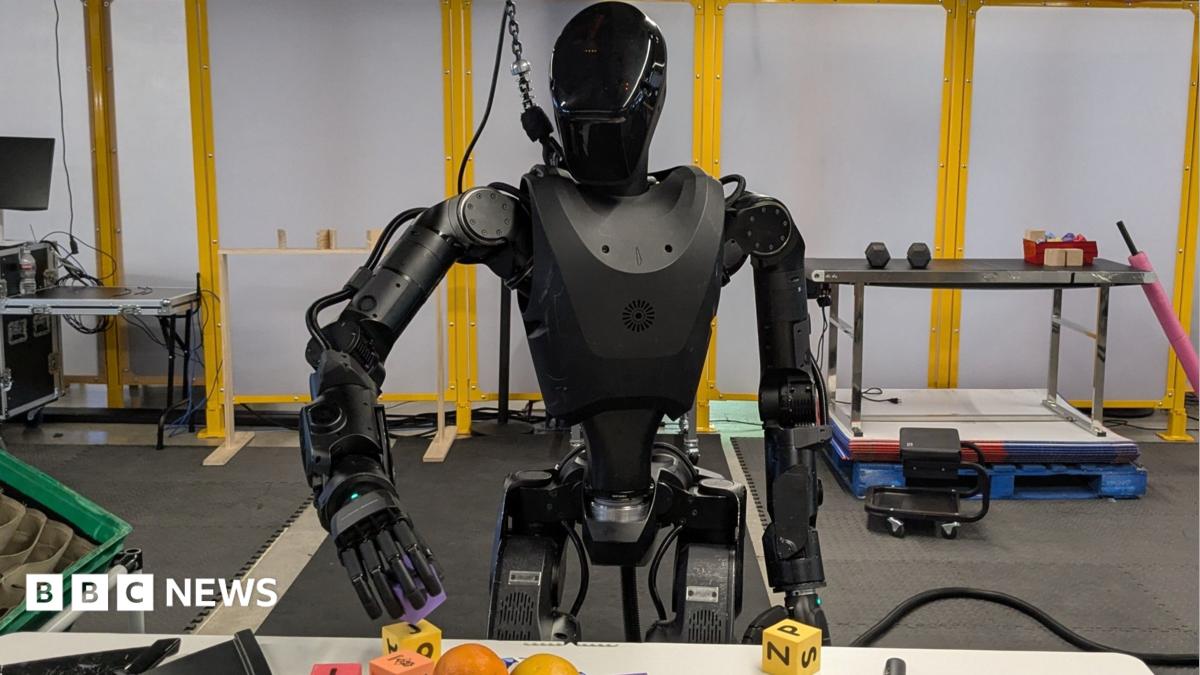
Yet not everyone is convinced the humanoid form factor is the most effective.
Other robots, such as quadrupeds, can navigate terrain more quickly and efficiently, says Fankhauser of Robozaps.
He also notes, based on what he has seen in the commercial space, humanoid technology still has a long way to go.
Today’s commercial humanoid robots can barely handle warehouse packing let alone open a door, says Fankhauser.
“If there was a war in Taiwan today, the likelihood that China is going to militarise these humanoids and fight effectively is fanciful,” he adds.
While Chinese robots have produced some impressive displays, external, they have taken place in highly controlled or structured environments – the antithesis of real-world warfare. Though Fankhauser adds things might be different in another five or 10 years.
Robert Griffin works on humanoid robots at the non-profit Florida Institute for Human and Machine Cognition, whose activities include military-funded humanoid projects focused on non-combat applications.
One of its spin-out companies was later acquired by Foundation for part of its core technology.
Griffin sees value in humanoids in reducing risk to human soldiers, but also says unpredictable environments remain a major hurdle.
Getting a robot to jump through a window of unknown height, land on uneven ground, and immediately navigate an unfamiliar interior is hard.
“You get an impression of human-level capability by seeing the human form… but [these autonomous systems] don’t know how to handle open-ended uncertainty yet,” says Griffin.
Human soldiers have easily foiled AI systems by doing what is “out of the ordinary”, like somersaulting or putting cardboard boxes over their heads, external, he adds.