
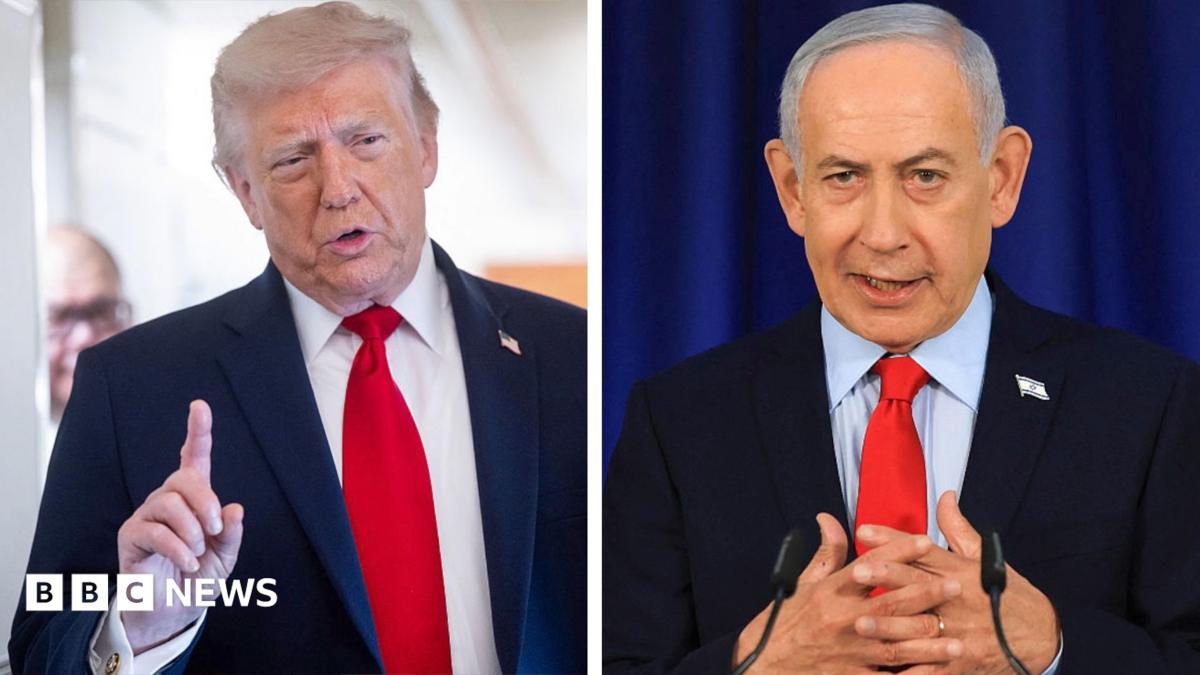
Trump expected a quick victory. He had watched with delight as the US military abducted the president of Venezuela and his wife, sent them to a jail in New York and installed a compliant successor in Caracas. Textbook regime change, he believed, way better than the forever wars fought by his predecessors in Iraq and Afghanistan. Iran would be next on the list.
Both men must be wondering what went wrong. The United States has the world’s most powerful military. Israel is the superpower of the Middle East.
Trump and Netanyahu saw a regime in Tehran reeling from economic crisis caused by sanctions, mismanagement and corruption. Israel had delivered hammer blows to its allies, Hamas in Gaza and Hezbollah in Lebanon. Its other key ally, Bashar al Assad had been deposed as president of Syria and fled to Moscow. In January the regime crushed huge demonstrations against it by killing thousands of Iranian citizens.
They underestimated the resilience, ruthlessness and guile of the Islamic regime. They believed that killing its supreme leader and his closest lieutenants would cause the regime to collapse from within.
They overestimated the efficacy of military force against a regime that had faced repeated threats for almost 50 years, had engineered itself to survive an attack and had thought hard about a conception of national security backed up by its religious and ideological convictions.
The Gulf oil states, allies of the US, and in the case of the UAE and Bahrain of Israel too, have suffered hammer blows. It is not simply lost revenue from petrochemicals and their byproducts, like fertiliser. They have built their futures around creating an oasis of stability and multi-billion-dollar business in the Gulf. Potential investors, and tourists, see the war turning that vision into a mirage.
The Iranian regime believes its survival and the ease with which it put a chokehold on the world economy by closing the Strait of Hormuz and attacking its Gulf Arab neighbours can be translated into long-term deterrence against the US and Israel.
The men who have replaced the old guard of Iranian leaders killed by Israel and the US are just as ideological as their predecessors but much more willing to take risks in what they see as an existential struggle. They believe that words alone will not stop more attacks in the future from the US or Israel. Instead, they want to demonstrate that more attacks on Iran will lead to painful consequences.
A key part of its strategy is linking the war in Lebanon with the war in the Gulf. The regime’s message to Trump is that he cannot hope for any kind of deal if Israel continues to bomb Lebanon and to try to destroy Hezbollah, the militia and political movement that it has nurtured since the 1980s as its forward defence against Israel.
By curbing Israel’s plans to attack Beirut, on the grounds that a deal was near (a claim he has made before, erroneously), Trump has shown implicitly that he accepts the link between what happens in Lebanon and what happens in the Gulf.
On Monday, Netanyahu said he would not accept the linkage. It was he said, “intolerable and completely unacceptable.” His problem is that Trump will put his interests and desire to end the war ahead of Netanyahu’s determination for it to continue until he can declare the Islamic regime in Tehran has been crippled.
Netanyahu cancelled a planned attack on Beirut, but since then Israel’s military, the IDF, has continued to hit southern Lebanon very hard.
When the Strait of Hormuz was closed in March, there were dire warnings of global economic consequences if it was still closed by June.
Not only does the vital waterway that was open until the US and Israel attacked Iran remain closed. Without remarkable diplomatic breakthroughs, it is hard to see it reopening any time soon.