
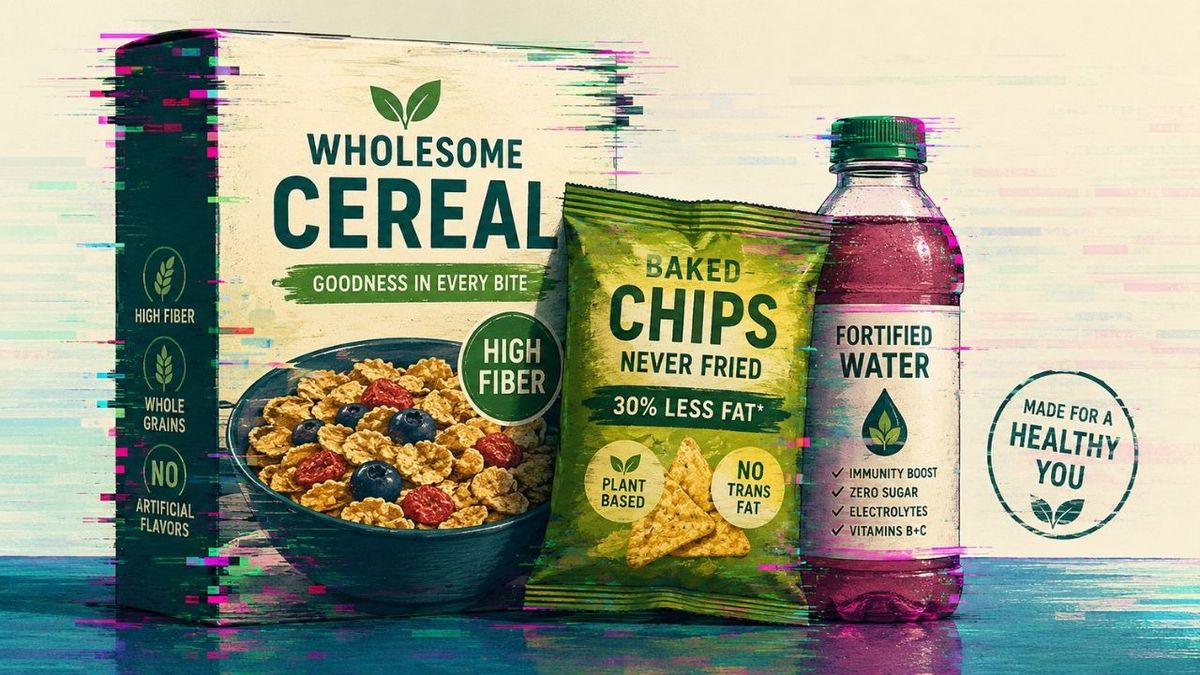
I am close to 26 now, and these days I find myself worrying about my parents’ health more than my own. My father has a sweet tooth and buys his fair share of packaged foods. There is nothing wrong with consuming sugar in moderation, of course. But in a country where lifestyle conditions are rising faster than health infrastructure can keep up with, people like me are increasingly trying to make more conscious choices. The operative word being “trying.”
The demand for health-oriented products is not just a trend. Worldpanel India’s Mainstreaming Health 2025 study found that health-oriented food and beverage products now represent Rs 63,093 crore in value, growing at a CAGR of 11.7% over the past four years. More strikingly, 87.9% of Indian households purchased a health product in the past year, with urban penetration at nearly 96%.
But what happens when the health product a consumer is loyally buying is not quite what it claims to be?
NielsenIQ’s Global State of Health and Wellness 2025 report found that 62% of consumers globally are now more sceptical of health claims made by food companies than they used to be, and 64% of Indian consumers specifically cited the need for detailed product information and verifiable claims from brands. The intent to eat better is there. The trust is not.
Safety concerns have surfaced across multiple food categories in recent years, leading to scepticism. FSSAI’s pan-India surveillance on spices between November 2024 and February 2025 found excess lead in chilli powder, illegal colouring agents in turmeric, and labelling violations across pepper and cardamom. In 2024, questions about sugar levels in infant food products and misleading labelling on protein supplements prompted the regulator to signal stricter scrutiny.
The food and beverage sector has become one of the most monitored categories on ASCI’s radar. ASCI’s Annual Complaints Report 2025-26 shows that food and beverages were among the top five most violative sectors with 331 cases, behind offshore betting, realty, and personal care.
In some cases, consumer-led scrutiny has moved far more quickly than any regulatory proceeding.
When consumers move faster than the system
In April 2023, health advocateRevant Himatsingka, known as FoodPharmer, posted a video questioning Bournvita’s sugar content and its positioning as a children’s health drink. It gathered over 12 million views before being taken down following a legal notice from Mondelez India. What followed happened faster than most regulatory timelines: the National Commission for Protection of Child Rights directed Mondelez to withdraw “health drink” claims from advertising and packaging, the Ministry of Commerce issued a directive to e-commerce platforms to delist Bournvita from the “health drinks” category, and by December 2023, the brand had reduced its added sugar content by roughly 15%.
His point about the specific harm of health-washed marketing is rooted in the frequency of consumption. “Junk food isn’t the problem. Junk food marketing itself as healthy is the problem. Because they market themselves as taller, stronger, sharper, people often give it to their children twice a day, which is 14 times a week. Whereas the Coca-Cola people would probably give it only once a week. You tend to consume more often when you think it’s healthy, which is the biggest problem,” Himatsingka shares.
The pattern has repeated across categories. Nestle reduced sugar in its Maggi Rich Tomato Ketchup by 22% following Himatsingka’s criticism. Lay’s switched to sunflower oil. More recently, he flagged Nutella’s positioning as a breakfast product, pointing out that 100 grams of the product contains 56.3 grams of sugar while it is regularly served to children as a morning meal.
The relationship between FMCG companies and creators who scrutinise them is shifting as a result of voices like his. Himatsingka notes, “Earlier, they were allies. Now, I would say 99.9% of influencers are still allies, taking money to promote whatever they want. But the remaining 0.1% will call them out. So now companies have to be a bit more careful.”
In our previous article, we touched upon how celebrity endorsements can blur the line when it comes to misleading claims. Consumers trust a celebrity’s word, and this trust has only been extended to creators and influencers on social media.
According to ASCI’s report, of the 1,609 influencer ads processed during the year, food and beverages were among the top five categories of influencer violations. In the category specifically, violations centred on misleading or unsubstantiated claims around metabolic health, chronic disease, and child development, for products ranging from weight-loss supplements to growth formulas.
Manisha Kapoor, CEO and Secretary General of ASCI, describes what these violations typically look like in practice. “The most common violations include misleading health and nutrition claims, exaggerated benefit-led messaging, and ingredient-based claims being extended to product-level outcomes without adequate substantiation,” she says. “Influencer-led promotions are a key driver; food and beverage features among the top five categories in influencer violations. A large proportion of influencer content continues to fall short on disclosure norms, amplifying the risk of misleading consumers.”
A regulatory framework that exists, but doesn’t always land
As explored in the first part of this series, experts flagged that front-of-pack labels are increasingly being used to shape perception rather than inform it. Clean-label startups like The Whole Truth, legacy brands, and everyone in between have learned to navigate what was described as a carefully constructed gap between the front and back of a pack.
While regulators questioned phrases like “cleanest, lightest whey protein ever” on The Whole Truth’s whey products and “No Added Sugar” messaging on snack bars, which were subsequently modified or withdrawn following FSSAI and ASCI intervention. The case highlights how even brands with a stated commitment to transparency run into the same definitional grey areas that others exploit routinely.
However, that gap is not just a labelling problem, but an enforcement problem.
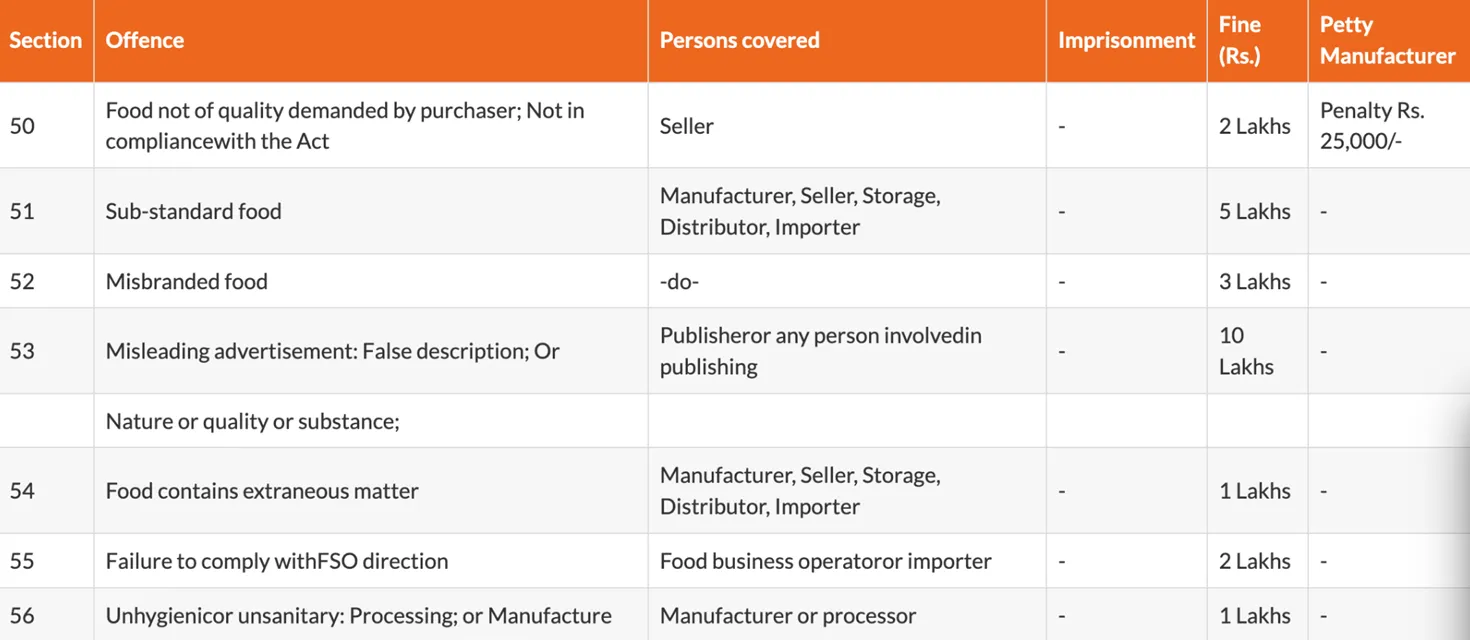
India has a regulatory structure that is, on paper, reasonably well designed. The Food Safety and Standards (Advertising and Claims) Regulations, 2018 require brands to substantiate claims like “low sugar,” “zero cholesterol,” or “gluten-free” against defined criteria. Words like “natural,” “pure,” and “fresh” can only appear if the product meets FSSAI-set parameters. Health claims must be backed by scientific evidence. Under Section 53 of the FSS Act, misleading advertisements can attract penalties of up to Rs 10 lakh. In 2024, FSSAI signed a formal MoU with ASCI to route food and beverage advertising complaints to the council for structured review.
Yet the gap between regulation and practice has given brands considerable room to manoeuvre. Kapoor points to a dimension of the problem that goes beyond obvious rule-breaking. “Even technically accurate claims can be deemed misleading if they create the wrong impression for an average consumer,” she says. ASCI’s Consumer Complaints Council evaluates not just whether a claim is scientifically defensible, but how an ordinary person in a supermarket aisle is likely to interpret it. In the food and beverage sector specifically, 61% of violations were linked to health and nutrition claims, with nearly all requiring corrective action.
Ravi Putrevu, Co-founder and CEO of NatFirst, parent company of TruthIn, a product-rating platform that has analysed over 75,000 currently sold packaged food products in India, describes how brands have learned to operate within regulatory definitions while still creating a misleading impression. “One common example is the use of ingredients like dates, date powder, or fruit concentrates, where brands claim ‘no added sugar.’ While this may be technically compliant with current regulations, these ingredients still contribute to the overall sugar content of the product,” he says. “Such practices operate within regulatory definitions but can create a misleading perception amongst consumers.”
Patanjali is perhaps the starker example of what happens when regulatory response is slow. ASCI found that 25 out of 33 Patanjali advertisements examined violated its code, spanning exaggerated health claims and comparative claims that disparaged competitors. Even after the Supreme Court expressed displeasure and issued warnings in late 2023, the brand ran fresh advertisements making similar claims in December 2023 and January 2024. The court called Patanjali’s subsequent apology “lip service.”
On whether current penalties create any real deterrent, Putrevu is direct. “The current monetary penalty of Rs 3 lakh for misbranded food is too low to cause any strong deterrence when compared to the USA, where fines can go up to $250,000 and imprisonment. These severe legal consequences can strengthen voluntary compliance,” he says.
The digital environment has made this harder to police. ASCI’s Annual Report found that digital platforms accounted for 97.3% of all ads scrutinised in 2025-26, with 82% being sponsored content on social media, and Meta platforms alone accounting for nearly 80% of digital violations. In this environment, even the role of disclaimers is limited.
“Disclaimers can help clarify or expand a claim but they should not contradict or modify the main message or attempt to correct a misleading claim,” Kapoor says. “In a digital-first environment, where most violations originate, and consumers engage primarily with headline messaging, the role of disclaimers becomes even more limited. Claims must be clear and truthful upfront, with disclaimers used only to support, not compensate for, the core message.”
What responsible marketing would look like
Regardless of whether a product consumed is healthy or not, the future of healthier marketing is directly proportional to brands taking responsibility.
On what responsible marketing would actually look like, Himatsingka does not leave much room for ambiguity. “If a product is tasty but not healthy, you would say this is one of the best-tasting products, it’s not healthy for you, but it’s very tasty. The problem is that brands want to say they are both healthy and tasty. It’s fine if you pick one. You don’t need to do both.”
The most recent example of a brand being moved by accumulated consumer and regulatory pressure is Kwality Wall’s. For years, many of its products in India were classified as “frozen desserts” because they used vegetable fats, including palm oil, instead of milk fat, even as consumers assumed they were buying ice cream. In May 2026, the brand announced it would transition its entire Indian portfolio to milk-based ice cream by 2027.
For over two decades, a regulatory distinction that most consumers were unaware of had allowed a product to be sold in a way that did not match what people believed they were buying.
Putrevu frames what a genuinely transparent system would look like. “Transparency can be improved through a combination of clear front-of-pack labelling visuals, standardised definitions, and accessible product-level data. When consumers can easily understand key nutritional risks related to high added sugars, saturated fat, or sodium, it reduces reliance on marketing claims,” he says. His platform’s database of over 75,000 analysed products, he argues, is a step toward giving consumers comparable, label-derived information rather than brand-generated claims.
The shifts are beginning. In May 2024, the Supreme Court ordered that no advertisement could be published without a prior self-declaration from the advertiser affirming it is not misleading, invoking the constitutional right to health and informed consumer choice. The Economic Survey of 2024-25 called for FSSAI to introduce warning front-of-pack labels, define nutrient thresholds for sugar, salt, and saturated fats, and impose stricter marketing restrictions on products targeting children. Overall voluntary compliance in advertising rose from 83% to 86% in 2025-26, according to ASCI, with 61% of reviewed ads withdrawn or modified without contest once brands were notified.
The numbers suggest the system is capable of correcting behaviour. The question is whether it can do so quickly enough to matter, and whether the economic incentive to push the boundaries of a health claim will always run ahead of the regulatory capacity to contain it. As Putrevu puts it, as more consumers begin to question labels and call out inconsistencies, brands are increasingly being pushed toward improvement. “Over time, this creates a shift where transparency and better product quality become competitive advantages rather than optional choices.”
That shift is underway. How far it goes depends on whether what follows the label can finally match what is written on it.