
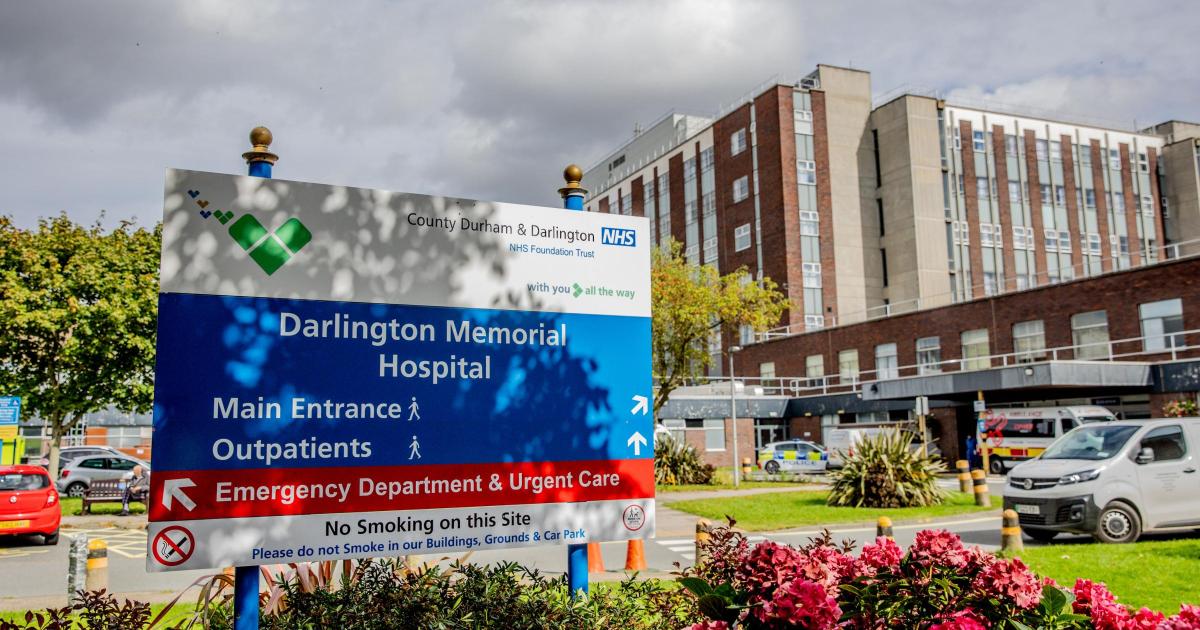
The trust has been rapped for its quality and safety of care after Care Quality Commission (CQC) inspectors turned up last December.
The trust, which provides services to around 650,000 people and employs 7,500 staff, has been downgraded from its well-led rating of good to inadequate.
An inspection into surgical services in October at the University Hospital North Durham, Darlington Memorial Hospital and Bishop Auckland Hospital also unearthed significant and serious safety concerns, with all three services branded “requires improvement”.
This included issues with safe staffing, escalation when people were deteriorating, record keeping, and learning from incidents.
The CQC said it didn’t always find out about safety incidents from the trust as required, but instead via tip-offs from the press and MPs.
The trust has been issued a warning notice for both this and its well-led inspection, where it was found to be in breach of regulations relating to good management and complaints.
Trust Chief Executive Steve Russell said: “We fully accept the findings of these reports and apologise where we have fallen short of the standards our patients, communities and colleagues rightly expect.”
A County Durham and Darlington NHS Trust sign (Image: NORTHERN ECHO)
Since the inspection, the trust said “significant work” has been undertaken to “strengthen patient safety, improve services and support staff”.
It said it accepts the findings and has already improved how concerns are handled, provided additional training, and reduced complaint backlogs so they are reviewed by executive leaders.
‘Blame culture’ and emergency bells
A lack of emergency call bells at the trust was one of the serious issues found in the inspection.
In the North Durham hospital, there were still no emergency alarms in nine of ten theatres.
Leaders also did not make sure there were enough suitably qualified, skilled, competent and experienced clinical staff to meet the needs of people and keep them safe from harm.
Staff didn’t always assess, manage and monitor risks to people’s health and safety or mitigate them where they were identified to protect them from harm.
The trust didn’t always make sure people could access the care, support and treatment they needed, when they needed it.
The University Hospital of North Durham (Image: NORTHERN ECHO)
The investigation found that the service did not have a “positive safety culture” with ongoing concerns about behaviours at all levels.
Staff shared concerns about how people communicated with each other and described examples of unkindness they had experienced and witnessed.
Staff and managers – some of whom were concerned about burnout and low morale – told inspectors that they felt the trust was over focused on finance, clinical staff voices were not heard, and concerns were not listened to.
Some described it as a culture of “turning a blind eye” and felt that there remained “pockets” of individuals whose poor behaviours were enabled.
Complaints were also not reviewed and acted on in a timely manner, with 67% remaining open from the period of July 1 to September 30, 2025, during the inspection.
There was a “serious patient safety” incident in the North Durham theatre in December 2024 – and inspectors found 11 months after the incident, there were still seven outstanding safety actions to be completed.
Darlington Memorial Hospital Picture: SARAH CALDECOTT (Image: SARAH CALDECOTT)
“This meant the action plan and its progression was not communicated effectively, as managers and staff were not fully aware of all the safety actions and when they were due to be completed”, the report said.
Some families told inspectors that they did not always feel fully informed and involved in decisions regarding care and treatment of their relatives.
The trust didn’t always inform people as soon as possible when a safety incident occurred to offer an honest explanation of what had happened and issue a clear apology.
On several occasions, the CQC became aware of these through the media or parliamentary contacts rather than being notified directly by the trust, which it is required to do.
The trust had a policy for informing families of a safety incident but these were not always identified in a timely manner – like the ongoing incidents relating to the current breast cancer scandal, where a separate investigation remains ongoing.
The trust continued to “significantly under-perform” against the NHS England diagnosis standard and the cancer 62-day waiting time standard.
Bishop Auckland Hospital (Image: Picture: THE NORTHERN ECHO)
The ongoing investigation has highlighted that the trust did not always clearly demonstrate that women were enabled to make informed choices regarding breast cancer surgery and treatment options, based on best practice guidance.
While the service treated people with kindness, empathy, and compassion, it did not always ensure patients’ privacy and dignity were respected.
For example, in North Durham, potential privacy risks were not always mitigated – with one patient saying they felt “on show” in temporary escalation space (TES) beds.
There were some positives, with the service working well across teams and services to support people and help them to lead healthier lives.
The service also supported people to manage their health and wellbeing to maximise their independence, choice and control.
The CQC also rated its community health services for adults as good, reflecting the “high-quality care, strong teamwork and positive patient experiences” delivered by staff.
Trust apologises
Trust chief executive Steve Russell apologised for where it had fallen short – saying it was important the trust was “open and honest” about where improvements are needed.
Russell, who took over as CEO in September last year, said a tremendous amount of work to improve has already taken place.
County Durham and Darlington NHS Foundation Trust chief executive Steve Russell (Image: CDDFT)
“We have strengthened leadership, introduced safer staffing arrangements within surgical services, improved how we listen to and learn from patients and families, and strengthened oversight of quality and patient safety”, he said.
“While there is still more to do, we are already seeing progress in a number of areas.
“I was particularly pleased to see community health services for adults rated ‘good’ across all areas. The reports also recognise the compassion, professionalism and dedication shown by colleagues across our organisation every day.
“We remain focused on delivering the improvements identified, being open and transparent about our progress, and making sure those improvements are felt by our patients, communities and colleagues.”
Chris Storton, CQC deputy director of hospitals in the North East, said it had been informed that improvements were being made.
Regarding the report, he said it was concerning staff didn’t feel listened to and that some were “actively discouraged” from speaking on concerns – and that it was critical this was addressed.
However, he said the trust demonstrated good partnership working through its involvement in the North East Combined Authority project to improve transport and bus links to hospital sites.
“We have shared our findings with the trust’s management, who are aware of the improvements needed, including addressing the organisation’s culture”, he said.
“We will continue to monitor the trust, including through future inspections, to ensure people remain safe while improvements are made.”