
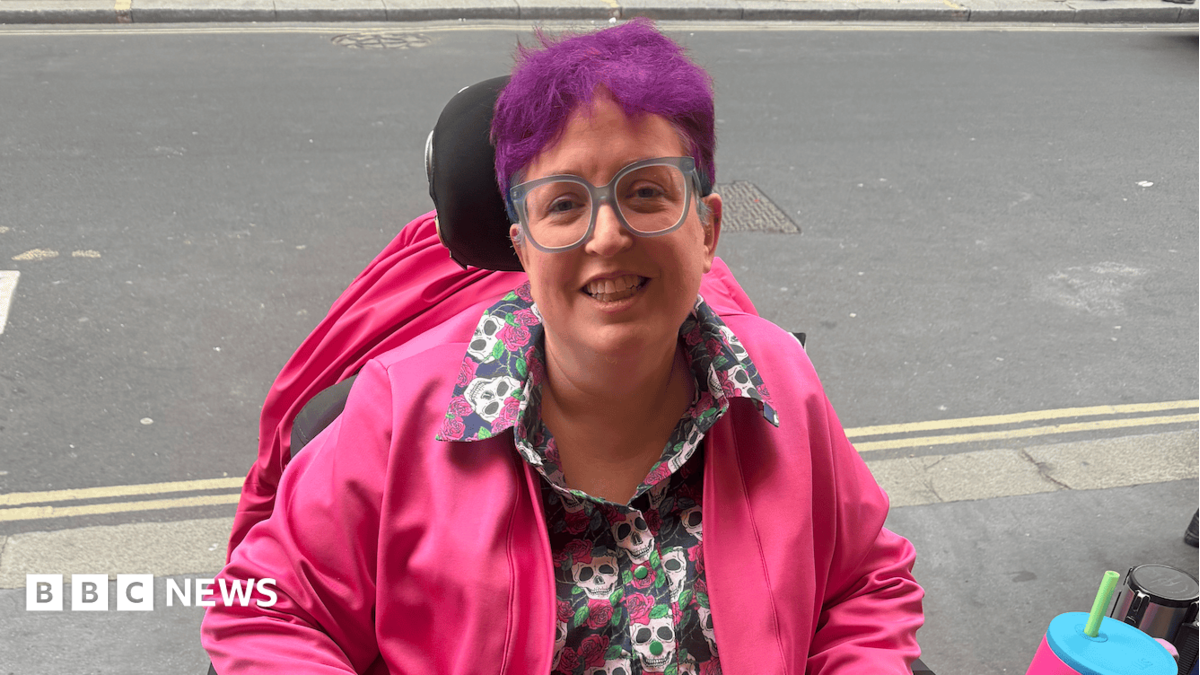
By the time disabled social worker Vikki Walton-Cole arrived at court, she was already “in pain and unable to walk”.
She was not then a full-time wheelchair user. But as the court had no on-site or nearby parking, it was a “massive effort” to walk from much further disabled parking, she told BBC podcast Access All.
When she then discovered the courtroom was only accessible by stairs, she “burst into tears”.
“That’s obviously not a great way to arrive at court as the professional.”
Walton-Cole says access issues like these were a “massive factor” in her decision to leave social work “because there’s just too many barriers in the court system”.
The BBC has heard that inaccessible courts have led to a number of issues for disabled people, including jurors feeling vulnerable, and lawyers having to join cases remotely despite being metres from the courtroom.
Under the Equality Act, courts must provide “reasonable adjustments” to those with disabilities.
A HM Courts and Tribunals Service (HMCTS) spokesperson said: “We are working closely with disability groups to reduce the barriers disabled people face when accessing justice.”
Have you been affected by the issues raised in this story? Contact Kateryna at: accessall@bbc.co.uk