
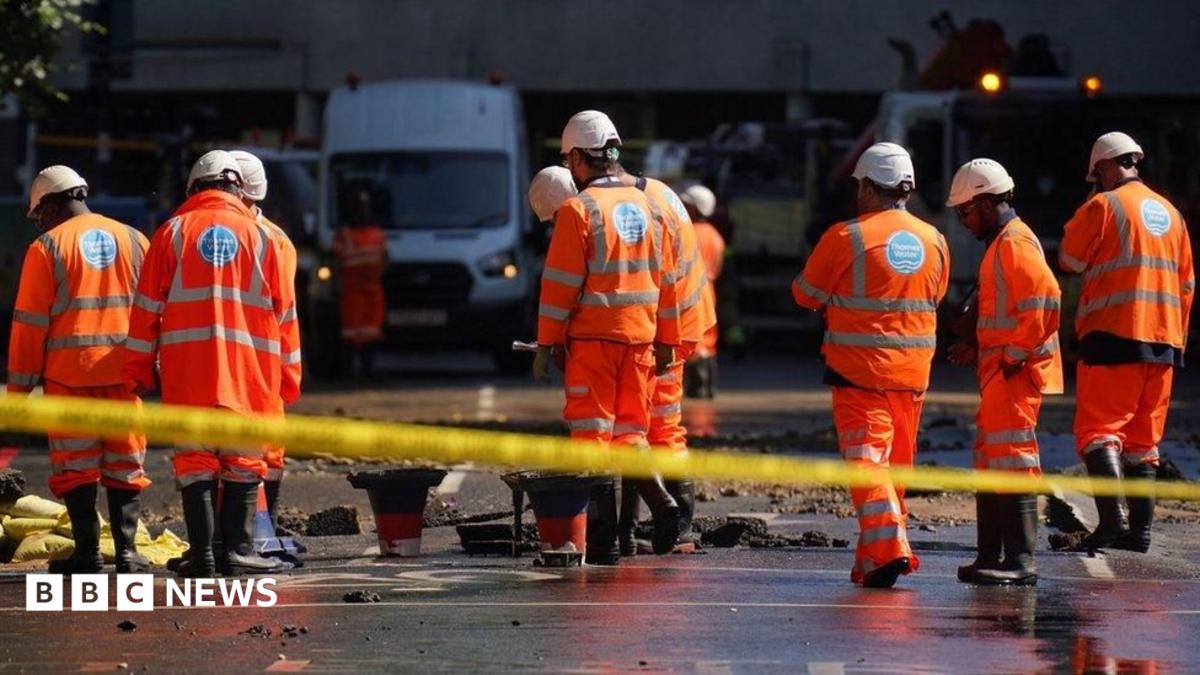
The government has previously said it would prefer “a market-based solution”, but would step in “if that were to become necessary”.
The form of temporary nationalisation on the table is known as a special administration regime (SAR), which ensures vital companies such as water, are kept running by government appointed managers.
If the company does go bust, households will still have drinking water and sewerage services.
A spokesperson for Thames Water has previously told the BBC that a SAR would create problems rather than solve them.
“SAR would delay urgently needed improvements, increase costs, transfer risk and potentially create operational disruption,” the spokesperson said.
Its lenders, London & Valley Water, previously warned “nationalisation is not the right answer”.
“It will only restart the process of fixing Thames Water, require billions of pounds of government financial support, increase uncertainty for employees, put pensions at risk, destabilise the supply chain, and make it harder to deliver the improvements customers deserve,” a spokesman added.
Earlier this year, a company which wanted to buy Thames Water, CKI Holdings, argued that customers would be better served if the utility was allowed to collapse, so that they and others could submit new bids to revive the debt-ridden company.
The firm’s co-managing director Andy Hunter said CKI, which already owns 75% of Northumbrian Water, had a proven track record in owning critical utilities.
“I think the next owner of Thames Water should be an experienced, credible, long-term focused operator with the expertise and the resources to fix Thames Water,” he said.
“But we seem to be sleepwalking into a conclusion that will result in the next owner of Thames Water – having, doubtless, many attributes – having none of these attributes.”
In July last year, the boss of Thames Water, Chris Weston, said the company was “extremely stressed” and that it would take “at least a decade to turn around”.