
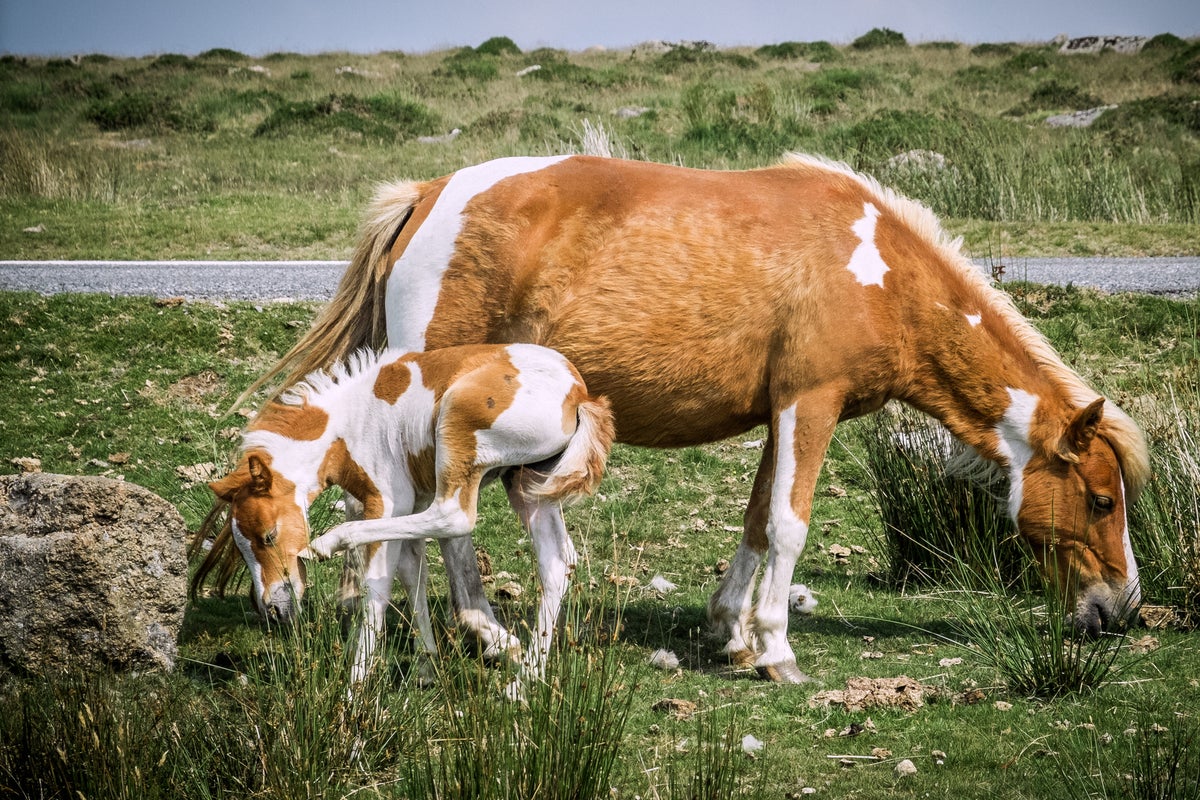
Dartmoor is perilous. When, in The Hound of the Baskervilles, Dr Watson looked out over the Great Grimpen Mire, he was horrified to see a stranded pony sucked to its death. Today the threat to Dartmoor’s wild ponies comes from another quagmire – officialdom. Natural England, the official body which is supposed to look after the interests of rural England, is ordering farmers in the national park to cut back on winter grazing in order (it argues) to protect the environment. Campaigners say that 90 per cent of the 1,000 or so wild ponies which live on the moor will be culled as a result.
Natural England’s staff hate being branded pony killers. They say that they are flexible people who just want the best for Dartmoor’s landscape which in parts (they claim) has been wrecked by high numbers of sheep, cows and ponies. If taxpayers are to go on giving grants to protect, then it’s only fair that farmers who get them stop doing damage, they add. If farmers choose to get rid of ponies rather than more profitable sheep and cows then “that is their choice”.
And that’s the crunch. Natural England aren’t ordering the ponies to be shot. They say they have nothing against them. But they are creating conditions in which other people – the farmers who care for the pony herds – may soon have no choice other than get rid of them on Natural England’s behalf, to enforce its rules It’s a cruel version of the logic which has made the organisation whipping boy of builders and developers and country people, who say fixed rules produce absurd outcomes – the most notorious being the vastly expensive bat tunnel on HS2. Natural England’s chair, Tony Juniper, has struggled to shake off the body’s “blocker” image, and even he has conceded the £100m that was parcelled off for the kilometre-long bat shed “could have been put to better uses”.
In any case, we have to follow the science, Natural England say, which sounds right – except that, as is always the way, there’s a debate about where the science leads. An independent report about the management of Dartmoor, commissioned by the government in 2023 and backed by a panel of scientists and land management experts was clear. “Dartmoor’s pony population is invaluable for conservation grazing and genetically important,” it found. “Ponies and cattle should not be linked for the calculation of stocking rates and NE should not take actions likely to result in a reduction in their numbers.”
So why is Natural England now asking for the opposite? There’s an unresolved debate about how to manage moorland. Some scientists who have studied Dartmoor say its problems come as much from too little grazing, not too much: thick, dull Molinia grass has swept across the area, swamping all other plants. Slashing the numbers of grazing ponies might make this worse. Or maybe it won’t as Natural England’s science team have decided. Even the organisation’s staff say there’s a need to try out different approaches and that perhaps different forms of grazing might not require sharp reductions in numbers after all.
Perhaps. But by the time any of this is agreed – if it ever can be – the ponies could have been destroyed. They might not be the only victims either. The Tory leader Kemi Badenoch has piled in this week to blame “total madness from another unaccountable quango”. State bodies like Natural England trade in a world of targets and acronyms and complex grants and are bewildered when this crashes into cultural and emotional forces. Getting into a fight over the future of much-loved ponies based on disputed assertions about science in contradiction of a government review which was supposed to sort things out, is exactly the sort of thing which gives fuel to its critics. The organisation, which does a lot of valuable work, is running out of friends. It should stop before it loses more.