
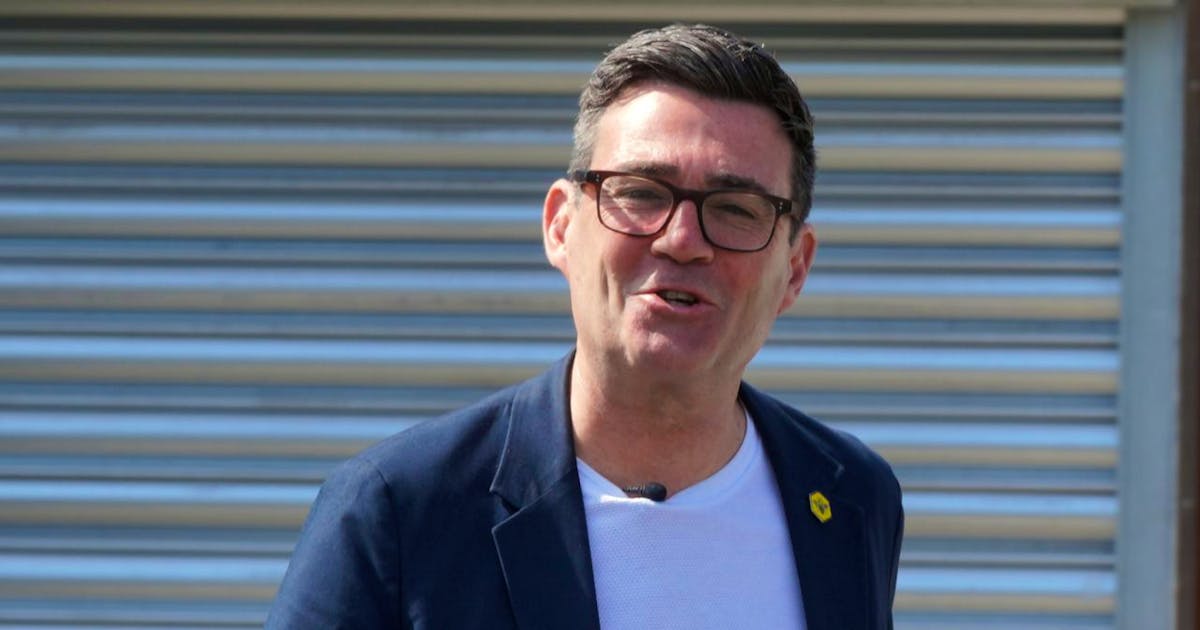
ARCHIVE – Andy Burnham arrives at the kickoff of his campaign as the Labour candidate for the by-election in Makerfield, England. Photo: Ian Hodgson/AP/dpa
Keystone
Following the by-election in the Makerfield constituency, British Prime Minister Keir Starmer faces the threat of political ruin more than ever. As the vote count revealed overnight, Starmer’s potential internal party challenger, Andy Burnham, won the district’s vacant parliamentary seat. As an “MP” (Member of Parliament), Burnham can now force the prime minister into a leadership election—and, with the backing of the ruling Labour Party, unseat him.
This could be the “turning point,” Burnham said in his early-morning speech. “I will give everything I have to ensure that the name Makerfield is forever synonymous with bringing about the change this country needs—and bringing back something we’ve lost: hope, hope for the future.”
In this small constituency, which normally has little to do with the big politics of Westminster, Burnham received 24,927 votes—nearly 10,000 more than Robert Kenyon (15,696), the candidate for the right-wing populist party Reform UK. Voter turnout was 58.78 percent; none of the other candidates received more than 3,200 votes.
Burnham is stepping down from his post as mayor of Greater Manchester to take the Labor parliamentary seat. “There won’t be a second chance, but now is the opportunity to build a new politics based on unity and hope from tonight’s result,” Burnham said. The election winner did not mention Starmer in his speech.
London Has Been Deep in Crisis for Months
The incumbent prime minister has been under immense pressure for months, and several ministers have already turned their backs on him—most recently the influential Defense Minister John Healey. Headlines such as “Starmer on the Brink” or “Chaos Returns to Westminster” have been appearing in various forms in recent weeks.
The situation had escalated in particular due to Labour’s heavy losses in the local and regional elections in England, Scotland, and Wales in early May, with Reform gaining ground. However, Starmer has so far ruled out resigning or even drawing up a timeline for an orderly exit. The prime minister has repeatedly pointed to his landslide election victory in the summer of 2024 and his mandate to lead the country out of the crisis.
How is the race for the Labor Party leadership unfolding?
Critics’ hopes for a by-election victory by Burnham were correspondingly high. The charismatic 56-year-old is considered a favorite of the party’s moderate-left wing. In Manchester, he earned a reputation as a down-to-earth doer with vision. Just under ten years ago, Burnham left Parliament after a failed attempt to become party leader. It is now considered certain that he will announce his next bid very soon.
To challenge Starmer, Burnham and other potential candidates need the support of 20 percent of Labour MPs—currently 81. This would be followed by a ballot among party members and other eligible voters. As the current leader, Starmer would automatically be on the ballot. Another potential candidate is Wes Streeting, who recently resigned as Health Secretary.
The leadership election, however, would not be settled within a few days—but would follow a set process that could drag on for weeks or even months. Because this process will naturally be accompanied by an internal party campaign, the chaos within Labour plays right into the hands of its opponents in Parliament. Reform, the party led by Brexit champion Nigel Farage, has been stoking anti-government sentiment for months. Farage himself has made no secret of his desire to become prime minister. The next regular House of Commons election is not scheduled until 2029.
Why Makerfield of all places?
The fact that a constituency in northwest England, of all places, has suddenly become so crucial to Britain’s future has nothing to do with the region itself. The by-election was triggered by the resignation of the incumbent Member of Parliament, Josh Simons, who stepped down following the disastrous local and regional elections to allow Burnham to return to Westminster and initiate a leadership change within the Labour Party.
This carried the risk that Reform might win the election—but in the end, Starmer’s opponents’ strategy paid off. On election day Thursday, the district was teeming with campaigners from all parties. According to media reports, Farage went door-to-door to encourage people to vote. Burnham also went all out and campaigned for himself in the final stretch.
According to observers, he didn’t win because he’s a Labour member—but because he’s a popular guy. When asked where they would place their mark on the ballot, residents of Ashton-in-Makerfield—the largest town in the constituency—often said: Burnham or Reform—but hardly ever Labour or Reform. “Hopefully Andy” was the motto of many—officially adopted by Starmer as well, who had to support his party colleague. But in doing so, he also strengthened his now-biggest challenger.