
The government’s review of personal independence payment (PIP) could lead to cuts in spending when it produces its final report later this year, work and pensions secretary Pat McFadden has told MPs.
Some politicians and journalists – although not Disability News Service – had suggested that the terms of reference for the Timms Review ruled out any reductions in PIP spending.
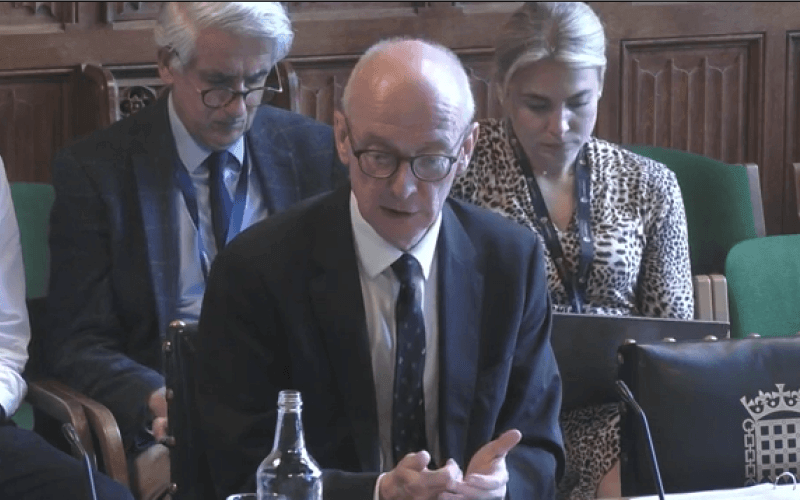
But McFadden (pictured) has now confirmed that he could order a cut to PIP spending when he responds to the review’s final report.
McFadden told members of the Commons work and pensions committee yesterday (Wednesday) there was “nothing to stop” the review from recommending reforms that would cut spending on PIP.
He said: “What we were saying in the terms of reference was we were sending a signal to the reviewers not to come forward with a big increase in cost package.
“There’s nothing to stop them coming forward with measures that reduce costs, but we didn’t want them to come forward with a review that simply said, ‘let’s pay much more into the system.’”
McFadden also strongly suggested that the government wanted to reduce the number of PIP recipients who experience mental distress or are neurodivergent.
He said that claimants’ conditions had “changed over recent years… and in particular there has been in increase in conditions like anxiety, depression, neurodiverse conditions and so on.
“Is this benefit fit for purpose in the way it is designed in dealing with that variety of conditions? And I think that’s a very interesting question for the reviewers.
“When I went to speak to them a few months ago in one of our sessions, that’s the question I put to [them to] consider.”
He said he expected an interim report from the review to be published before the summer recess next month.
Liberal Democrat committee member John Milne told McFadden there was a “strong media narrative at the moment that welfare spending is out of control” when official statistics showed that was not the case.
He said: “Welfare spend as a percentage of GDP* is about where it was under the days of Maggie Thatcher, who was not known for her welfare generosity.”
Milne said about half of the rise in PIP claimants was due to the rise in the state pension age and other factors.
He asked McFadden: “Do you think there’s a responsibility on government to put out a more balanced view of the statistics, because if you think the problem is twice as big as it is, your policy response might overreach by twice as much as it needs to?”
But McFadden declined to offer such reassurance, telling Milne that the proportion of GDP spent on social security had risen by about one percentage point over “six or seven years”** which was “quite significant”, and that spending on health and disability benefits had risen sharply over that period.
He appears to have produced the one per cent figure by comparing the forecast for spending in 2026-27 with a year, 2019-20, that marked the conclusion of years of Conservative-led government attacks on the social security system.
McFadden said: “Cost is a consideration. Cost isn’t a dirty word. We have to look at the cost of the system.
“I am aware of the cost of the system. I am aware of these steep increases in health and disability benefits that are often quoted.”
*Gross domestic product, the size of the country’s economy in a particular year
**The proportion of GDP spent on social security, according to the Office for Budget Responsibility (OBR): 2010-11: 12.0%, 2011-12: 12.0%, 2012-13: 12.1%, 2013-14: 11.7%, 2014-15: 11.5%, 2015-16: 11.3%, 2016-17: 10.9%, 2017-18: 10.5%, 2018-19: 10.3%. 2019-20: 10.2%, 2020-21: 11.9%, 2021-22: 10.4%, 2022-23: 10.0%, 2023-24: 10.9%, 2024-25: 10.7%, 2025-26 (latest OBR forecast): 10.9%, 2026-27 (latest OBR forecast): 11.2%, 2027-28 (latest OBR forecast): 11.1%, 2028-29 (latest OBR forecast): 11.0%, 2029-30 (latest OBR forecast): 11.1%, 2030-31 (latest OBR forecast): 11.2% [see chart 5.2, Economic and fiscal outlook – October 2024 and table 4.1, Economic and Fiscal Outlook – March 2026]