
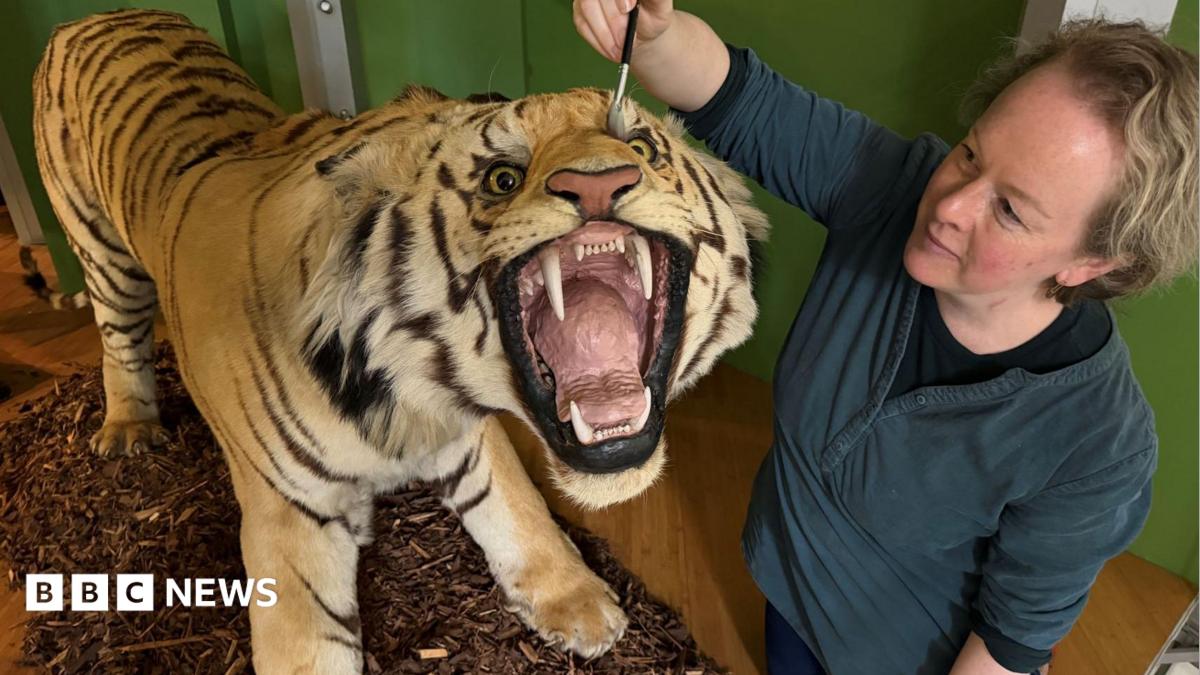
Curators Clare Brown and Sarah Burhouse spent several days in the museum’s Life on Earth gallery, working to preserve some of their most historic natural science specimens.
Burhouse, Leeds Museums and Galleries’ curator of natural sciences, said such exhibits were prone to damage from clothes moth and the buried carpet beetle.
“People often panic if they collect taxidermy and they see pests such as these and think there’s an infestation.
“But actually, these are just creatures that live in our environment so it’s nothing to worry about.
“But we do need to keep on top of these things, particularly because our collection is susceptible to damage from them.”
The curator said their inspections of specimens had uncovered some damage to the tail of the male Huia which had “been nibbled a bit, probably by clothes moths”,
She added: “We think this is historical damage though rather than something new.”
Another taxidermy mount to receive attention was Grandma the panda – part of the first group of live giant pandas to arrive in the UK in 1938,
Captured near Weizhou village in central China, she reached Britain in 1938 but died two weeks later from double pneumonia.
After her death, her remains were distributed to museums around the country for research, with Leeds receiving the skin of Grandma – named such because she was the oldest panda in the group.