
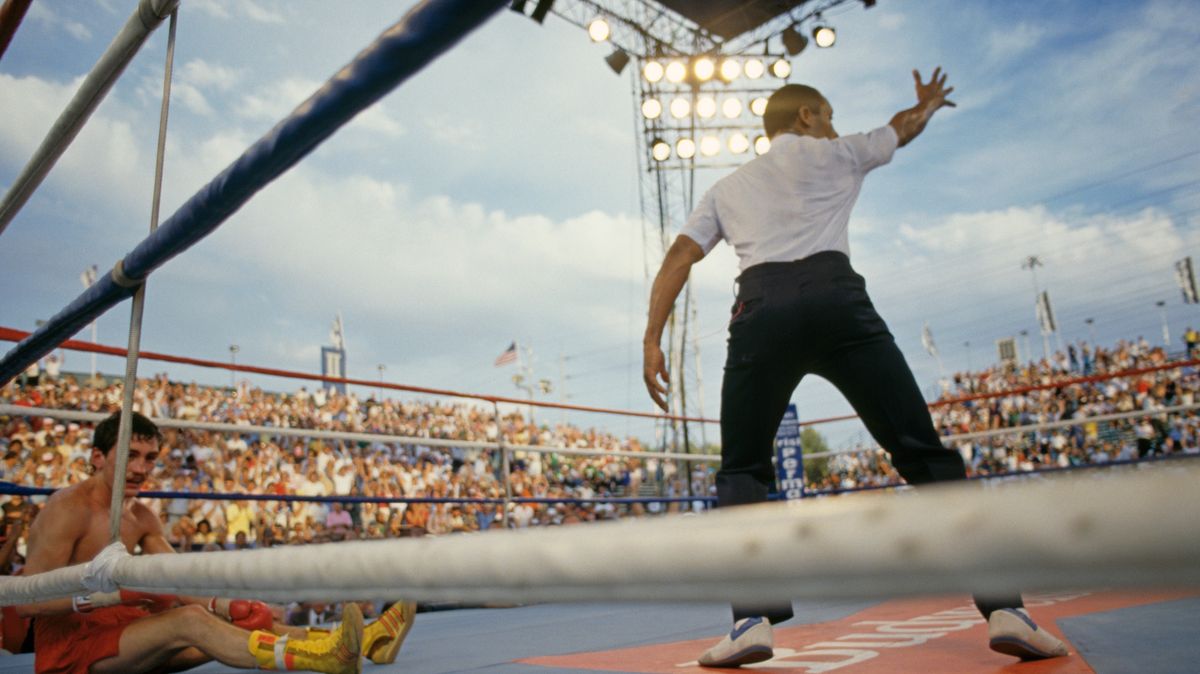
It is hard to believe, but on Tuesday June 23rd it will be a full four decades since the fight that shocked Irish boxing – the defeat of Barry McGuigan by Steve Cruz in a specially constructed outdoor arena in the carpark of Cesars Palace in Los Vegas.
McGuigan had won the WBA featherweight title by outpointing long serving champion Eusebio Pedroza in front of a crowd of 26,000 at the Loftus Road ground of Queens Park Rangers in London a year earlier and had then retained it with inside the distance wins over Bernard Taylor in the Kings Hall in Belfast and Danilo Cabrera in the RDS in Dublin.
The home fans had been catered for, now it was time to chase the American dream, but nobody had predicted that, in reality, it would turn out to be an American nightmare.
Cruz, a 22-year-old with a 25-1 record who five years earlier had won the Golden Gloves and been runner-up in the US Championships (facing Richard Savage in both finals) hadn’t even been in the frame until less than four weeks before the fight.
Original opponent Fernando Sosa, A 28-year-old Argentinian with a 43-3-3 record, had been scheduled to challenge McGuigan at the RDS the previous February but was forced to withdraw after breaking a finger in training and was replaced by Danilo Cabrera from the Dominican Republic. Sosa was the originally announced opponent but had to withdraw for a second time after being diagnosed with a detached retina in each eye and would never fight again.
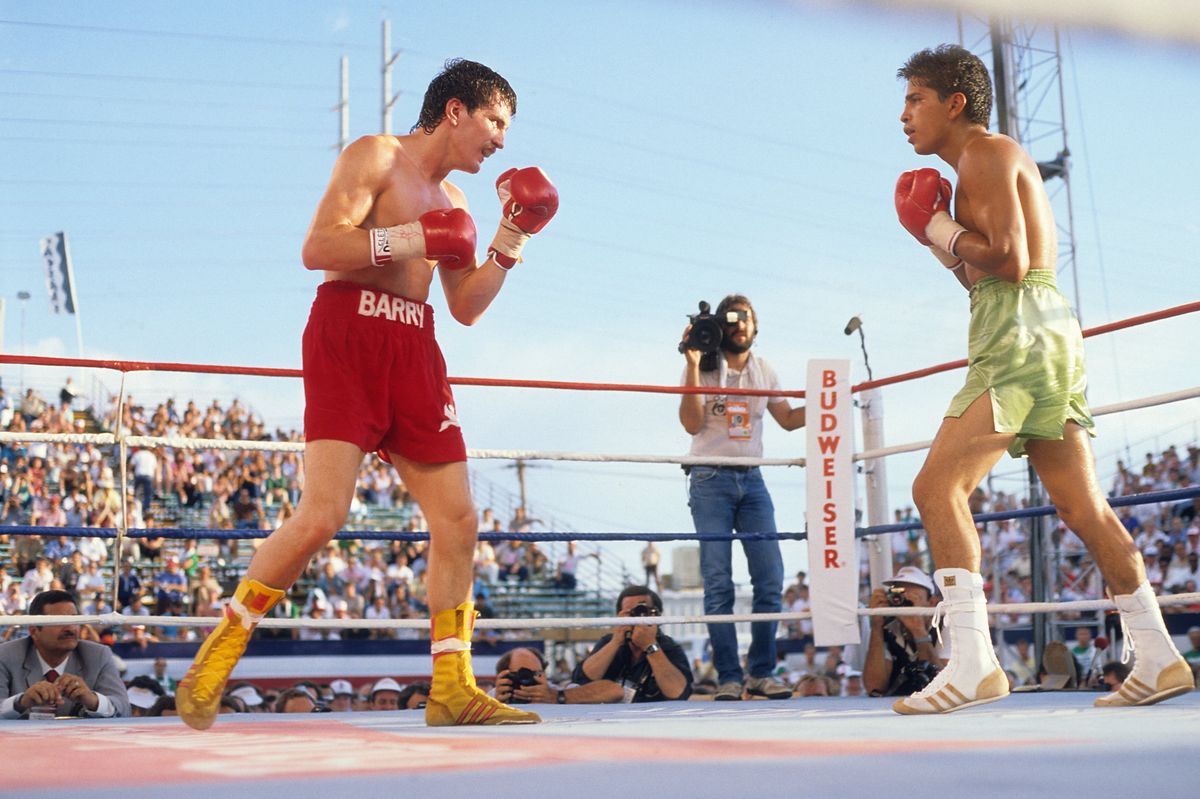
Barry McGuigan and Steve Cruz in Las Vegas in 1986(Image: Getty)
The show’s promoter Bob Arum provided the McGuigan camp with a quartet of possible replacements, all of them world ranked; Antonio Esparragoza from Venezuela at number one, Jose Marmolejos from Panama at number two, Antonio Rivera from Puerto Rico at number five and Cruz at number nine.
McGuigan’s manager Barney Eastwood opted for the latter on the basis that, on paper at least, he was the easier option. That was the first of several mistakes.
McGuigan’s record going into the ring was 29-1 with all but four of his wins coming inside the distance and his lone loss being a highly controversial eight round decision in his third bout, against Peter Eubanks in Brighton. Three fights and four months later McGuigan would stop Eubanks in the eighth round in the Ulster Hall.
Cruz’s statistics were rather less impressive. A dozen of his wins went the full distance and his lone defeat was catastrophic; he climbed into the ring at the Showboat Hotel & Casino in Las Vegas in March 1984 with perfect 19-0 record, only to be floored twice and stopped in 141 seconds by a relatively obscure Mexican, Lenny Valsez.
The machinations began even before the fight; the McGuigan camp had hoped – and campaigned – for a neutral referee but the Nevada State Athletic Commission insisted on an American as the third man; the choice of Richard Steele would prove significant.
McGuigan’s fight was scheduled to start at ten minutes after six on that Monday evening (it was just ten minutes late) but, initially, McGuigan and Cruz weren’t even supposed to be in that timeframe.
Tommy Hearns, who would stop Mark Medal in eight rounds in defence of his WBC light-middleweight title, was due to occupy the slot but had enough clout to get his fight postponed by an hour … and that from a man who, despite living in Detroit from the age of five, had actually been born in Grand Junction – just outside Memphis – in Tennessee.
Cruz, who had a 15-year-old wife, was born and raised in Fort Worth in Texas and had fought all but two of his previous 26 fights in either Texas or Nevada, so the heat obviously was not a factor for him.
Even when the fight started there was another stroke. Cruz was given the corner facing the sun which is more of an advantage that it sounds. It meant that during the intervals between rounds, his cornermen were in front of him, protecting him from the sun. Where was McGuigan during this? Sitting on his stool getting the back burned off him, that’s where.
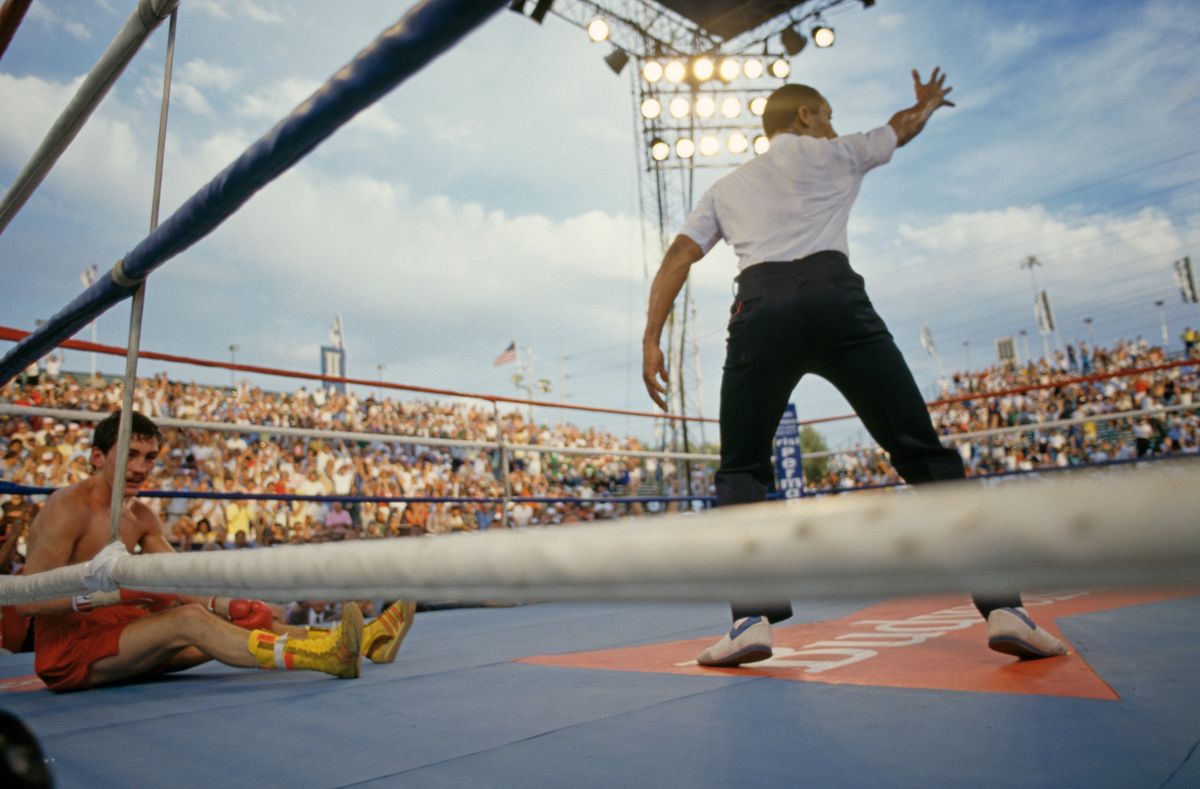
Irish boxer Barry McGuigan (left) on the canvas during his defence of his WBA world featherweight title against Steve Cruz of the USA, at Caesars Palace, Las Vegas, 23rd June 1986
For the first nine rounds of the fight (for the entirety of which the temperature in the ring exceeded 110 degrees and rose above 120 degrees for a time), McGuigan had a close but unanimous lead then, in the tenth, came the first disaster when Cruz had McGuigan on the canvas.
Two rounds later came another shock when referee Steele deducted a point from McGuigan for a low blow. “He might have been a wee bit easier on me; Cruz lifted my protective cup right out of its place with a low punch, but he got away with it.”
Then, in the 15th and final round, with McGuigan still ahead on the scorecards, came total disaster. Two counts and a unanimous decision for Cruz but only by a single point according to two of the judges. If only, if only Steele hadn’t deducted a point, if only one of the three knockdowns had been avoided, McGuigan would have won what was later named Fight of the Year by Ring (itals) magazine.
McGuigan, purely as a precaution, was ferried by ambulance the three miles to the Valley Hospital and detained overnight, but was still able to supply an initial reaction to his title loss.
“I have no complaints, he deserved to win,” he said. “My accuracy was a mile off. I’m not sure what I did wrong. You have your off nights, unfortunately this was one of them. That’s the way it goes. I might move up to junior-lightweight which is four pounds heavier.”
The next day, the strain in the relationship between fighter and manager – which had initially surfaced in the wake of McGuigan’s tenth and final round stoppage of former Commonwealth champion Charm Chiteule from Zambia in the Kings Hall in January 1984 – became evident when, separately, he and Eastwood spoke to the press.
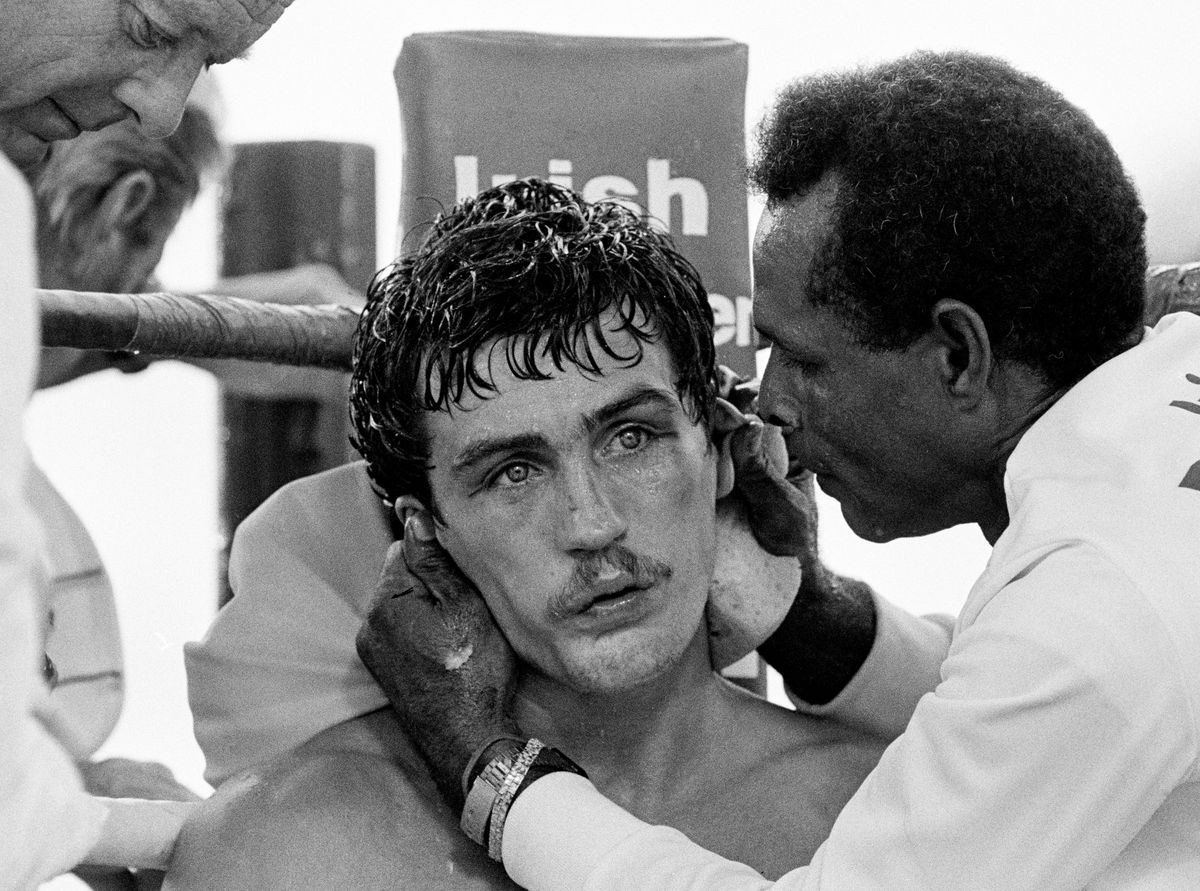
Irish featherweight boxer Barry McGuigan with his trainer between rounds during his world featherweight fight against Steve Cruz, Las Vegas, 23rd June 1986(Image: Getty Images)
“It was the wrong place at the wrong time of year, at the wrong time of day,” he said.
“The heat was incredible. Had it been in winter time, it might have been okay, or even if it was later in the evening when it had got cooler.
“I was talking to a man in hospital who is here five years, and he is still not acclimatised, but let me say that Steve Crux is an excellent fighter. I don’t want to take away from him in any way. I did not perform well at any stage. I was slow and, from half way on, my feet were killing me.
“We have gone over this a thousand times. I didn’t like it from the beginning. I didn’t like the trip – it was too severe, too tiring, too far away from home, and it takes too long to acclimatise.
“You can’t breathe, and my feet were blistering very badly during the fight, I was beaten fair and square, but I slowed down dreadfully in the second half of the fight. It certainly has affected my desire to box on.
“It’s a hard sport, and I’m sure professional boxers out there will tell you not just the fighting, it’s the build up to the fight; it’s getting up in the morning wanting to train and train hard. I always wanted to train. In fact, I was always my worst enemy in overdoing things.
“The one thing I am worried about now is maybe I have lost the willingness to train and get up in the morning and training in the gym every day. I hope to make up my own mind one way or the other within the next six months,” said McGuigan.
Eastwood would have none of the sun factor. The sun didn’t cost McGuigan the fight, the count in round ten did.
“When he looked like stopping Cruz, he himself got caught with a sucker punch and down he went,” he said.
“From that point on his legs were never the same and it was hard to motivate him. He never got back into the fight after that, though he did win a couple of rounds, the fact that he lost a point for a low blow probably cost him the fight.
“In the final round all he had to do was hold his own, stay on his feet and he would have got the decision. The heat had absolutely nothing to do with it.
“The punch in round ten did all the damage. McGuigan was having a field day up until the tenth round and when Barry hit him in round ten it looked all over and Barry then went in to finish him only to be caught with two shots and down he went,” said Eastwood.
Cruz, after getting $20,000 for a split decision non-title win over Roger Arevalo in Forth Worth the following November, would lose his crown in his first defence when his mandatory challenger, Antonio Esparragoza from Venezuela, stopped him with a dozen seconds remaining in the fight at the Will Rogers Coliseum in Fort Worth in March 1987.
Five years later, by which time his record had fallen to 35-6, Barney Eastwood resurrected him as a challenger to WBC champion Paul Hodkinson at the Maysfield Leisure Centre in Belfast. Dropped in the first and again in the third, he was rescued by Italian referee Rolando Barrovecchio at 1:05 of the latter session.
Sign up to our free sports newsletter to get the latest headlines to your inbox