
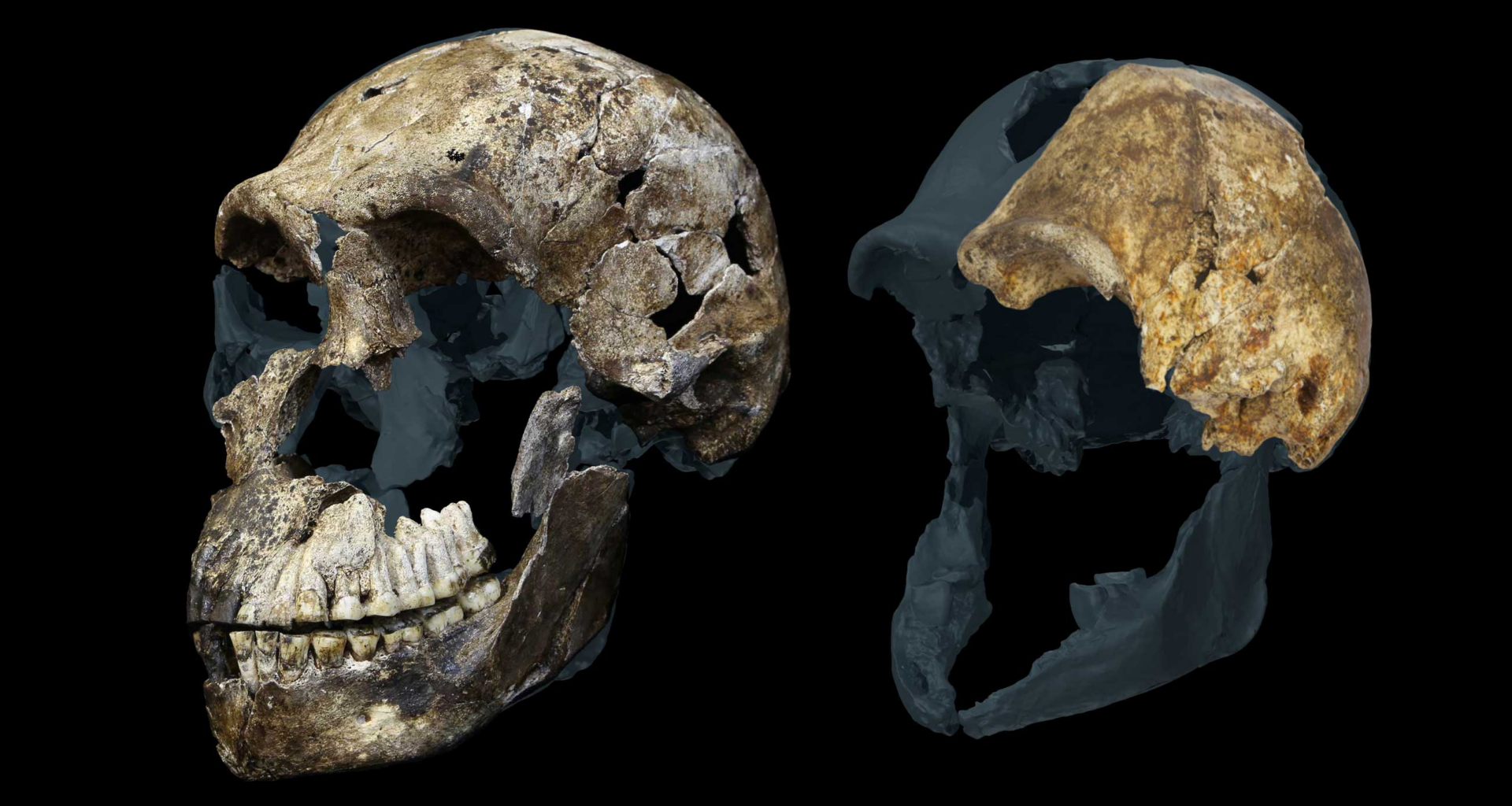
For the first time, archaeologists have analyzed the genetic material of Homo naledi, a mysterious 300,000-year-old relative of modern humans discovered deep in a South African cave system. What they found is unique in human evolution studies: Every skeleton known from the species is female.
“I think it is fair to say that they surprised us,” Lee Berger, a National Geographic explorer-in-residence, told Live Science in an email, but H. naledi “has always been an enigmatic discovery.”
You may like

A partial jawbone with teeth from Homo naledi lies was found in the Rising Star cave system.
(Image credit: Mathew Berger / Rising Star Program)
“An already weird hominin”
What to read next
Other hominins in South Africa

Study lead author Palesa Madupe has pioneered techniques to extract proteins from fossils.
(Image credit: Alberto Taurozzi / Rising Star Program)
What does sex change?
Madupe, P.P., Taurozzi, A.J., Koenig, C., Patramanis, I., Munir, F., Dickinson, M.R., Mackie, M., Troché, G., Parker, G., Kyriakidou, P., Mahoney, P., McFarlane, G., Zipfel, B., Cox, J., Penkman, K., Schroeder, L., Ackermann, R.R., Olsen, J.V., Hawks, J., Berger, L., Cappellini, E. (2026). Proteomic analysis of dental enamel from 20 Homo naledi individuals shows no male markers. Cell. https://doi.org/10.1016/j.cell.2026.05.044