
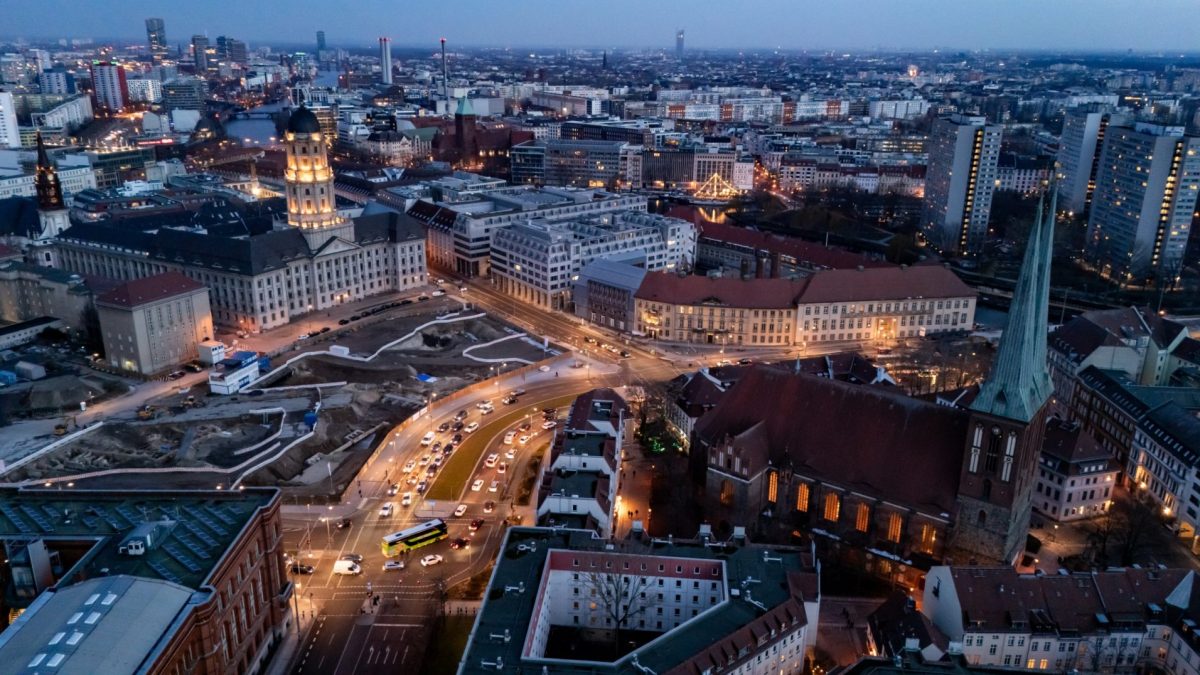
Working until 70 and losing the right to collect your pension early are among the changes Germany is considering as it tries to stop its retirement payment system becoming unaffordable.
An expert commission has recommended gradually raising the retirement age in line with life expectancy, tightening access to early retirement, and introducing compulsory retirement savings invested through a central fund.
The proposals are designed to reduce pressure on a system that relies heavily on today’s workers funding today’s pensioners.
Shorts
Scroll to previous short
Scroll to next short

The feeling of dread that the weekend is over is all too familiar.
Here, psychologists, career consultants and sleep experts give their best advice on how
to beat the gloom that the
work week is looming…
 (Photo: Getty).
How to beat the Sunday scaries
Pave the way on Friday
Psychologist Maria-Teresa Daher-Cusack says to wrap up tasks and not to leave big or difficult things for Monday. And write a to-do list for the next week so you know what to expect when you return after the weekend.
 Young man practicing meditation in nature at sunrise – stock photo. (Photo: Getty)
 Working from home is being blamed by some councils for the rise in fraudulent ‘polygamous’ working (Photo: Moment RF/Getty)
Get outside early
Doctor Naheed Ali says getting out on a Sunday morning – not sleeping late – helps regulate the circadian rhythm that can become skewed over the weekend.
How to avoid Sunday scaries
On Sunday spend time away from technology to allow yourself a personal reset away from doom scrolling.
 Relaxing with dog on sofa – stock photo. (Photo: Getty)
Rebrand your Sunday evenings from a daunting time to relaxing. Career consultant Victoria McLean goes out for dinner or reads something unrelated to work.
She also doesn’t check her inbox on a Sunday night as it can begin the dread.
How to beat the Sunday scaries
 Sleep tourism in hotel. Exhausted woman sleeps sweetly in bed in the morning – stock photo. (Photo: Getty)
Sleep well
Put yourself in the best position to rest by avoiding large meals, screens and caffeine.
Structure your week
If possible don’t stack your Mondays with high-pressure tasks.
 Caucasian mid adult patient writing a diary while recovering in the hospital ward – stock photo. (Photo: Getty)
 Cheerful aged woman, senior intern waving, saying goodbye to her young colleagues while leaving office after first day at work – stock photo. (Photo: Getty)
Find the fun daily
Don’t just save joyful things for the weekend. On lunch breaks, try to do something you enjoy.
 (Photo: Getty).
Sometimes, you
need to listen.
If the Sunday scaries are constant, listen to them. If every Sunday fills you with dread and nothing seems to quell it it’s worth asking if it’s the job, the culture or the career itself. No one should spend half their weekend bracing for impact… ” says Victoria McLean
The UK has one of the most stable electricity grids in the world.
But no country’s energy system is 100 per cent secure and large-scale blackouts, although rare, are possible.
Here’s how to prepare, and what could happen, if we do have a blackout.

The immediate effects
If the UK’s power went down tomorrow, these are the ways it is likely to impact you first.
You’d get stuck in lifts, wherever you are in the lift shaft.
Trains would be stopped as the signals depend on electricity.
Traffic lights would stop working on the roads – leading to congestion or crashes.
Contactless payments are likely to fail.
Your Wi-Fi at home would stop working and communication becomes difficult.
Fridges and freezers will turn off – unless you have a standalone generator – and food will spoil over time.
Hospitals and water treatment works have their own backup generators so will keep going until their supply runs out.
How transport would be affected
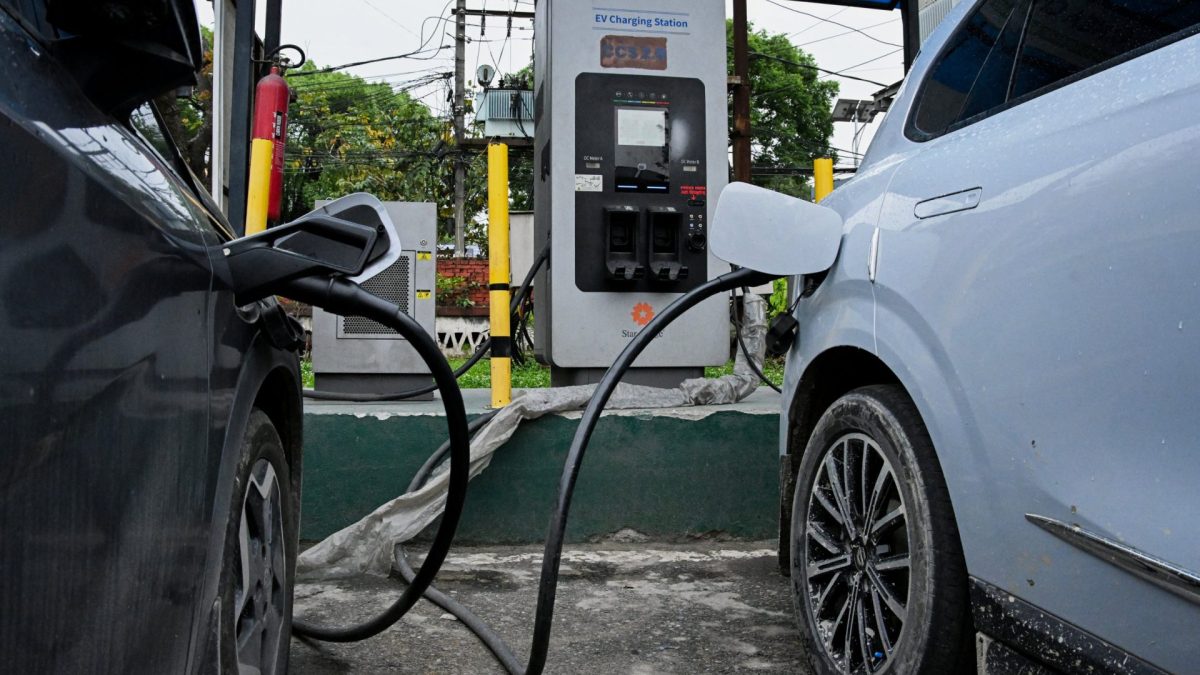 Caption: This photograph taken on April 29, 2026 shows people charging their electric vehicles at a charging station in Kathmandu. As global fuel markets reel from the Middle East war, motorists in Nepal are increasingly turning to electric vehicles, with high demand putting a strain on dealerships. (Photo by Prakash MATHEMA / AFP via Getty Images) / TO GO WITH ‘Nepal-Transport-Automobile-Energy’ FOCUS
Photographer: PRAKASH MATHEMA
Provider: AFP via Getty Images
Source: AFP
Copyright: AFP or licensors
For EV owners that are already on the road, Professor Keith Bell, who works in electricity planning, recommends that those with an EV with reasonable charge use it as a generator, like your own store of electricity.
In the case of the power system going down, petrol isn’t a totally safe option as queues at petrol stations could be huge and places are likely to run out of fuel.
The longer term effects
The longer the power takes to return the worse things are likely to get. In 2021 Storm Arwen physically damaged power lines across the UK.
 Without nuclear to take the strain, that exposure to gas is costing us dear (Photo: Catherine Falls Commercial/Getty)
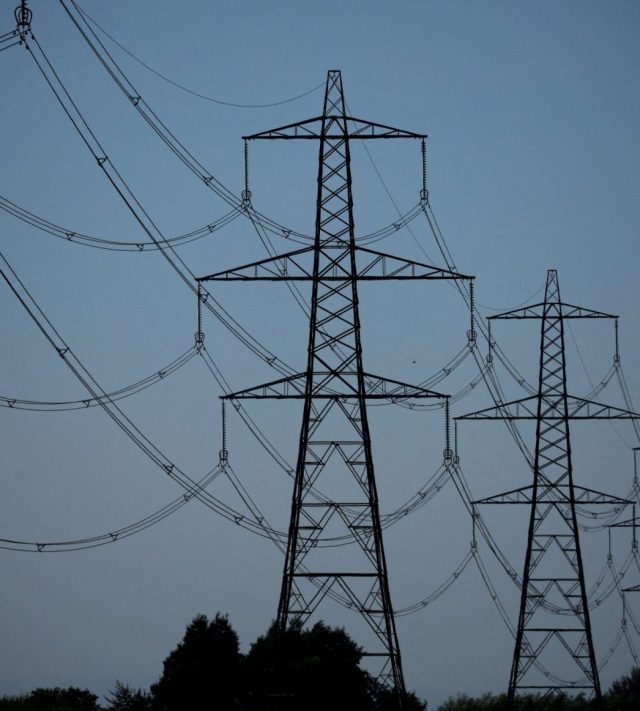 Caption: FILE PHOTO: A row of electricity pylons is seen near the Frodsham on shore wind farm in Frodsham, Britain, September 5, 2023. REUTERS/Phil Noble/File Photo
Photographer: Phil Noble
Provider: REUTERS
Source: REUTERS
During the 1977 New York blackout, which lasted 25 hours, there was civil unrest, resulting in widespread looting and arson, although intense heatwaves are thought to have exacerbated the situation.
Things to buy now to prepare
 The Russian state-owned Sputnik news agency took over the BBC’s radio frequency in Lebanon (Photo: Getty)
Battery radio
To get updates during a power cut – a car radio can be used, but in severe weather it might be safer to stay inside.
Bottled water
A minimum of 2.5-3 litres of drinking water per person per day is recommended.
 Caption: Plastic bottle with clean water on a blue background.
Photographer: SimpleImages
Provider: Getty Images
Source: Moment RF
 A Cuban rides his bike during a nation wide blackout in Havana on 21 March (Photo: Yamil Lage/AFP/Getty)
Wind-up torch
The Government recommends opting for torches over candles, for safety reasons.
How to prepare
A blackout is unlikely but we should make small changes.
If possible, don’t let your petrol tank run down to almost empty. Keep it over half full so you’re never caught short.
Always have a portable power bank, and spare batteries, to charge your phone and other essentials.
As card machines could fail, keep some cash at home.
To keep yourself distracted and entertained, keep board games and a pack of cards handy to play.

Eight easy ways to stop
your child spending summer glued to their devices
Not all screen time is bad
Using screens in a way that benefits your child’s development is key and balancing educational content and entertainment with offline activities ensures a well-rounded routine.
DR GUMMER

How to keep your kids off screens

Outdoor activities
For younger children, try scavenger hunts, garden games and nature walks. For older ones, hikes
and biking trips.
Create a schedule
Designated screen-free times helps children develop a routine that balances screen use with other activities.
 Caption: Mid adult man with eyeglasses sitting on a comfortable sofa at home, thoughtfully writing notes in a small notebook while natural sunlight illuminates the room
Photographer: Milan Markovic
Provider: Getty Images
Source: E+

Family game nights
It’s an excellent way
to bond and develop critical thinking skills.
How to keep your kids off screens
Creative hobbies
Getting creative, through drawing, painting or model construction, enhances cognitive skills and offers an alternative to screens.


Social interaction
Arrange playdates or group activities with friends, or for older kids try an overnight camping trip in the garden.
How to keep your kids off screens
Lead by example
Showing that you value offline time encourages your children to do the same.


Have a reward
Implement a reward system where screen time is earned through positive behaviour.
Open conversations
Discuss the importance of balancing screen time with your children so they understand the reasons behind the rules.

Can following a particular diet
help prevent or delay dementia?
Some studies suggest so.
These are the eight brain-boosting foods registered dietitian Fareeha Jay
recommends people consume as part of a weekly diet…

Foods that can cut dementia risk
 Caption: A detail of cracked egg falling into the pan as woman holds egg shells in both hands.
Photographer: SimpleImages
Provider: Getty Images
Source: Moment RF
Eggs
They contain several nutrients thought to support brain health, including choline, vitamin B12 and iodine.
Coffee
Caffeine can reduce inflammation and
slow the degeneration
of brain cells.
 Barista hand making cappuccino Coffee with espresso machine in cafe – stock photo. (Photo: Getty)
 Cooking fruit and vegetables (Photor: GMVozd/Getty Images/E+)
Broccoli
It’s packed with antioxidants and high in vitamin K, which is essentially for healthy brain cells.
Fibre is overlooked in dementia prevention
 Caption: Cookie jar, tea, wine, nuts, books, lit candles and Christmas decorations on the table. Cozy Christmas hygge at home. Selective focus.
Photographer: Jelena990
Provider: Getty Images
Source: iStockphoto
To increase fibre intake, include wholegrains, nuts, seeds, lentils, and legumes.
Fermented foods also support brain health by improving the gut microbiome.

LIFESTYLE
4 min read
Foods that can cut dementia risk
 (Photo: Joff Lee/Getty Images)
Oily fish
Your brain uses Omega-3s to build brain and nerve cells – so a diet rich in them may slow age-related mental decline.
Walnuts
These improve heart health markers, which is linked to a lower risk of neurological disorders.
 Health professionals are nuts about nuts – with good reason!
 Supermarkets report increasing demand for blueberries (Photo: RHS/Guy Harrop)
Blueberries
They contain compounds which have been shown to improve blood flow to the brain, cognitive function, and memory.
The Mind diet
The diet aims to reduce dementia risk and the decline in brain health.
It was created in 2015 by Dr Martha Clare Morris and colleagues at Rush University Medical Centre and the Harvard Chan School of Public Health.
It encourages vegetables, berries, nuts, whole grains, olive oil, fish, beans, and poultry.
These foods contain nutrients that promote good brain health by reducing oxidative stress and inflammation.
 The Midlife MOT is open to all and covers three key areas: work, wealth and well-being (Photo: Westend61/Getty)
Feeling insecure at work
in your 50s? You’re not alone
The final decades of work
There’s this assumption about being put out to pasture… but now that we’re living and working longer, we have to challenge myths around ageing and remember that over-50s are a crucial part of the workforce…
LYNDSEY SIMPSON, AUTHOR OF AGE REBELLION AND FOUNDER OF 55/REDEFINED

The current situation
By 2030, almost half of all employees in the UK workforce will be over 50.
36%
Now one in three workers are over 50.
Yet more than a third of those between 50 and 69 believe that their age puts them at a disadvantage when they apply for jobs.
37%
The Age Without Limits study from 2024 shows that 37 per cent of workers between 51 to 70 felt badly treated in work because of their age.
The things to do, says Simpson
 More and more people are using AI for counselling (Photo: Oscar Wong/Getty/Moment RF)
Keep learning new skills
We need the same level of career planning in
our fifties as our twenties. It’s possible to reinvent yourself again.
Embrace technology
It’s nonsense that older people can’t pick up how to use new tech.
 Caption: John?r Bildbyr? AB
+46 8 644 83 30
www.johner.se
info@johner.se
sales@johner.se
Photographer: Johner Images
Provider: Getty Images/Johner RF
Source: Johner RF
Copyright: John?r Images/Lisa ?berg
 Caption: This is a photo of a woman clutching a pink piggy bank labelled pension. See PA Feature FINANCE Pension Pots. WARNING: This picture must only be used to accompany PA Feature FINANCE Pension Pots. PA Photo. Photo credit should read: Alamy/PA
NOTE TO EDITORS: This picture must only be used to accompany PA Feature FINANCE Pension Pots
Photographer: Alamy/PA
Provider: Alamy/PA
Source: PA
Think about money
Do you need a pay rise? Could you trade some of that money you earn, to work a bit less, and do more things you enjoy?
The things not to do
Become full-time childcare
Grandparenting on the horizon? If you don’t want to do childcare, have the conversation early – even before a child becomes pregnant – that you plan to continue working and love your job.
 Caption: Indoor image of thoughtful puzzled senior woman with gray hair in glasses looking at paycheck holding head in hand, upset with high rent charge, sitting at kitchen table in front of laptop
Photographer: shurkin_son
Provider: Getty Images
Source: iStockphoto
 Grandparents and granddaughter gardening together – stock photo. (Photo: Getty)
Accept redundancy too quickly
It’s going to be so much harder to get back into work if you don’t have a plan before you take that leap.
The things not to do
Rush into retirement
 Senior bed woman problem pain headache home elderly mature pain bedroom upset unhappy female caucasian adult relationship retirement old difficulty ache head sick migraine hangover sleep – stock photo. (Photo: Getty)
Everybody thinks early retirement is the dream but the reality can be different. There can be loneliness, lack of purpose and a sense of invisibility.

LIFESTYLE
5 min read
By November, UK food prices will be 50 per cent higher than they were at the start of the cost-of-living crisis
With that in mind, food editor Sophie Morris shares how she saves money on her weekly shop

Easy ways to save on the weekly shop
 Caption: NORTHWICH, ENGLAND – JULY 06: Whole chicken sit on display in a Tesco supermarket on July 06, 2022 in Northwich, England. The British Retail Consortium recently said food manufacturers and supermarkets are having to pass on some of the cost of soaring raw materials to consumers, leading to the price of basic goods throughout the UK rising at the fastest pace since September 2008. Fresh food prices increased by 6% in the year to June 2022 coupled with an increase in inflation, and fuel and energy prices to create a cost of living crisis. This is leading to millions of low-income households going without essentials items, falling behind on bills and taking on debt. (Photo by Christopher Furlong/Getty Images)
Photographer: Christopher Furlong
Provider: Getty Images
Source: Getty Images Europe
Avoid chicken breast
Boneless chicken thighs are all meat and a much tastier product.
Don’t plan everything
If you plan every meal all week, there’s no leeway for necessary last-minute changes of plan (or leftovers).
 Man Cooking By Woman Chopping Carrots In Kitchen – stock photo. (Photo: Getty)
 Governments are not all powerful when it comes to huge international forces like those increasing global food prices (Photo: Oscar Wong/Getty Images/Moment RF)
Shop alone
There are so many products that children want to fill the trolley with – all kinds of exciting eye candy. It’s cheaper to go alone.
Easy ways to save on the weekly shop
Consider a vegetable box delivery
Having a Riverford box delivery helps Morris avoid impulse buys and go to the shops
less – even though the box is pricey. “It is expensive, but of great quality and organic”.
 Milk and potatoes prices are expected to increases sharply later this year, say supply chain experts (Photo: Kate Wieser/Getty)
 Low carb, FODMAP diet food background with vegetables, fruits, smoked salmon, chicken fillet, greens, nuts, olives. Menu for healthy eating . – stock photo. (Photo: Getty)
Track your spending
It doesn’t need to be an elaborate spreadsheet but without some kind of metric, it’s impossible to spot where you
can or must make cutbacks.
Easy ways to save on the weekly shop
 The supermarket loyalty schemes vary in their generosity (Photo: Paul Childs/Reuters)
Look for yellow stickers
You can save plenty
over a year by never buying branded products at full price.
Take stock
Do a quick cupboard stocktake. You might find you already have three jars of one thing.
 Mid-Adult Couple Calculating Their Finances On The Laptop In The Kitchen – stock photo. (Photo: Getty)
 “Soft restrictions” aren’t infallible; we can always make the effort to get a ladder and get the biscuit tin down from the highest shelf (Photo: Getty)
Avoid packaged snacks
Packing fruit, biscuits, and nuts etc into a Tupperware to take out is more cost effective than buying tiny packaged portions.
Easy ways to save on the weekly shop
Be wary of DIY treats
“Faking” a takeaway at home can sound like a cheaper option, but if it’s something you don’t usually cook – that needs new ingredients – it could work out pricier.
 Whatever you buy, buy British if you can. That will help boost fishermen’s finances (Photo: Betty Laura Zapata/Getty)
 Caption: A customer looks at packages of chilled chicken cuts in a part-empty refrigerated display unit at a Lidl supermarket store in Walthamstow, west London, on September 21, 2021. (Photo by Tolga Akmen / AFP) (Photo by TOLGA AKMEN/AFP via Getty Images)
Photographer: TOLGA AKMEN
Provider: AFP via Getty Images
Source: AFP
Copyright: AFP or licensors
Do you need it now?
Returning a few things to the shelves that you won’t need in the near future can save you a healthy amount.
Skip a shop
Every time you make do with what’s at home,
you save big.
 Supermarkets will find ways of holding down the price of the basics, and try to make their money on the fancy lines (Photo: Roy James Shakespeare/Getty)
Easy ways to save on
the weekly shop
Try a week or a month of shopping local,
and you might be surprised at the results,
in terms of cost and other benefits like supporting local businesses, and
avoiding car journeys and traffic.
 Defenders of the triple Lock point to the fact pensioners are often asset-rich and income-poor. (Photo: Getty)
Go shopping when you’re not in a huge rush so you can make relaxed and informed decisions. Don’t expect to stick to your plan or make great choices when you’re in a hurry.
I’ve been a cleaner for 30 years – these are the 10 products I swear by
Rebecca Jones has tried most cleaning products in her
decades-long career.
She shares the ones she can’t
live without.

The 10 best cleaning products

Best vacuum
Henry is a classic.
It has fantastic filters, sucks up pet hair quickly, and is great at cleaning up fine dust.
Best mop and bucket
The Vileda H2PrO set is light, manoeuvrable and keeps clean and dirty water separate.

 A reader has asked whether or not she should sack her cleaner because she isn’t doing a good job anymore (Photo: stock image of a man cleaning a window via Getty Images)
Best glass cleaner
The HG Glass and
Mirror cleaner removes stains without leaving smudges or streaks.
The 10 best cleaning products
Best multipurpose cleaner
Method’s multi-surface cleaner is plant-based, cruelty-free, and works great on grease, sinks, sealed wood surfaces, hobs, bins and sealed laminated floors.
 Deep cleaning glass door handles for Covid-19 disease prevention. alcohol,disinfectant spray on Wipes of Banister in home for safety,infection of Covid-19 virus,contamination, germs – stock photo. (Photo: Getty)

Best toilet brush
Unlike a regular toilet brush, nothing gets stuck in the bristles of Ibergrif M34152 Silicone brush. It also dries quickly, so
there’s less odour.
The 10 best cleaning products
Best mould remover
Jones uses the HG Mould Spray on walls, tiles, grout, windows and outdoor furniture.
 (Photo: boonchai wedmakawand/Getty/Moment RF)

Best cloths
The Seep Eco Bamboo clothes have a streak-free finish and last.
Best carpet cleaner
Every home should have a bottle of Dr Beckmann’s stain remover, says Jones.
 Caption: Dr Beckmann Power Brush Stain Remover
Image from https://www.dr-beckmann.co.uk/products/pre-wash-stain-devils/
The 10 best cleaning products
Best stain remover
The Mr Siga Multi-Functional Eraser Sponge acts like fine sandpaper to lift
dirt, stains, and scuffs using only water.
 (Photo: Viktoriya Skorikova/Getty Images/Moment RF)

Best kept secret
Jones uses Bar Keepers Friend Cleanser to polish stainless-steel, scour sinks and clean her fridge and cookware.
Around 957,000 people aged 16 to 24 are classed as NEET ie. not in Education, Employment or Training
But as youth unemployment rises, not all companies
are looking to universities to find their new recruits. Meet the people who have benefitted.
 Poorer graduates will be hit hardest by the changes, the National Union of Students says (Photo: Andrew Fox/Getty/Image Bank)

For young people unable to attend uni
My whole life was being a carer, so I was very lost…
From the age of around 10, Bruce Devlin took responsibility for everything at home – from administering his mother’s medication, to doing the shopping, cooking, cleaning and supporting his mother’s mental health.
He scraped through school, leaving with the lowest grades.
Now, aged 26, he has secured a job by pursuing an unconventional route.
The charities helping them
Bruce followed an unconventional route.
Getting a foot in the door seemed impossible with his qualifications, lack of experience and connections.
His Job Centre work coach put him in touch with Generation, a non-profit which partners with companies to identify roles which they are struggling to fill.
He landed a place on Generation’s first IT support boot camp and benefited from CV and interview coaching.
Bruce is now a level three senior quality engineer with 2i Testing, a company which tests other companies’ software.
The result
Getting a full-time salary and being a contributing member of society is an amazing achievement. Without this, I’d be just another person on jobseeker’s allowance, wasting any potential I had.
BRUCE DEVLIN, 26, GLASGOW

The apprenticeship route
Jessica Andrea Carvalho had an offer to start a media and marketing degree but she rejected it at the last minute to avoid huge debt and years of classroom learning.

Avoiding increasing
NEET numbers
 Young woman at her first job interview with the owner of a coffee shop – stock photo. (Photo: Getty)
Generation placed 700 people
like Bruce in jobs last year.
The number of placements has jumped 20 per cent from last year.
42 per cent of their learners come from the UK’s most deprived areas.

Big Read
10 min read
 Plan 5 applies to students who began university courses on or after August 2023
(Photo: Abraham Gonzalez Fernandez/Getty Images/
Source: Moment RF)
What do employers think?
Creating more routes in is not just about opportunity – it helps bring in talent with different experiences.
Paula Cunnington, the chief talent officer for Publicis Groupe UK, a network of marketing agencies that has hired 79 apprentices, says curiosity and real-world experience are far better indicators of future success.
The plans have drawn comparisons with Sweden, which combines a state pension with investment-based retirement saving, and have prompted debate over whether the UK could learn from a similar approach.
Here, The i Paper explains how Germany’s pension system works, what is changing, and how it compares with the UK.
How Germany’s pension system works
Unlike the UK, Germany has long relied predominantly on its state pension to provide people’s retirement income.
Its statutory pension operates on a pay-as-you-go basis, meaning contributions from employees and employers are used to pay people who have already retired rather than being invested for the contributor’s own retirement. This is similar to the UK’s state pension.
The age you collect your pension is currently 66 years and two months for those born in 1959 – though you can retire from 63 – with your pension reducing by 3.6 per cent for every year early you retire.
The amount someone receives depends on how much they earned and contributed throughout their career.
Private and workplace pensions exist, but they have traditionally played a much smaller role than they do in the UK, where automatic enrolment has made investment-based workplace pensions a key part of retirement planning.
Germany’s approach has become harder to sustain as its population has aged. Fewer children are being born while life expectancy continues to rise, leaving fewer workers paying into the system and more pensioners drawing an income.
Stephen Barber, professor of global affairs at the University of East London, said Germany was facing “a problem common to economies across Europe and the industrialised world, that of an ageing population and with it increasing life expectancy”.
He said the proposals stood out because politicians were finally confronting an issue many governments have been reluctant to address.
“The plans are significant to the extent that they represent government facing up to a challenge where policy change is likely to be politically unpopular but where not taking action is only storing up problems, maybe even systemic collapse, in the future,” he explained.
What will change?
At the heart of the reforms is a shift towards investment.
Rather than relying almost entirely on younger workers to fund today’s retirees, Germany wants employees and employers to make compulsory contributions into a centrally managed investment fund that would help pay for future pensions.
Rachel Vahey, head of public policy at AJ Bell, said Germany was adopting “a Swedish-style investment fund” alongside its existing pay-as-you-go model, allowing workers and employers to build retirement savings while keeping the state pension.
Working for longer is another major part of the package. Current rules allow some people who have contributed for 45 years to claim a pension from age 63. Those provisions would disappear under the recommendations, while future increases in the pension age would be linked to life expectancy.
The plans would see Germany raise its standard retirement age to about 70 by the early 2090s.
According to Vahey, restricting early access to pensions is another way of helping people maintain an adequate income in later life, with Germany choosing to make it “harder for people to retire early”.
Barber also stressed the reforms would not ban early retirement altogether, as people who had their own private savings would be able to do that.
How Germany compares with the UK
The UK takes a different approach to its state pension, with a flat-rate payment based on national insurance contributions or credits instead of payments depending on career earnings.
Alongside that, most employees are automatically enrolled into a workplace pension, where contributions from workers and employers are invested throughout their careers.
Currently, the full new state pension, for those who hit state pension age after 2016 – is worth £241.30 per week – £12,547.6 per year.
And those on the basic rate – those who hit their state pension age in 2016 or earlier – get £184.90 per week – £9,614.8 per year. You can get more in certain circumstances.
Germany’s reforms would not replace its earnings-related state pension. Instead, they would add an investment element [to the funding of the pension], creating a system that shares features with both the UK’s workplace pensions and Sweden’s national model.
Carl Emmerson, partner at London Economics, said the changes would actually move Germany closer to the UK.
He pointed out that both countries already have similar normal retirement ages and expect those ages to rise further. As an example, the UK’s state pension age is rising to 67 between 2026 and 2028.
Germany, however, wants future increases to be linked directly to life expectancy rather than relying on periodic government reviews, as is the case in the UK.
Emmerson suggested the UK could learn from that approach.
He said: “Perhaps one lesson for the UK is that the current review should not just be thinking about whether or not the legislated increase from 67 to 68 should be brought forward, but also whether we should be legislating now for any subsequent rises.”
One notable difference that would remain is the fact that Germany currently allows some long-serving workers to receive their pension early, while “the UK has no provision for individuals to receive a state pension early”, he said.
Sweden the reference point for Germany
Sweden’s pension system has become the main reference point for Germany’s reforms because it combines an earnings-related state pension with compulsory retirement savings invested over a worker’s lifetime.
That approach means future pensions are supported by investment returns as well as contributions from the current workforce.
Other countries have adopted similar principles. The Netherlands relies heavily on collectively invested workplace pensions, while Denmark combines a state pension with substantial funded occupational schemes.
Australia also requires employers to contribute into investment funds through its compulsory superannuation system.
Should the UK copy Germany?
The UK already shares some of the features Germany is trying to introduce.
It also does have plans to raise the state pension age. An increase in the state pension age to 68 is currently pencilled in for 2044-46, although a review will consider whether to change those dates.
But Vahey said the UK should not simply copy another country’s approach. The UK faces many of the same demographic pressures, with fewer younger workers supporting a growing retired population, but it starts from a different place because workplace pension saving is already well-established.
She said ministers could not “dodge this difficult topic for ever” as the state pension becomes an increasing pressure on the public finances.
Even so, her conclusion was clear: “No country should simply copy another’s pension system.
“The UK’s pensions landscape is different, with a well-established workplace and private pension system that has helped millions of people start saving through automatic enrolment.
“Any future changes should build on what’s already working in the UK, rather than trying to replicate another country’s approach.”