

Stephanie Whitelock said “it is a privilege” to be able to look after her son, Gabe, who has cerebral palsy, autism and a learning disability – although it has meant her finances have taken a large hit.
The mother of three lives in Reigate, Surrey, with her husband, James, 48, and their children, Ned, 13, Gabe, 10, and Primrose, four.
Before Gabe was born, Stephanie worked part-time in student services at a sixth-form college, often looking after students who were vulnerable and needed extra support.
Shorts
Scroll to previous short
Scroll to next short

Unused or unwanted subscriptions cost consumers £1.6bn.
Writer Sadhbh O’Sullivan looked into her own forgotten subscriptions when she became a first-time buyer, and realised how much she was wasting on things she wasn’t using.

 Are you good at managing money (Photo:
Peter Dazeley/Getty/The Image Bank RF)
The hidden spends that go unnoticed
I’d long considered myself to be quite a reasonable spender.
But the hidden costs across her bank accounts, like free trials that hadn’t been cancelled and memberships for abandoned services, proved otherwise.
It was full of small amounts, £2.99 here, £4.50 there. These small amounts added up.
The ghost subscriptions
Sadhbh isn’t alone.
19%
According to a Nationwide survey almost one in five Brits don’t use every platform they pay for.
The bank suggests they could save as much as £400 a year by ditching them.
4.7 million
National Trading Standards’ 2025 research found 4.7 million people were paying for subscriptions they didn’t know they’d signed up for.
In 2024, a government report found unused and unwanted subscriptions cost consumers up to £1.6bn a year.
How to deal with the subscriptions
Hunt them down
Banking apps usually list your ‘subscriptions’ separately from direct debits and standing orders so you can easily spot what you’re shelling out on.
 Pensioners have some flexibility over the timing and payment of their state pension
(juststock/Getty Images/iStockphoto/ NIPITPHON)
 Edge will give customers cashback on debit card and direct debit spending
Check everything
You can be debited through credit cards, E-payment services, your mobile phone bill, Apple Pay or Google Pay.
How to deal with subscriptions
 Dating apps have failed the black community, says Amber (Photo: Morsa Images/Getty)
Be honest
Don’t vow to use a subscription you’re not going to, even if you
have good intentions.
Look over 13 months
Many businesses have changed from monthly to annual payments so look further back.
 Changes are due to kick in on everything from inheritance tax to filling in self-assessment forms (Photo: Getty).
 Customers struggling with debts are highly likely to be in vulnerable circumstances, regulators warn
(Photo: Martin Prescott/Getty)
Future proof
Make sure to track any subscriptions you have kept so you can cancel them, if need be, in future.
Don’t be afraid of phone calls
If companies don’t let you cancel online, don’t fear the customer service line.
With TV and broadband, call the new customer number as it’s often answered more quickly.
If you’re happy with the service, but not the price, speak to a real person that may offer a better deal.
Look for a phone number and press the ‘thinking of leaving us’ option. It’s usually a fast track to a team with authority to offer bigger discounts.
Donations to charity have increased dramatically
But staff say many people treat their shops like a tip.
Here they share the most useful donations they get, and the
ones that drive them mad.
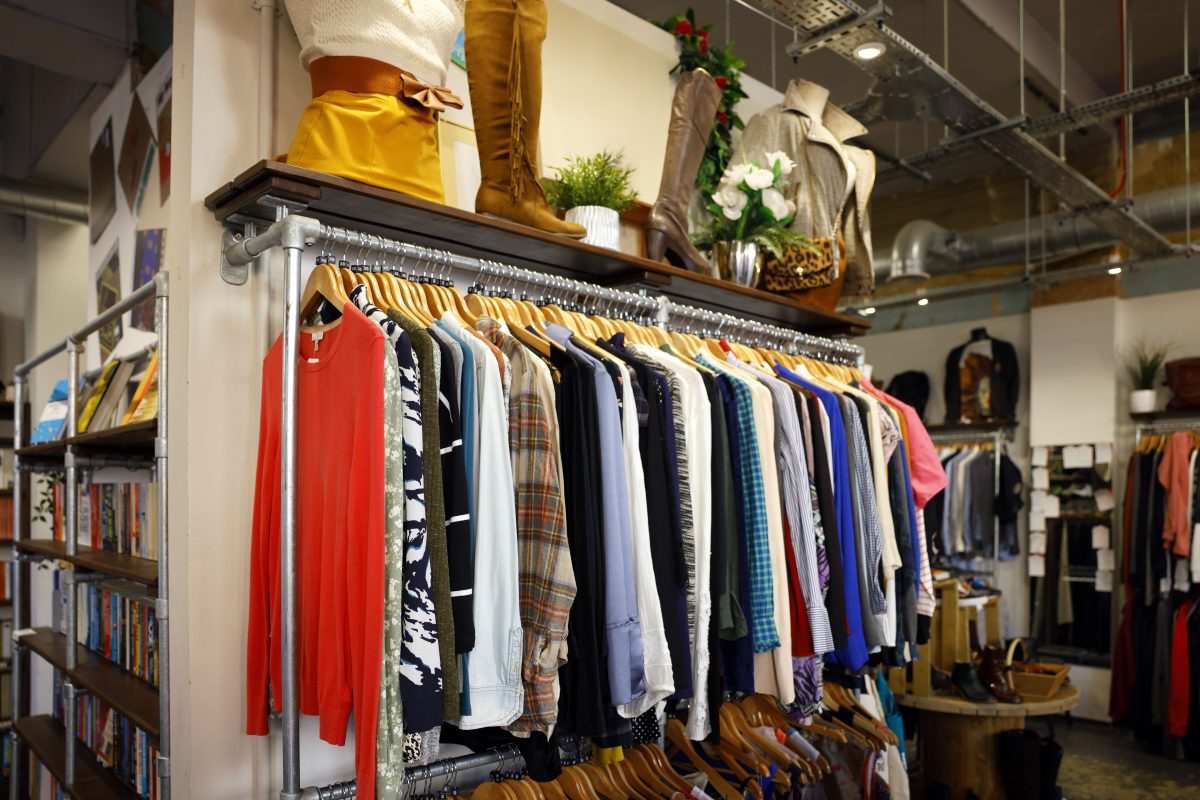 A rail of clothes in a second hand vintage charity shop – stock photo. (Photo: Getty)
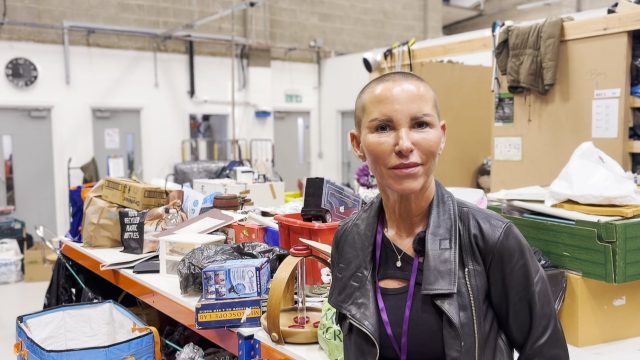
People won’t buy the current donations
The quality of donations over the last year has diminished.
Claire Stockman, head of retail for St
Luke’s Hospice [pictured], says many donations include used items from fast fashion like Boohoo and Primark, which they cannot sell for more than £2, if at all.
What the workers see
60%
of what comes into St Luke’s Hospice is unsellable, Stockman says.
She adds its soiled, damaged beyond
repair or smelly.
Vinted
Harriet, a volunteer at Crisis in Dalston,
says people bring in clothes that are dirty and stained – things that they cannot sell
on Vinted.
She also sees dirty kitchenware and technology that no longer works.
It’s not all bad
 Two young women shopping in a vintage charity shop – stock photo. (Photo: Getty)
Harriet says they still get their
fair share of designer items.
She’s seen a pair of Louboutins
sell for around £400.
People will buy high-end items
even if they’re a little worn.

First Person
6 min read
The best donations
There was a box donated after someone’s family had passed and in it were all these medals. I researched them and the whole collection ended up going for £2,340…
JANE THURNELL-READ, VOLUNTEER AT
THE OXFAM GENERAL SHOP IN EXETER

What is a good donation?
 A young woman chooses clothes in a fashion store and reads the labels on things while shopping at the mall. A millennial shopaholic woman tries on clothes in a fashion boutique – stock photo. (Photo: Getty)
A good donation is anything new with tags on, anything that hasn’t been opened, or higher quality items.
Items that have been well looked after are more likely to sell and generate a better price for charity too.
Harriet adds that knick-knacks and wine glasses are surprise hits in her branch.
The feeling of dread that the weekend is over is all too familiar.
Here, psychologists, career consultants and sleep experts give their best advice on how
to beat the gloom that the
work week is looming…
 (Photo: Getty).
How to beat the Sunday scaries
Pave the way on Friday
Psychologist Maria-Teresa Daher-Cusack says to wrap up tasks and not to leave big or difficult things for Monday. And write a to-do list for the next week so you know what to expect when you return after the weekend.
 Young man practicing meditation in nature at sunrise – stock photo. (Photo: Getty)
 Working from home is being blamed by some councils for the rise in fraudulent ‘polygamous’ working (Photo: Moment RF/Getty)
Get outside early
Doctor Naheed Ali says getting out on a Sunday morning – not sleeping late – helps regulate the circadian rhythm that can become skewed over the weekend.
How to avoid Sunday scaries
On Sunday spend time away from technology to allow yourself a personal reset away from doom scrolling.
 Relaxing with dog on sofa – stock photo. (Photo: Getty)
Rebrand your Sunday evenings from a daunting time to relaxing. Career consultant Victoria McLean goes out for dinner or reads something unrelated to work.
She also doesn’t check her inbox on a Sunday night as it can begin the dread.
How to beat the Sunday scaries
 Sleep tourism in hotel. Exhausted woman sleeps sweetly in bed in the morning – stock photo. (Photo: Getty)
Sleep well
Put yourself in the best position to rest by avoiding large meals, screens and caffeine.
Structure your week
If possible don’t stack your Mondays with high-pressure tasks.
 Caucasian mid adult patient writing a diary while recovering in the hospital ward – stock photo. (Photo: Getty)
 Cheerful aged woman, senior intern waving, saying goodbye to her young colleagues while leaving office after first day at work – stock photo. (Photo: Getty)
Find the fun daily
Don’t just save joyful things for the weekend. On lunch breaks, try to do something you enjoy.
 (Photo: Getty).
Sometimes, you
need to listen.
If the Sunday scaries are constant, listen to them. If every Sunday fills you with dread and nothing seems to quell it it’s worth asking if it’s the job, the culture or the career itself. No one should spend half their weekend bracing for impact… ” says Victoria McLean
The UK has one of the most stable electricity grids in the world.
But no country’s energy system is 100 per cent secure and large-scale blackouts, although rare, are possible.
Here’s how to prepare, and what could happen, if we do have a blackout.

The immediate effects
If the UK’s power went down tomorrow, these are the ways it is likely to impact you first.
You’d get stuck in lifts, wherever you are in the lift shaft.
Trains would be stopped as the signals depend on electricity.
Traffic lights would stop working on the roads – leading to congestion or crashes.
Contactless payments are likely to fail.
Your Wi-Fi at home would stop working and communication becomes difficult.
Fridges and freezers will turn off – unless you have a standalone generator – and food will spoil over time.
Hospitals and water treatment works have their own backup generators so will keep going until their supply runs out.
How transport would be affected
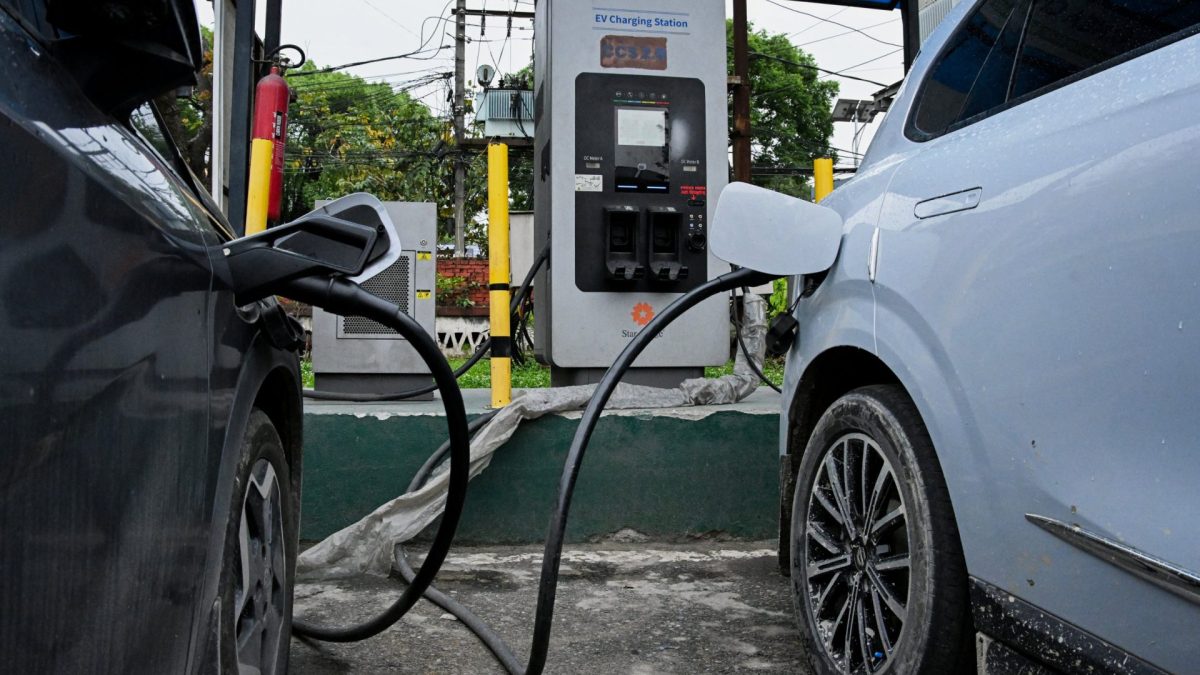 Caption: This photograph taken on April 29, 2026 shows people charging their electric vehicles at a charging station in Kathmandu. As global fuel markets reel from the Middle East war, motorists in Nepal are increasingly turning to electric vehicles, with high demand putting a strain on dealerships. (Photo by Prakash MATHEMA / AFP via Getty Images) / TO GO WITH ‘Nepal-Transport-Automobile-Energy’ FOCUS
Photographer: PRAKASH MATHEMA
Provider: AFP via Getty Images
Source: AFP
Copyright: AFP or licensors
For EV owners that are already on the road, Professor Keith Bell, who works in electricity planning, recommends that those with an EV with reasonable charge use it as a generator, like your own store of electricity.
In the case of the power system going down, petrol isn’t a totally safe option as queues at petrol stations could be huge and places are likely to run out of fuel.
The longer term effects
The longer the power takes to return the worse things are likely to get. In 2021 Storm Arwen physically damaged power lines across the UK.
 Without nuclear to take the strain, that exposure to gas is costing us dear (Photo: Catherine Falls Commercial/Getty)
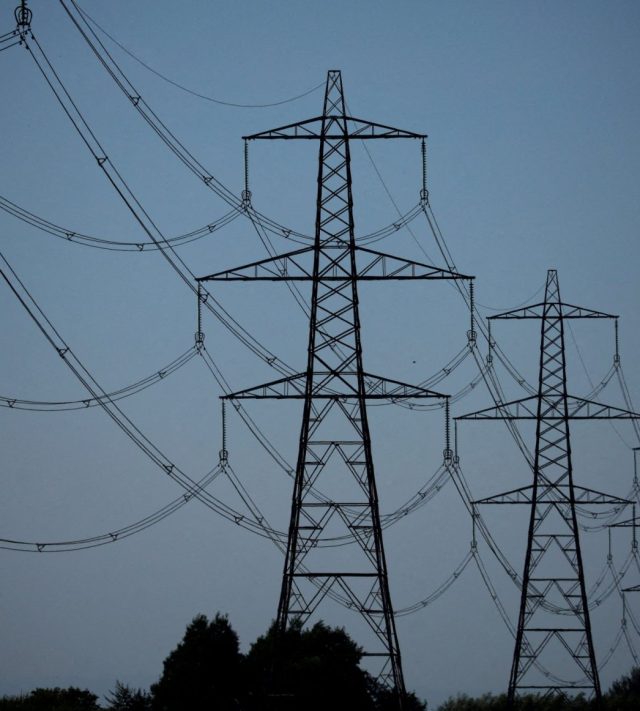 Caption: FILE PHOTO: A row of electricity pylons is seen near the Frodsham on shore wind farm in Frodsham, Britain, September 5, 2023. REUTERS/Phil Noble/File Photo
Photographer: Phil Noble
Provider: REUTERS
Source: REUTERS
During the 1977 New York blackout, which lasted 25 hours, there was civil unrest, resulting in widespread looting and arson, although intense heatwaves are thought to have exacerbated the situation.
Things to buy now to prepare
 The Russian state-owned Sputnik news agency took over the BBC’s radio frequency in Lebanon (Photo: Getty)
Battery radio
To get updates during a power cut – a car radio can be used, but in severe weather it might be safer to stay inside.
Bottled water
A minimum of 2.5-3 litres of drinking water per person per day is recommended.
 Caption: Plastic bottle with clean water on a blue background.
Photographer: SimpleImages
Provider: Getty Images
Source: Moment RF
 A Cuban rides his bike during a nation wide blackout in Havana on 21 March (Photo: Yamil Lage/AFP/Getty)
Wind-up torch
The Government recommends opting for torches over candles, for safety reasons.
How to prepare
A blackout is unlikely but we should make small changes.
If possible, don’t let your petrol tank run down to almost empty. Keep it over half full so you’re never caught short.
Always have a portable power bank, and spare batteries, to charge your phone and other essentials.
As card machines could fail, keep some cash at home.
To keep yourself distracted and entertained, keep board games and a pack of cards handy to play.

Eight easy ways to stop
your child spending summer glued to their devices
Not all screen time is bad
Using screens in a way that benefits your child’s development is key and balancing educational content and entertainment with offline activities ensures a well-rounded routine.
DR GUMMER

How to keep your kids off screens

Outdoor activities
For younger children, try scavenger hunts, garden games and nature walks. For older ones, hikes
and biking trips.
Create a schedule
Designated screen-free times helps children develop a routine that balances screen use with other activities.
 Caption: Mid adult man with eyeglasses sitting on a comfortable sofa at home, thoughtfully writing notes in a small notebook while natural sunlight illuminates the room
Photographer: Milan Markovic
Provider: Getty Images
Source: E+

Family game nights
It’s an excellent way
to bond and develop critical thinking skills.
How to keep your kids off screens
Creative hobbies
Getting creative, through drawing, painting or model construction, enhances cognitive skills and offers an alternative to screens.


Social interaction
Arrange playdates or group activities with friends, or for older kids try an overnight camping trip in the garden.
How to keep your kids off screens
Lead by example
Showing that you value offline time encourages your children to do the same.


Have a reward
Implement a reward system where screen time is earned through positive behaviour.
Open conversations
Discuss the importance of balancing screen time with your children so they understand the reasons behind the rules.

Can following a particular diet
help prevent or delay dementia?
Some studies suggest so.
These are the eight brain-boosting foods registered dietitian Fareeha Jay
recommends people consume as part of a weekly diet…

Foods that can cut dementia risk
 Caption: A detail of cracked egg falling into the pan as woman holds egg shells in both hands.
Photographer: SimpleImages
Provider: Getty Images
Source: Moment RF
Eggs
They contain several nutrients thought to support brain health, including choline, vitamin B12 and iodine.
Coffee
Caffeine can reduce inflammation and
slow the degeneration
of brain cells.
 Barista hand making cappuccino Coffee with espresso machine in cafe – stock photo. (Photo: Getty)
 Cooking fruit and vegetables (Photor: GMVozd/Getty Images/E+)
Broccoli
It’s packed with antioxidants and high in vitamin K, which is essentially for healthy brain cells.
Fibre is overlooked in dementia prevention
 Caption: Cookie jar, tea, wine, nuts, books, lit candles and Christmas decorations on the table. Cozy Christmas hygge at home. Selective focus.
Photographer: Jelena990
Provider: Getty Images
Source: iStockphoto
To increase fibre intake, include wholegrains, nuts, seeds, lentils, and legumes.
Fermented foods also support brain health by improving the gut microbiome.

LIFESTYLE
4 min read
Foods that can cut dementia risk
 (Photo: Joff Lee/Getty Images)
Oily fish
Your brain uses Omega-3s to build brain and nerve cells – so a diet rich in them may slow age-related mental decline.
Walnuts
These improve heart health markers, which is linked to a lower risk of neurological disorders.
 Health professionals are nuts about nuts – with good reason!
 Supermarkets report increasing demand for blueberries (Photo: RHS/Guy Harrop)
Blueberries
They contain compounds which have been shown to improve blood flow to the brain, cognitive function, and memory.
The Mind diet
The diet aims to reduce dementia risk and the decline in brain health.
It was created in 2015 by Dr Martha Clare Morris and colleagues at Rush University Medical Centre and the Harvard Chan School of Public Health.
It encourages vegetables, berries, nuts, whole grains, olive oil, fish, beans, and poultry.
These foods contain nutrients that promote good brain health by reducing oxidative stress and inflammation.
 The Midlife MOT is open to all and covers three key areas: work, wealth and well-being (Photo: Westend61/Getty)
Feeling insecure at work
in your 50s? You’re not alone
The final decades of work
There’s this assumption about being put out to pasture… but now that we’re living and working longer, we have to challenge myths around ageing and remember that over-50s are a crucial part of the workforce…
LYNDSEY SIMPSON, AUTHOR OF AGE REBELLION AND FOUNDER OF 55/REDEFINED

The current situation
By 2030, almost half of all employees in the UK workforce will be over 50.
36%
Now one in three workers are over 50.
Yet more than a third of those between 50 and 69 believe that their age puts them at a disadvantage when they apply for jobs.
37%
The Age Without Limits study from 2024 shows that 37 per cent of workers between 51 to 70 felt badly treated in work because of their age.
The things to do, says Simpson
 More and more people are using AI for counselling (Photo: Oscar Wong/Getty/Moment RF)
Keep learning new skills
We need the same level of career planning in
our fifties as our twenties. It’s possible to reinvent yourself again.
Embrace technology
It’s nonsense that older people can’t pick up how to use new tech.
 Caption: John?r Bildbyr? AB
+46 8 644 83 30
www.johner.se
info@johner.se
sales@johner.se
Photographer: Johner Images
Provider: Getty Images/Johner RF
Source: Johner RF
Copyright: John?r Images/Lisa ?berg
 Caption: This is a photo of a woman clutching a pink piggy bank labelled pension. See PA Feature FINANCE Pension Pots. WARNING: This picture must only be used to accompany PA Feature FINANCE Pension Pots. PA Photo. Photo credit should read: Alamy/PA
NOTE TO EDITORS: This picture must only be used to accompany PA Feature FINANCE Pension Pots
Photographer: Alamy/PA
Provider: Alamy/PA
Source: PA
Think about money
Do you need a pay rise? Could you trade some of that money you earn, to work a bit less, and do more things you enjoy?
The things not to do
Become full-time childcare
Grandparenting on the horizon? If you don’t want to do childcare, have the conversation early – even before a child becomes pregnant – that you plan to continue working and love your job.
 Caption: Indoor image of thoughtful puzzled senior woman with gray hair in glasses looking at paycheck holding head in hand, upset with high rent charge, sitting at kitchen table in front of laptop
Photographer: shurkin_son
Provider: Getty Images
Source: iStockphoto
 Grandparents and granddaughter gardening together – stock photo. (Photo: Getty)
Accept redundancy too quickly
It’s going to be so much harder to get back into work if you don’t have a plan before you take that leap.
The things not to do
Rush into retirement
 Senior bed woman problem pain headache home elderly mature pain bedroom upset unhappy female caucasian adult relationship retirement old difficulty ache head sick migraine hangover sleep – stock photo. (Photo: Getty)
Everybody thinks early retirement is the dream but the reality can be different. There can be loneliness, lack of purpose and a sense of invisibility.

LIFESTYLE
5 min read
By November, UK food prices will be 50 per cent higher than they were at the start of the cost-of-living crisis
With that in mind, food editor Sophie Morris shares how she saves money on her weekly shop

Easy ways to save on the weekly shop
 Caption: NORTHWICH, ENGLAND – JULY 06: Whole chicken sit on display in a Tesco supermarket on July 06, 2022 in Northwich, England. The British Retail Consortium recently said food manufacturers and supermarkets are having to pass on some of the cost of soaring raw materials to consumers, leading to the price of basic goods throughout the UK rising at the fastest pace since September 2008. Fresh food prices increased by 6% in the year to June 2022 coupled with an increase in inflation, and fuel and energy prices to create a cost of living crisis. This is leading to millions of low-income households going without essentials items, falling behind on bills and taking on debt. (Photo by Christopher Furlong/Getty Images)
Photographer: Christopher Furlong
Provider: Getty Images
Source: Getty Images Europe
Avoid chicken breast
Boneless chicken thighs are all meat and a much tastier product.
Don’t plan everything
If you plan every meal all week, there’s no leeway for necessary last-minute changes of plan (or leftovers).
 Man Cooking By Woman Chopping Carrots In Kitchen – stock photo. (Photo: Getty)
 Governments are not all powerful when it comes to huge international forces like those increasing global food prices (Photo: Oscar Wong/Getty Images/Moment RF)
Shop alone
There are so many products that children want to fill the trolley with – all kinds of exciting eye candy. It’s cheaper to go alone.
Easy ways to save on the weekly shop
Consider a vegetable box delivery
Having a Riverford box delivery helps Morris avoid impulse buys and go to the shops
less – even though the box is pricey. “It is expensive, but of great quality and organic”.
 Milk and potatoes prices are expected to increases sharply later this year, say supply chain experts (Photo: Kate Wieser/Getty)
 Low carb, FODMAP diet food background with vegetables, fruits, smoked salmon, chicken fillet, greens, nuts, olives. Menu for healthy eating . – stock photo. (Photo: Getty)
Track your spending
It doesn’t need to be an elaborate spreadsheet but without some kind of metric, it’s impossible to spot where you
can or must make cutbacks.
Easy ways to save on the weekly shop
 The supermarket loyalty schemes vary in their generosity (Photo: Paul Childs/Reuters)
Look for yellow stickers
You can save plenty
over a year by never buying branded products at full price.
Take stock
Do a quick cupboard stocktake. You might find you already have three jars of one thing.
 Mid-Adult Couple Calculating Their Finances On The Laptop In The Kitchen – stock photo. (Photo: Getty)
 “Soft restrictions” aren’t infallible; we can always make the effort to get a ladder and get the biscuit tin down from the highest shelf (Photo: Getty)
Avoid packaged snacks
Packing fruit, biscuits, and nuts etc into a Tupperware to take out is more cost effective than buying tiny packaged portions.
Easy ways to save on the weekly shop
Be wary of DIY treats
“Faking” a takeaway at home can sound like a cheaper option, but if it’s something you don’t usually cook – that needs new ingredients – it could work out pricier.
 Whatever you buy, buy British if you can. That will help boost fishermen’s finances (Photo: Betty Laura Zapata/Getty)
 Caption: A customer looks at packages of chilled chicken cuts in a part-empty refrigerated display unit at a Lidl supermarket store in Walthamstow, west London, on September 21, 2021. (Photo by Tolga Akmen / AFP) (Photo by TOLGA AKMEN/AFP via Getty Images)
Photographer: TOLGA AKMEN
Provider: AFP via Getty Images
Source: AFP
Copyright: AFP or licensors
Do you need it now?
Returning a few things to the shelves that you won’t need in the near future can save you a healthy amount.
Skip a shop
Every time you make do with what’s at home,
you save big.
 Supermarkets will find ways of holding down the price of the basics, and try to make their money on the fancy lines (Photo: Roy James Shakespeare/Getty)
Easy ways to save on
the weekly shop
Try a week or a month of shopping local,
and you might be surprised at the results,
in terms of cost and other benefits like supporting local businesses, and
avoiding car journeys and traffic.
 Defenders of the triple Lock point to the fact pensioners are often asset-rich and income-poor. (Photo: Getty)
Go shopping when you’re not in a huge rush so you can make relaxed and informed decisions. Don’t expect to stick to your plan or make great choices when you’re in a hurry.
After Gabe was born, the regular appointments, therapy and support he would require became clear. Yet, as Stephanie worked during term-time at the college, she did not get annual leave in the form many employees recognise.
To look after Gabe, she would have to take unpaid leave days, and by the time he was two-and-a-half, it became evident to Stephanie that her job had become “untenable.”
Although Stephanie believes being able to take care of Gabe is an “amazing” thing to do, she is concerned the role of unpaid carers is not recognised in the way it should be.
She said: “I gave up my job at the college in April 2018 to look after Gabe. I was hyper-focused on finding out what was causing his symptoms and what support we could give him.
“I’ve missed out on career progression but was willing to sacrifice that to look after my son. When I left my job I was battling fatigue juggling everything. I suspect I now have PTSD as it was such a difficult time.”
 Stephanie and Gabe. Since she quit her college job to care for her son, the family’s finances have taken a hit
In the past few weeks, Stephanie has found a job working seven hours a week at a nursery, covering lunchtimes three days a week. “The pay isn’t high, but it is a start,” Stephanie said.
Her husband, James, works full-time as an IT infrastructure manager, taking care of Gabe before and after he is at work. Since Stephanie quit her college job, the family’s finances have taken a hit.
Stephanie said: “We certainly won’t be taking any expensive trips abroad to Disney World any time soon and the kids often make do with hand-me-down clothes. We’re not poor but we watch what we spend due to our circumstances.”
Stephanie and her husband have previously used credit cards to pay for private therapy for Gabe, with sessions often costing £100 or more a time. The couple also fundraised £10,000 online to take Gabe to the US for treatment to help him walk, which Stephanie says was successful.
She said the family pay “several” thousand pounds in additional costs to due Gabe’s disabilities. A weekend activity day costs £105 for Gabe, while their daughter’s weekend day club costs £25 for the day. Stephanie and James also spend large sums of incontinence pads for Gabe.
“Sensory toys always cost more than standard toys and getting clothes and shoes that are right for Gabe can be more expensive”, Stephanie adds. Gabe wears a leg splint, so the couple always have to buy two pairs of shoes so Gabe has the right fit for each foot.
Stephanie also has an eye on the future and is concerned about what her pension and retirement will look like.
She said: “I am not adding any money to a pension. I am also aware that the amount I do have in pensions now will not be anywhere near enough for a comfortable retirement.
“James is adding money to a pension via work. But we are fully aware that our retirements and pensions will look different to those of our friends. Gabe will also be living with us to the day we are no longer here. And our number one worry is what happens to Gabe when we can no longer or are not around to care for him.”
Stephanie receives around £400 a month in carer’s allowance and Gabe receives £600 a month via disability living allowance.
Stephanie said: “We receive these benefits but I classify myself as an unpaid carer. We look after Gabe for 70 hours a week.
“Unpaid carers should be permitted to work more hours without their carer’s allowance being affected. More holistic support from a dedicated body or organisation, rather than a charity, would also be helpful. What we need is a government-spearheaded body focusing purely on unpaid carers and their needs.”
A carer is anyone who cares, unpaid, for a friend or family member who due to illness, disability, a mental health problem or an addiction cannot cope without their support.
Aside from the financial toll, being a carer places an emotional and physical strain on Stephanie.
She said: “The physical aspect really takes a toll on your body. The exhaustion is on another level because you are physically tired, but also tired from the mental load of things like appointments, therapy and medication. It is difficult and I am yet to find a balance. Something always slips, and then I feel awful about that. I end up with burn-out.”
Georgina Colman, founder of Purpl, a firm providing discounts for disabled people, said: “For many families, caring responsibilities develop gradually over time. What it really looks like is constantly managing complex care needs, providing emotional support and covering high additional costs on top of that.
“The financial impact of caring is often hidden, but it’s very real.”