
July 1, 2026
For most of us, these past few years have been marked by constant transition — collectively attempting to regain balance in a rapidly morphing world. At the same time, experiencing the throes of change that define your early twenties is a feat in and of itself. But for the actor and music artist, 23-year-old Finn Wolfhard, this transition has taken on a far more public form — namely, the release of the final season of Stranger Things, his upcoming sophomore album, Fire From the Hip, the announcement of a North American tour, a Met Gala debut and a recent stint hosting Saturday Night Live.
Fresh from the Met Gala, Wolfhard harks back to the big night, describing it as “very special, but odd”. But now, en route to the airport, he is already moving on to whatever comes next. “I think I’m entering a new chapter in my life,” he tells me — a passage marked by two back-to-back solo albums, released after spending the better part of a decade tied, nearly inextricably, to one of the most recognisable franchises in modern television. I wonder aloud whether these records are his way of separating himself from the collective identity that inevitably comes with a phenomenon like Stranger Things. Wolfhard frames it differently. It isn’t separation he’s searching for, but reintroduction.
Despite this move towards self-definition, Wolfhard repeatedly returns to the idea of collectivity. Even while framing Fire From the Hip as his most personal work yet, he speaks about music less as an act of individual expression and more as something inherently communal. “I find it incredibly uncomfortable,” he admits, “advocating for yourself as a solo artist, because I’m so used to being part of an ensemble.” The sentiment extends to his writing process, too. For Wolfhard, authorship seems less about isolation than team-built construction. “It’s important to remind myself that music is shared,” he says. “Making stuff with other people means something.”
There’s something about this creation process that feels sacred — shared, yes, but reserved for those trusted to enter this sanctuary. Fire From the Hip was deliberately recorded in the isolated woods surrounding Minnesota’s Pachyderm Studios. Removing himself from the turbulence and velocity of his public life, he tells me, was essential in order to immerse himself fully in the process. Absent of the usual industry cacophony, the record was instead shaped by the minds, ears and talents of trusted friends, past tourmates and, of course, his own intuition.
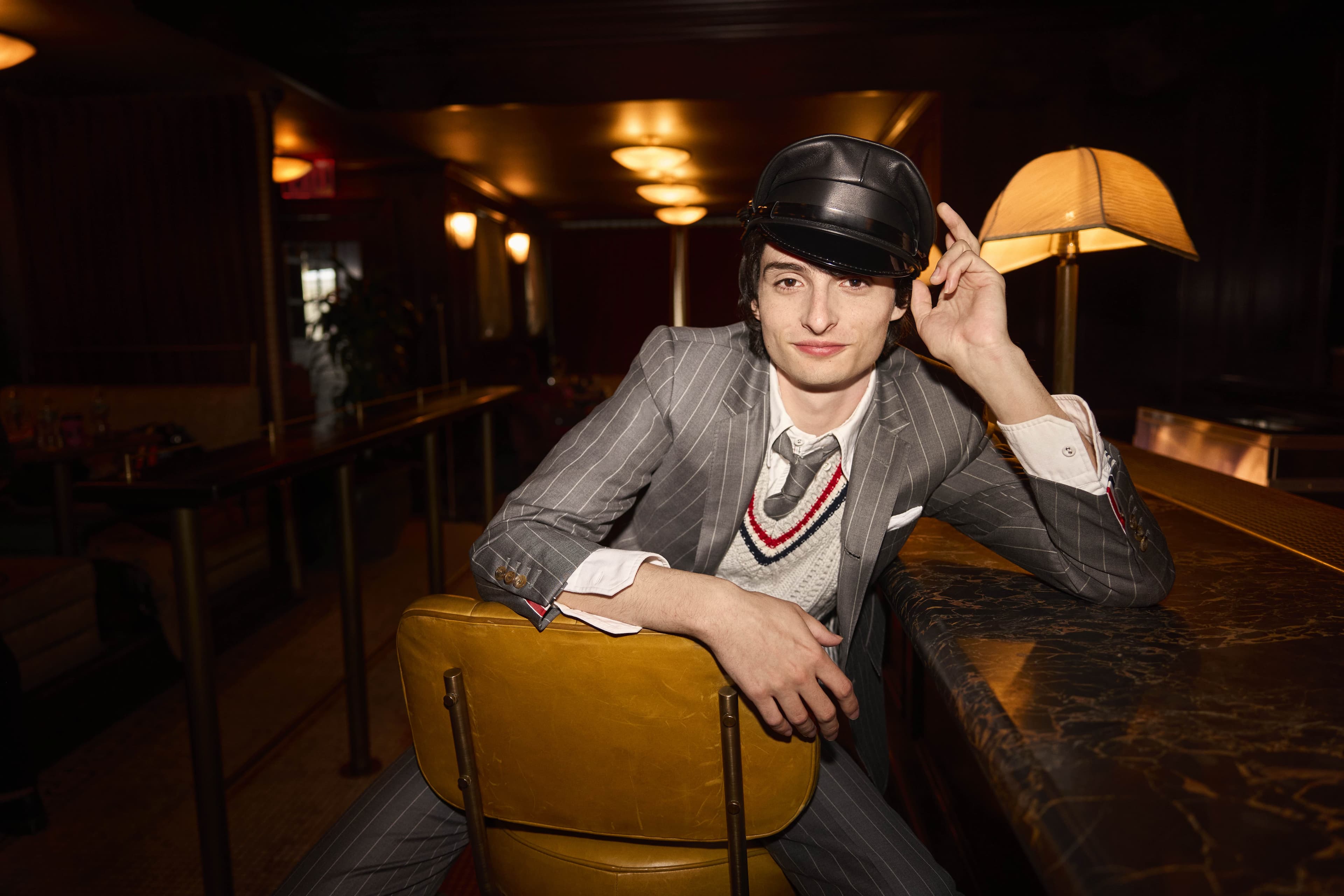
Finn wears jacket, vest, top, tie, pocket square and trousers by THOM BROWNE.
If his debut studio album, Happy Birthday (2025), was the opening scene, then Fire From the Hip is the world expanding around it. The records share the same roots, but this time, they are allowed to grow outward — fuller and more realised. Admitting it might sound pretentious, Wolfhard cautions, but the difference between the two records can best be described through a cinematic lens. “If the last record was 16mm, then this is 35mm,” he explains. Higher resolution, perhaps, but not necessarily cleaner, the album still retains an analogue rawness — one realised through Wolfhard’s increasingly assured songwriting. Fire From the Hip is certainly more confident in itself, but still carries traces of someone trying to figure things out in real time.
This tension is embedded directly into the title itself. A phrase typically associated with impulsivity, Fire From the Hip carries a dual meaning for Wolfhard. He describes feeling an almost compulsive urgency to “fix” things the moment they go wrong — attempting to resolve existential anxieties as soon as they surface, rather than allowing himself to sit with uncertainty. That same impulsiveness extends into social situations, too. He laments his habit of “saying things without thinking”, then regretting them moments later. But beyond impulsivity, the title also conjures the image of a duel. Not quite a Clint Eastwood-style standoff, but something more internal. “I’m constantly at odds,” Wolfhard explains. “I think, generally, people are always at odds with themselves.” It’s a conflict made tangible in the album artwork: a Wes Anderson-esque tableau of “me shooting me”.
“It makes me more comfortable to express myself through a bunch of different things, because it helps me learn about the world, myself and people.”
That isn’t to say, though, that Wolfhard’s new record wallows in pessimism. While Happy Birthday often lingered in nostalgia, Fire From the Hip approaches those same themes with noticeably more confidence. Loneliness and anxiety still occupy the record’s emotional landscape, but this time they’re met with something softer. Perhaps even hopeful. “Even the sad-sounding songs have happier lyrics,” Wolfhard tells me. That said, the record feels less like an abandonment of teenage confusion and more like an evolution beyond it — an understanding that sadness and joy rarely exist independently of one another. Sometimes sad moments can feel beautiful, and sometimes happiness arrives tangled with grief.
There’s humour woven throughout the record, too — an aspect of Wolfhard’s personality that hasn’t always surfaced in his music before. At the end of his opening track, ‘I’ll Let You Finish’, he sings the notorious 2015 Kanye West VMA speech: “Yo, Taylor, I’m really happy for you, I’ll let you finish. But Beyoncé had one of the best videos of all time”. Another humorous nod arrives in the album’s closing track, ‘The Climb (Not That One)’, which references the archetypal coming-of- age story of Gen-Z, Hannah Montana: The Movie.
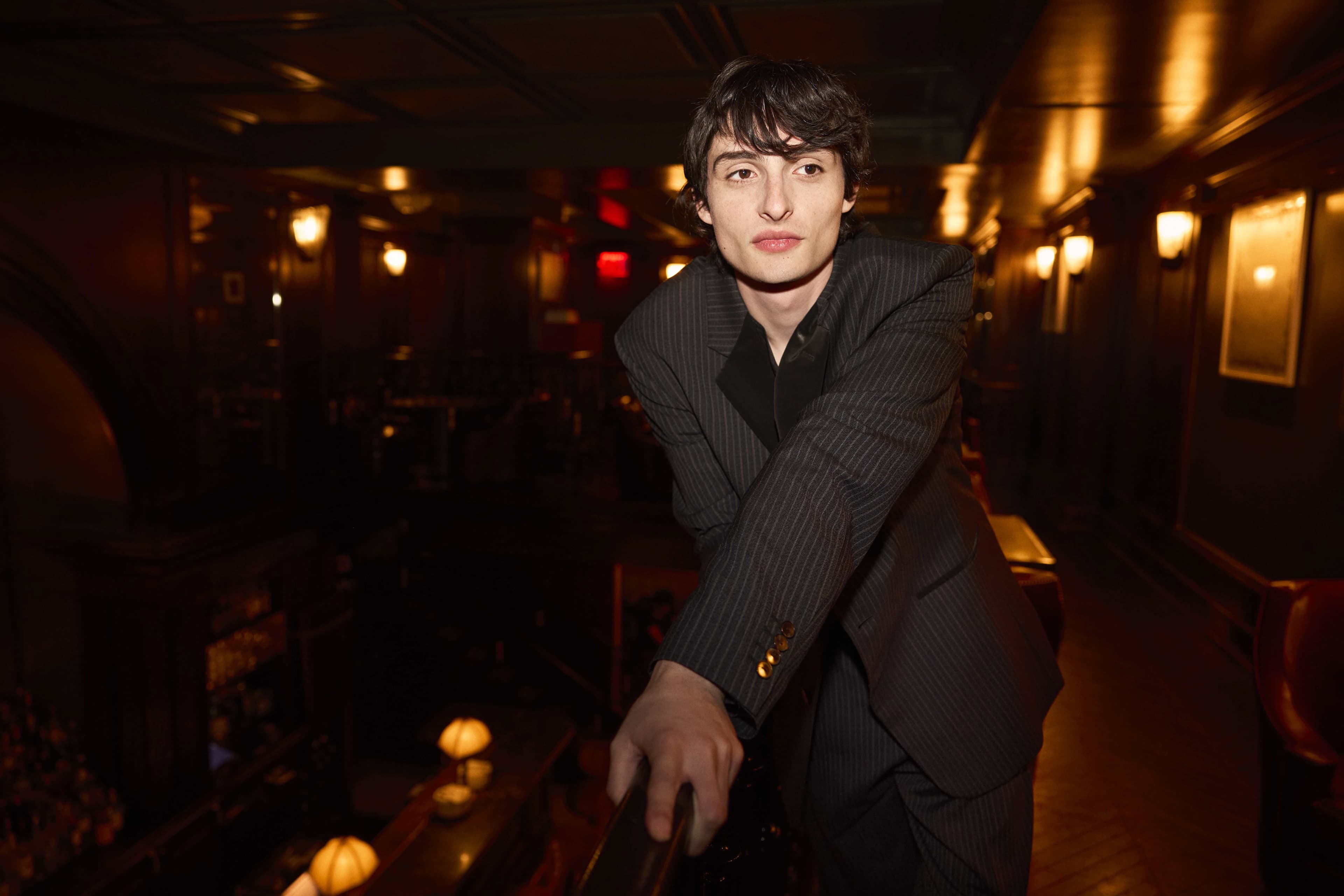
Finn wears jacket, top, and trousers by CALVIN KLEIN Collection.
It’s essential to know, however, that Wolfhard isn’t trying to be funny. The humour interwoven in Fire From the Hip is more a revelation of the artist’s behind-the-scenes personality than an attempt at evoking any specific reaction. Growing up under public scrutiny, Wolfhard seems to have reached a kind of peace with constant perception. “I have no control over how people are going to see me or view my music,” he reflects. “The only thing I can do is keep working with the people that I’m interested in working with, and hopefully learn something about myself in the process.”
It’s a sentiment that feels increasingly universal. Wolfhard speaks about visibility less as a celebrity-specific condition and more as something generational. “Everyone is a public figure now,” he states, reflecting on the increasingly blurred boundary between private life and online performance. And with this, Wolfhard observes, comes an inescapable dichotomy: the internet as both connective tissue and emotional obstruction — a space designed to foster intimacy, while often flattening individuality into content.
Never has Wolfhard felt this more than at some of his live shows last year. He describes looking out into seas of crowds and seeing not faces, but phones. It was an experience that didn’t fuel connection, but instead, created a strange dystopian emptiness. “It’s confusing for me, because the whole reason why I got into music is the connection that you feel to it,” Wolfhard says. For a generation socialised almost entirely online, documenting a moment can sometimes eclipse the experience of fully inhabiting it. After all, if it’s not on Instagram, did it even happen? But Wolfhard’s objective for his shows is, ultimately, a simple one: to “shed that part of themselves. [To] come and dance, and not worry about anything else. That’s my goal.”
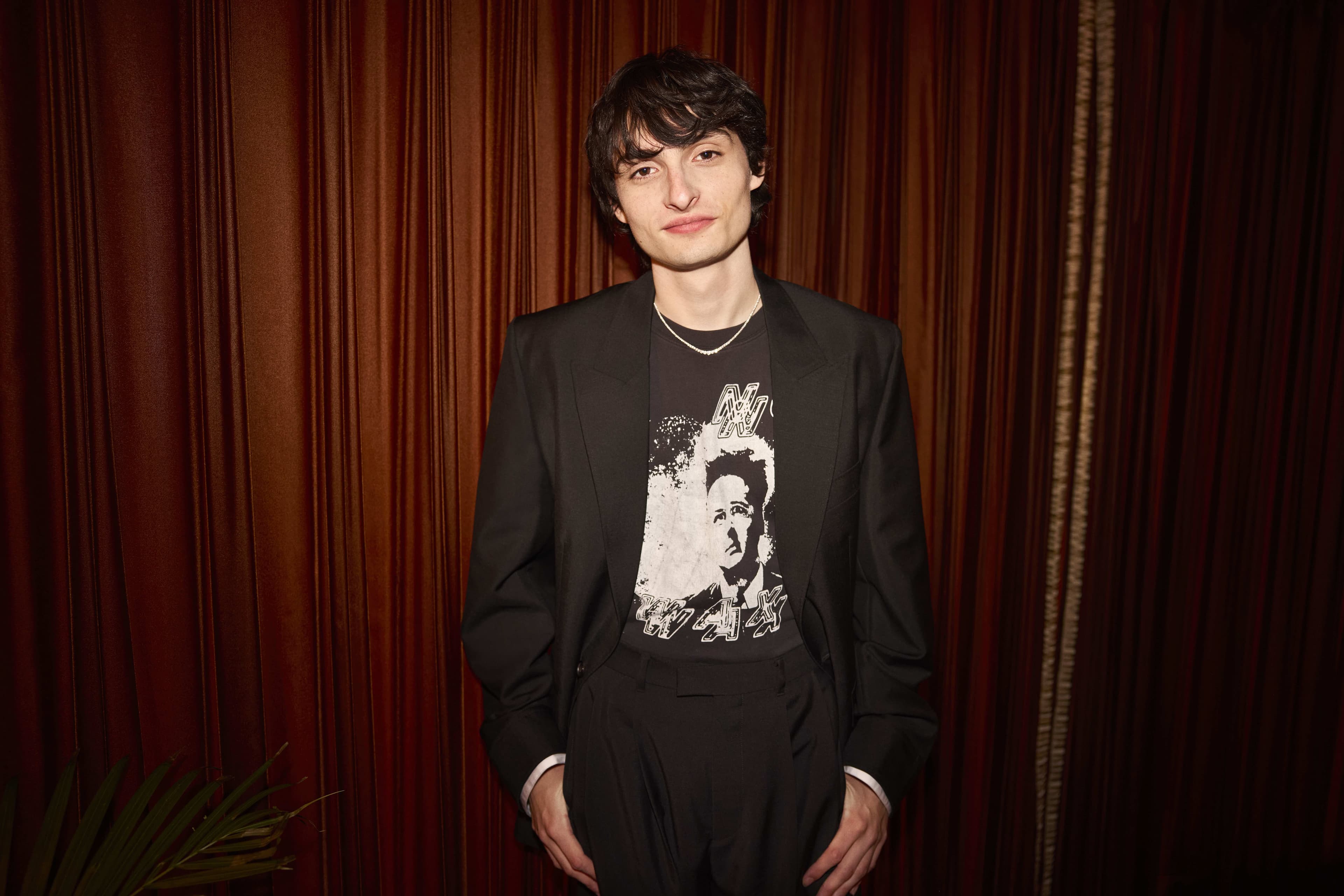
Finn wears jacket and trousers by GIVENCHY by Sarah Burton and necklace by FABIOLA ORDOÑEZ.
Whether it’s performing live, acting, writing or directing, connection and curiosity seem to remain Wolfhard’s guiding principles. He speaks about the different mediums less as separate disciplines and more as interconnected parts of his evolution — both as an artist and simply as a person experiencing the world. And, rather than remaining confined by the prominence that Stranger Things afforded him, Wolfhard has used it as an opportunity to explore every creative avenue that interests him. Not out of self-mythologising, but genuine curiosity — a desire to create work that feels truthful and connected to those around him. “It makes me more comfortable to express myself through a bunch of different things,” he says, “because it helps me learn about the world, myself and people.”
Listening to Wolfhard speak so earnestly, I find myself wondering how he’s remained so grounded through it all. If most people had experienced that level of visibility during their adolescence, many would likely fail to emerge from it as the same person. For this, Wolfhard credits the people around him — staying close with old friends, returning home to Canada and continuing to live with his family amid the chaos of constant travel and exposure. “I can just rely on them… there’s stability there,” he affirms.
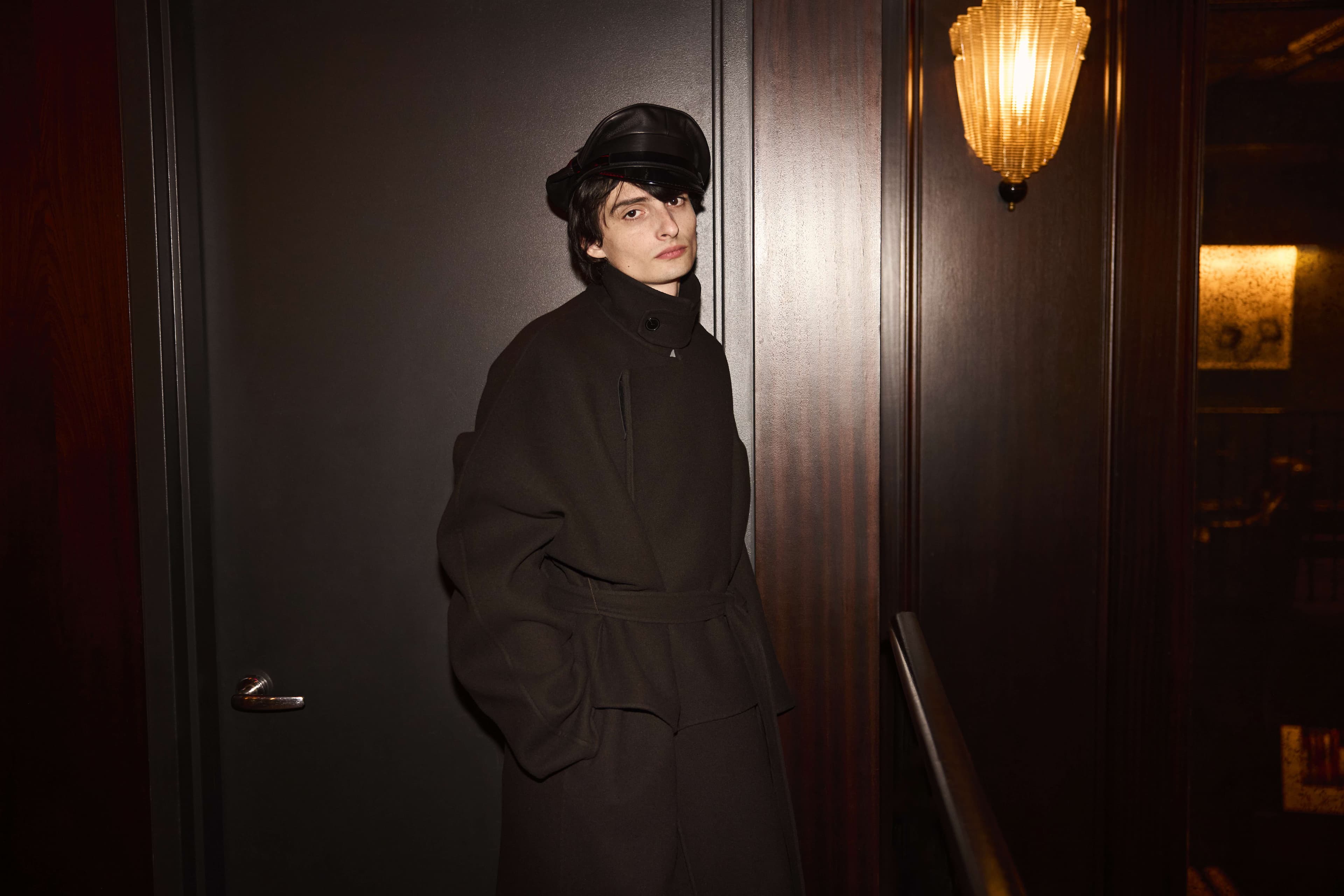
Finn wears coat by CALVIN KLEIN Collection.
Choosing to remain in Vancouver while the overstimulation of Los Angeles and New York sits perpetually within reach feels deeply intentional — a way of preserving moments of stillness, normalcy and even boredom within a life that rarely slows down. “Vancouver is a place to get bored,” Wolfhard says. “I feel like that’s when the best work happens. When you have time to start asking yourself important questions.”
With that final thought, he arrives at the airport. It’s funny — throughout the interview, it never really felt like speaking to someone of international acclaim, but rather someone one might meet at an afters. There’s a humbleness to Finn Wolfhard, a relatability rooted in the fact that, beneath it all, he still feels like… just a guy. Only one with Winona Ryder’s number on speed dial.
PhotographerJordan RossiStylistRaúl GuerreroWriterAbi TurnerGroomerRuth Fernandez at ASM MGMT using LA MERPhotographer’s AssistantJared AlexanderFashion AssistantsJeremy Machado, Axel Garcia, Melisa LopezProduction AssistantLatoya McCloudRetouchingAlice ConstanceWith Thanks ToThe Little Ned
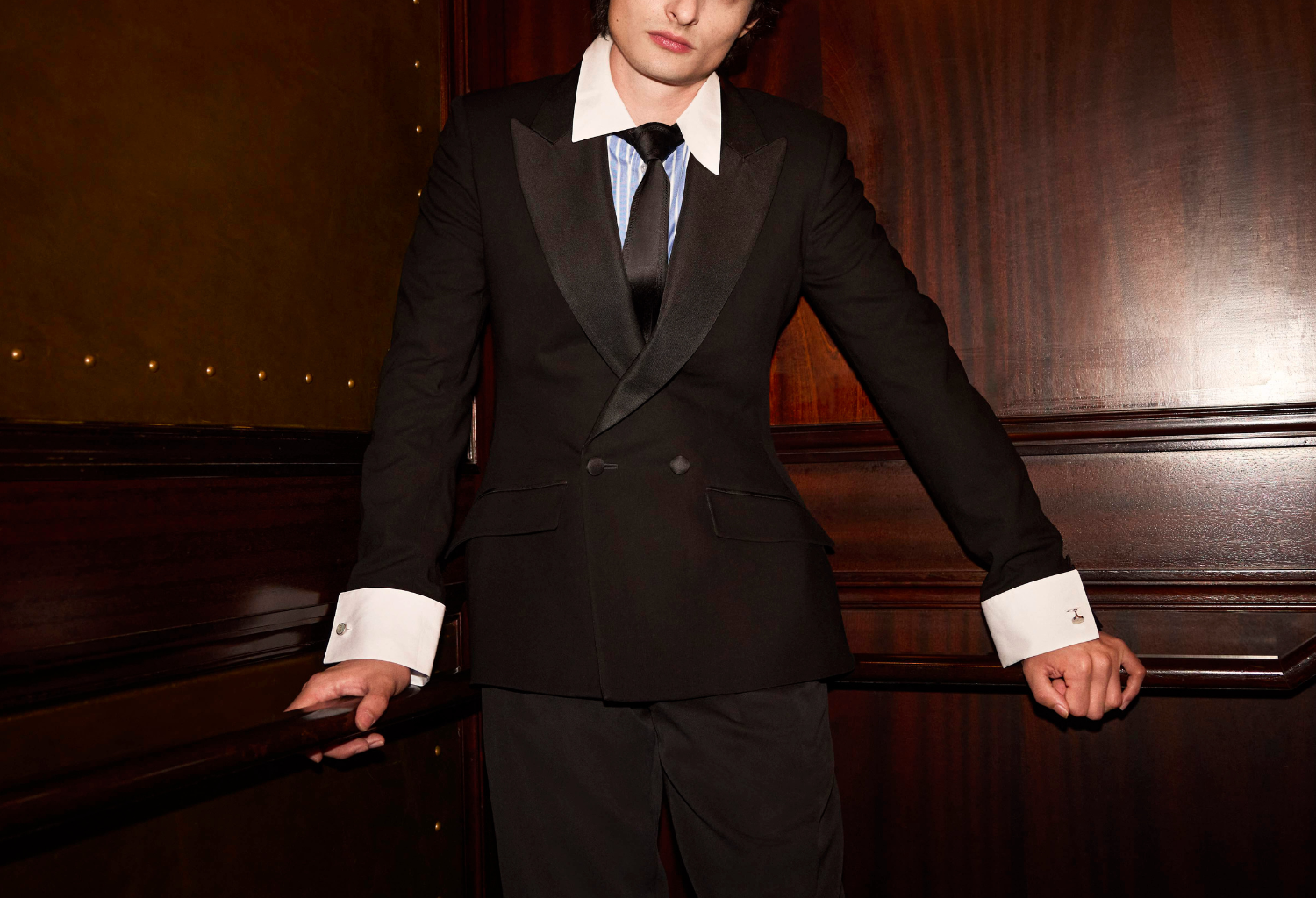
Finn wears jacket, top and tie by DIOR and trousers by SAINT LAURENT.