
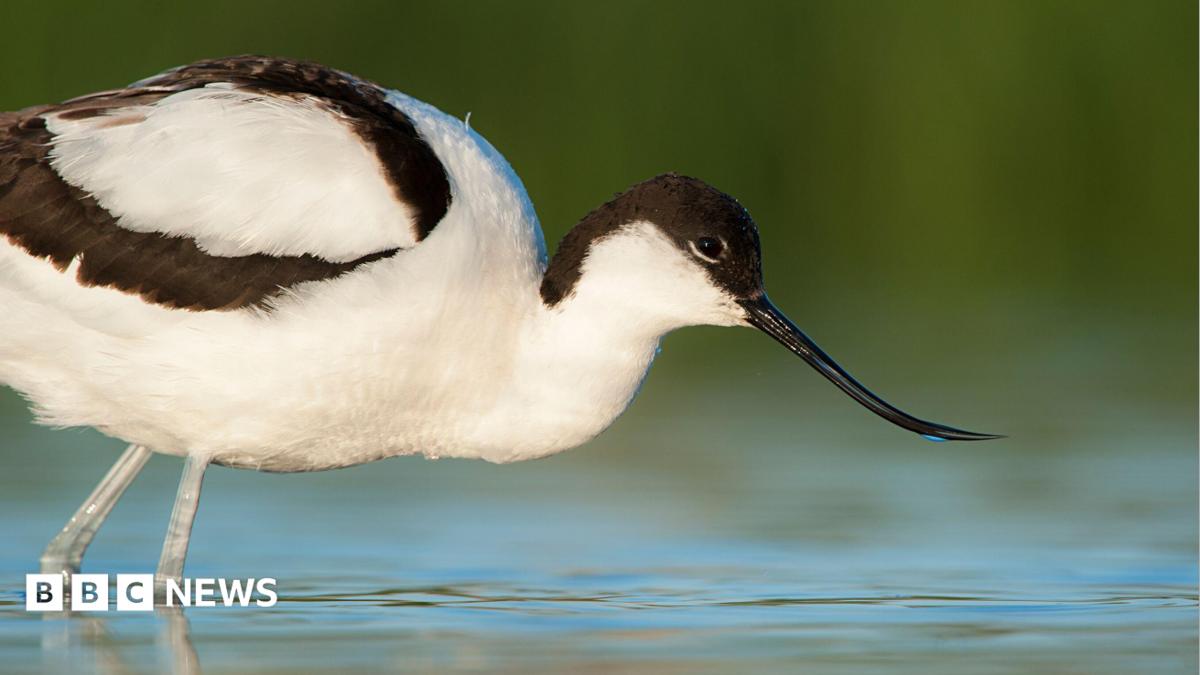
By the 1840s, the species had disappeared as a breeding bird in Britain after widespread drainage of wetlands for agriculture and development.
Its return began more than a century later, when four breeding pairs settled on the Suffolk coast in 1947 at what would later become RSPB Minsmere.
The RSPB has detailed, external how, after World War Two, soldiers slept “top-to-toe in a tent” guarding the precious breeding birds in a secret mission codenamed Operation Zebra.
Avocets have bred there every year since 1963, and here are now an estimated 1,950 breeding pairs and 8,700 wintering birds in the UK, compared with just four breeding pairs in the late 1940s.
The record-breaking avocet is evidence of both the resilience of wildlife and the success of long-term conservation efforts, added Jones.
“It is wonderful to think that despite all the adversity birds face, and the pressures wildlife faces from humans, they can be extraordinarily resilient,” he said.
“You wonder how many chicks this bird might have parented over the years. It’s remarkable, really.”