
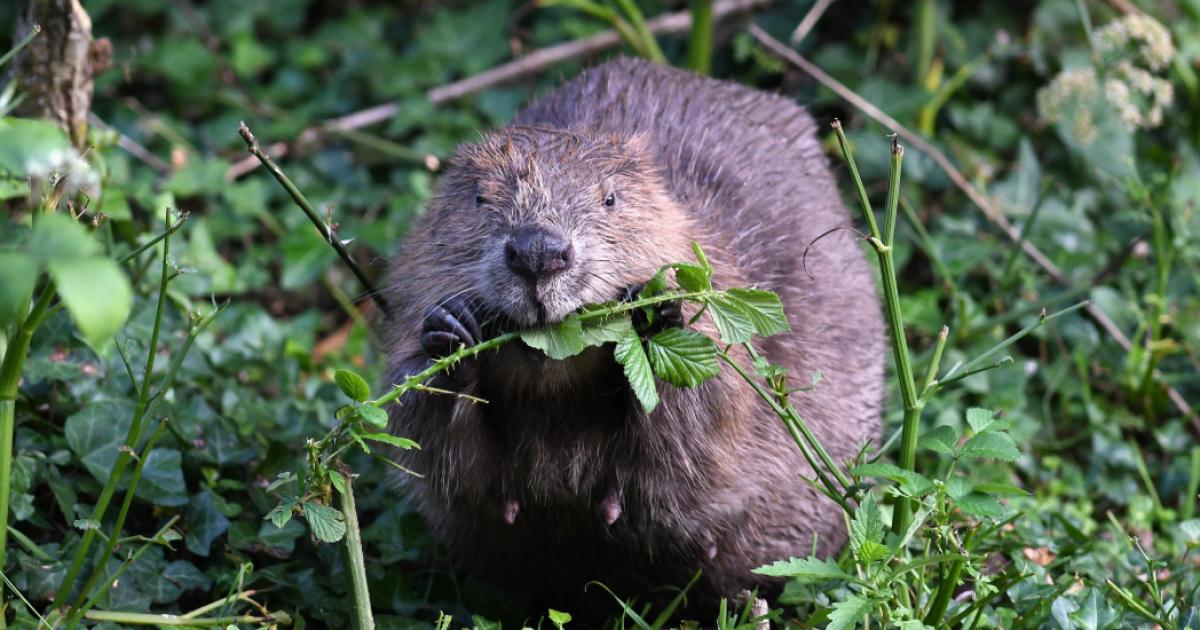
Suffolk Wildlife Trust are exploring the possibility of reintroducing the species through the Eastern Region Beaver Advisory Group.
Sam Hanks says the main challenge Beavers may face is public understanding (Image: Suffolk Wildlife Trust)
Sam Hanks, head of Wilder Landscapes at Suffolk Wildlife Trust, said: “Beavers have been extinct in the eastern region for most of the last 400 years; they were hunted for their fur and scent glands.
“More recently, beavers have been introduced in enclosures in the region, beginning in Essex in 2019.
“A single group of enclosed beavers live in Suffolk, and there are a handful of enclosures across Norfolk also.
“These populations have been a great first test, but a sustainable future for beavers is only possible through wild release.”
Beavers are a protected native mammal in the UK (Image: Suffolk Wildlife Trust)
However, concerns have been raised over the impact the reintroduction of beavers may have on active farmland.
Rob Wise, NFU regional environment adviser for the East of England, recognises that beavers can provide benefits for some farmers and landowners.
“However, we are concerned about the negative impacts beavers can have on productive farmland, as well as the management requirements, costs and risks involved.
“Beavers can flood and waterlog fields, feed on agricultural crops like maize, as well as damage and fell trees such as cricket bat willow.
“It’s important we work with government in developing its approach to beavers to minimise the negative impacts, while ensuring beavers fit in with wider ambitions for multifunctional land use and food production,” Mr Wise said.
Rob Wise raised concerns about beavers causing flooding on farmland (Image: Supplied)
Sir Michael Bunbury, chair of the Lower Deben Owners Group, said: “It’s wonderful to have reintroduction of natural species in the right place as long as they don’t add to the risk to humans and flooding.
“The river needs to be able to flow as well as to support wildlife.”
Beavers, a protected native mammal in the UK, do not have any natural predators, but Mr Hanks predicts the main challenges they will face are “public understanding and acceptance of their presence.”
Andrew Benkiron, managing director of Elveden Farms, said: “It would have to be in the right situation and with the consultation of those upstream and in the immediate vicinity.
“I would suggest some kind of modelling needs to be performed to demonstrate the impact of when they do build their dams.”
An enclosed colony was released in Little Haugh Farm, near Bury St Edmunds, in February 2024.
Tatjana praised the impact Beavers have had on her land (Image: Tatjana Griel Castro)
Tatjana Griel Castro, owner of the estate, said: “The beavers we got, they came from Scotland, and they were very close to a railway line, and sometimes they gnawed off a tree, and the tree fell on the railway line. Now that’s unacceptable. So they were relocated.”
Ms Griel Castro praised the beavers’ “ingenuity”, creating new water bodies and cleaning lakes of algae.
“They made a dam which raised the water level of the lake.
“With that, it created a new little stream, a natural stream from the lake down to the river, and it’s the most beautiful little stream,” she said.