
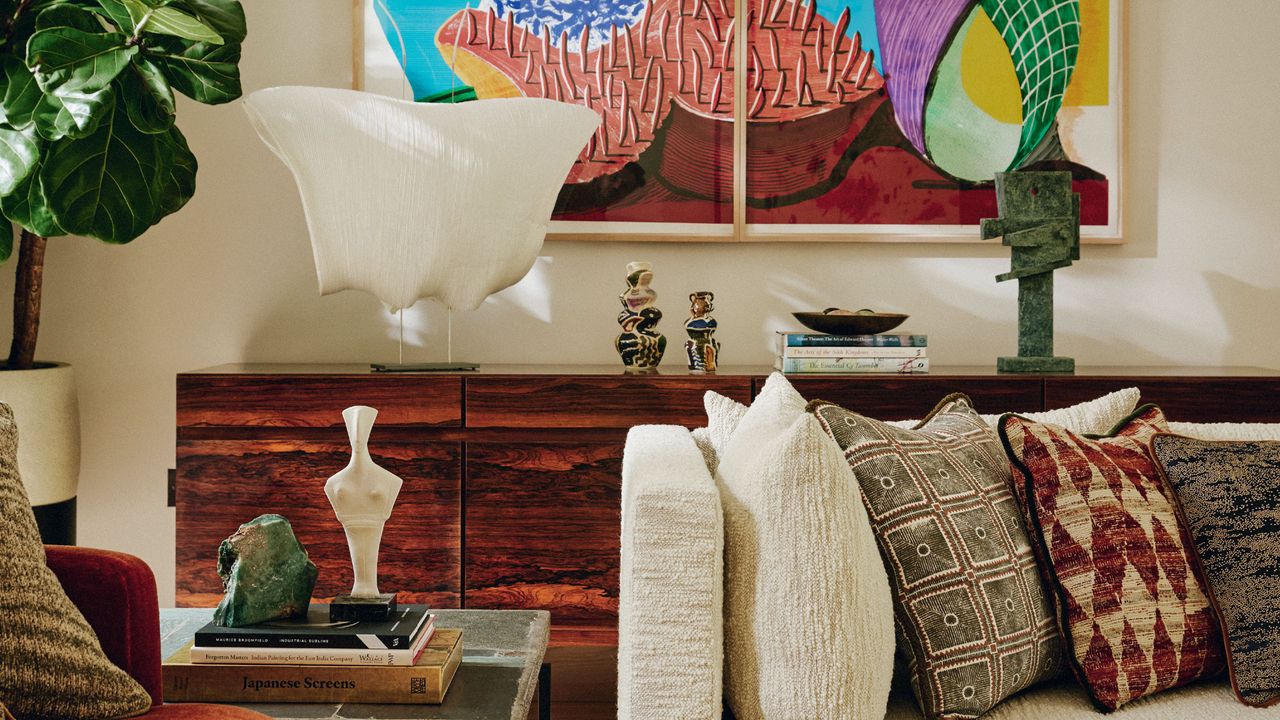
For interior designers, that tethering is the whole point. Amy Jenkinson of Studio Five Interiors counts herself a convert. ‘Sourcing art is the part of a scheme clients agonise over most, and it’s usually the last thing to land,’ she says. ‘With the interior-design tool, you can photograph a client’s inherited console and the app pulls up a tonal landscape whose greys mirror the veins in the marble exactly. That used to take me three art fairs and a fortnight of research.’ The tool she means is Echo, a reverse-image search that recommends artworks that share a room’s visual DNA. There is voice search too: murmur ‘a quiet coastal abstract with pinks and blues, and a little texture’ and the app obliges, no art-historical vocabulary required.
That ease is convincing some designers, though rarely without a caveat – and the debate it stirs is, in its way, the truest measure of the thing. The team at Studio Five is drawn less to the cleverness than to the calm. Their clients want their homes ‘to feel gathered over time, never bought in an afternoon’, and what they prize is the way the app ‘widens the net beyond the same dozen names everyone uses’.
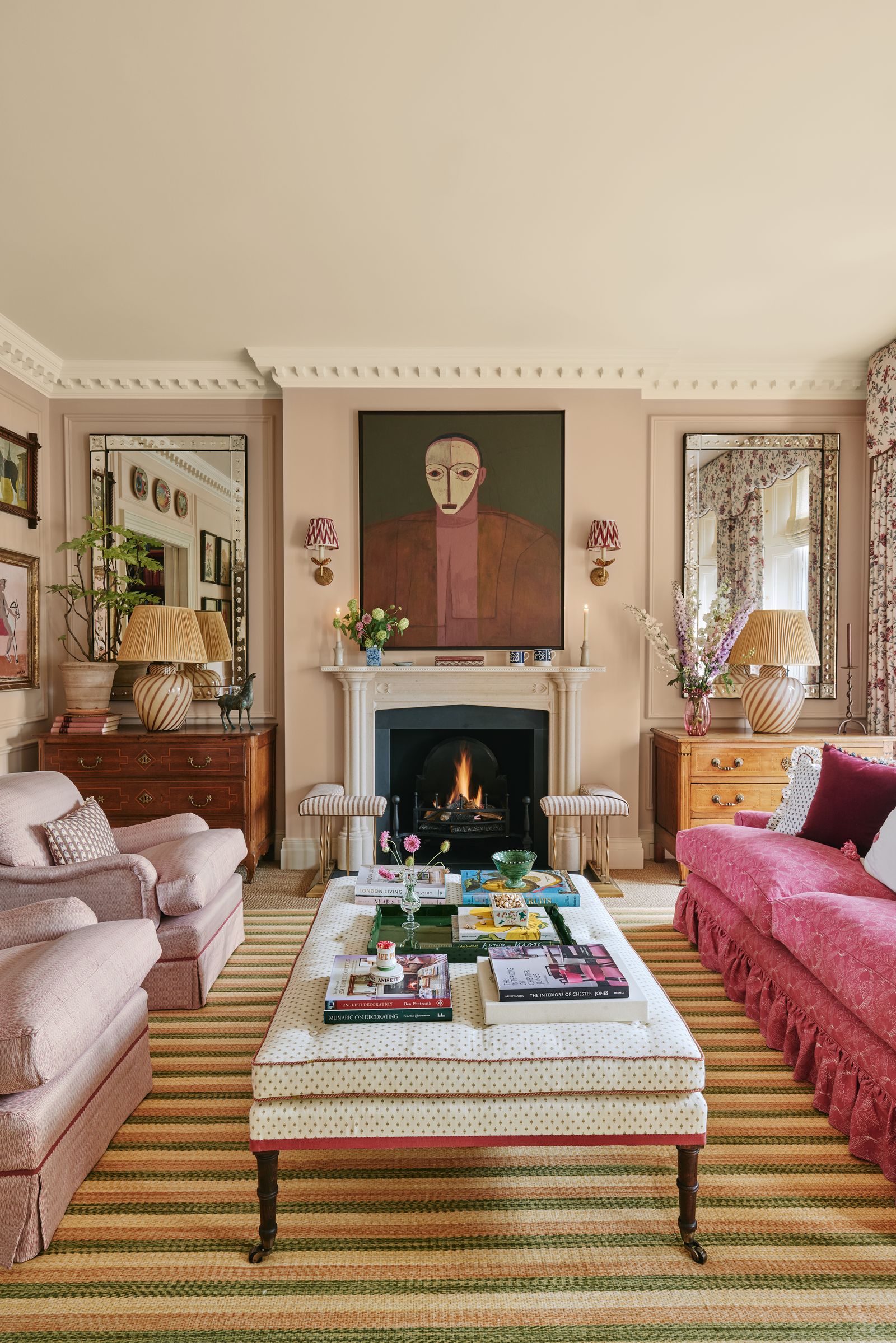
The Performance, 2023, by Peggy Kuiper takes centre stage in this sitting room designed by Stella Weatherall. She eschewed technology for the human touch, working with Lizzie Dixey at The Art Register to find the perfect pieces.
Christopher Horwood
Not every designer will hand over the reins so readily, and nor should they. Designer Wilf Lytton – who trained under Colefax legend Roger Jones, and who now oversees Scawen Interiors – sounds a thoughtful note of caution. ‘I’d consider using it research purposes,’ he says, ‘but I’d be sorry to lose the part of this job that comes from getting lost in a gallery and being surprised. An algorithm, by its nature, tends to lean towards what you already like.’ It is a fair point, and one Ben seems glad to concede: the app, he insists, is a beginning rather than an oracle – a way in, not a replacement for the eye.
The practicalities – so often where good intentions come unstuck – are handled with the same lightness of touch; mock-ups, payment, shipping and even import duty are sorted by the team at NALA, and the work is sent straight from the studio to the buyer. But what finally won me over was the question of who profits. Artists keep their full listed price – the platform takes its 11.5 per cent fee (a fraction of a gallery’s commission) from the buyer, not from the maker – so a purchase feels closer to patronage than to a transaction strained through the usual layers.