
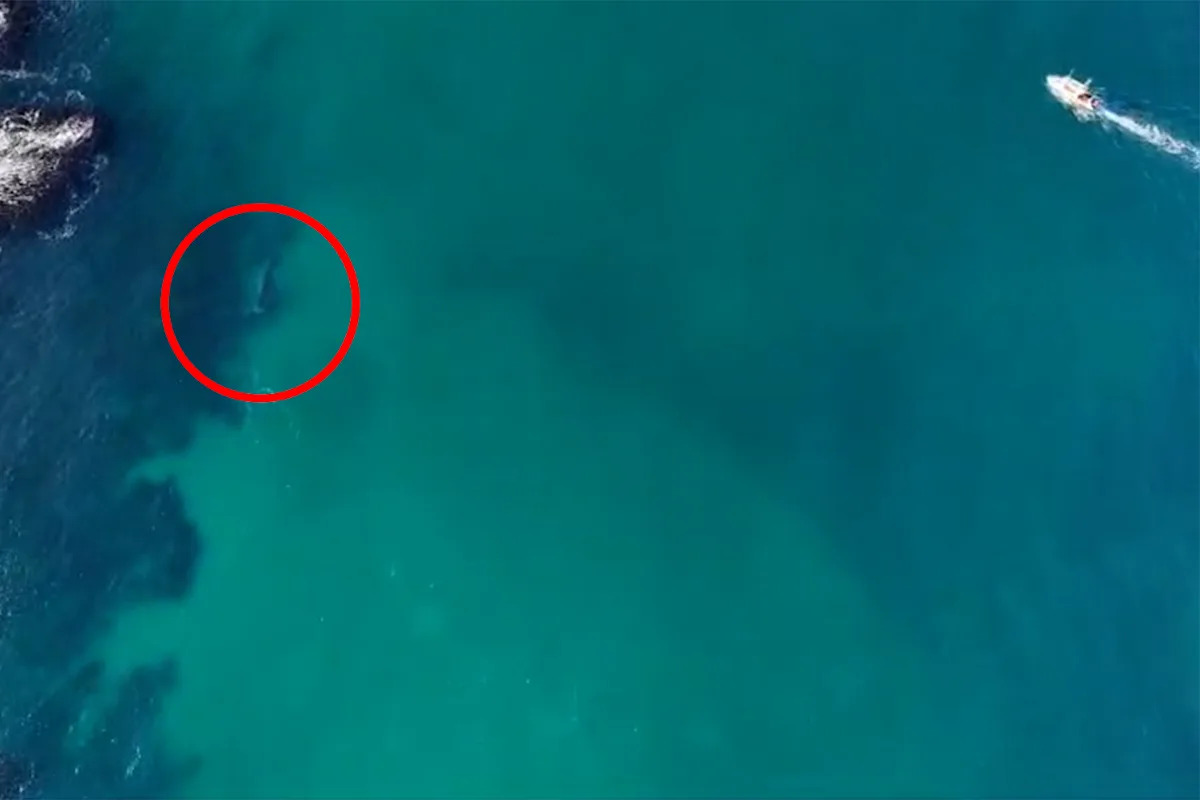
Fishing gear that entangled a 15-metre whale has been retained by authorities as they believe it may help in the search for its owner.
Rope, netting and buoys were the items cut from the humpback’s body, because it had been impeding its movement as it migrated up Australia’s east coast.
Entanglement is common, and if not attended to quickly, affected animals can be cut, mutilated, suffer infection, or have their energy reserves severely depleted.
Active and discarded nets and line, along with shark nets set by the NSW and Queensland governments, all contribute to the problem.
How many whales actually survive after being cut free is unknown, as few are tracked.
The entangled whale was first spotted by Marine Rescue NSW on Saturday morning, 200 metres off the coast of Forresters Beach, on the state’s Central Coast.
As its vessel continued to track the animal, marine mammal experts from ORRCA used a drone to assess the entanglement, which was centred around its tail.
You can watch the incredible video below of the rescue of the whale.
By 3.30pm, specialists from the National Parks and Wildlife Service (NPWS) Large Whale Disentanglement team had cut it free.
It said the process is both “complicated and dangerous”.
RELATED:
NPWS spokesperson Mitch Carter called the outcome “an outstanding collaborative effort”.
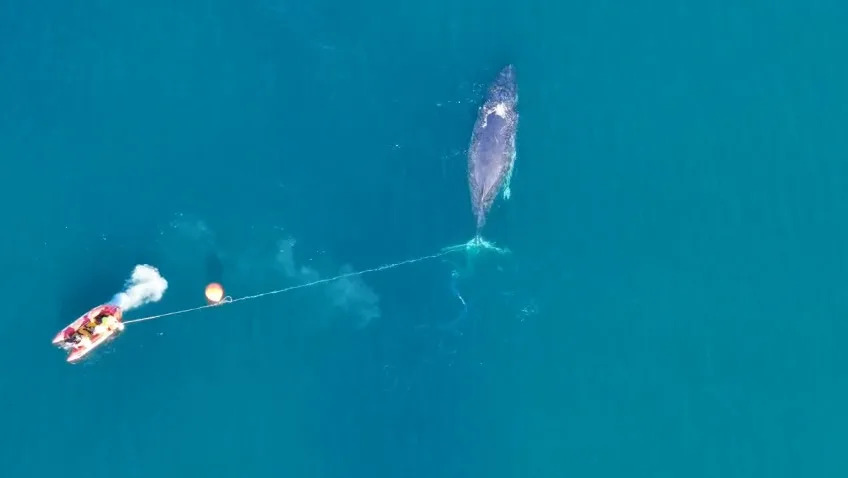
The whale was entangled in buoys, rope and other gear.
(ORRCA)
“The quick reporting of the entanglement, favourable conditions and the ability to confirm the nature of the entanglement using drone footage all contributed to a rapid and successful response,” he said.
“The whale presented some challenges on the water, particularly as it was not lifting its tail as expected, but the skill and persistence of the crew ultimately resulted in the gear being safely removed.”
Major threats facing humpback whales off Aussie coast
Humpback numbers have rebounded to around 30,000 since hunting ceased in the 1970s.
But entanglement, underwater noise from construction projects, and vessel strikes all remain major threats.
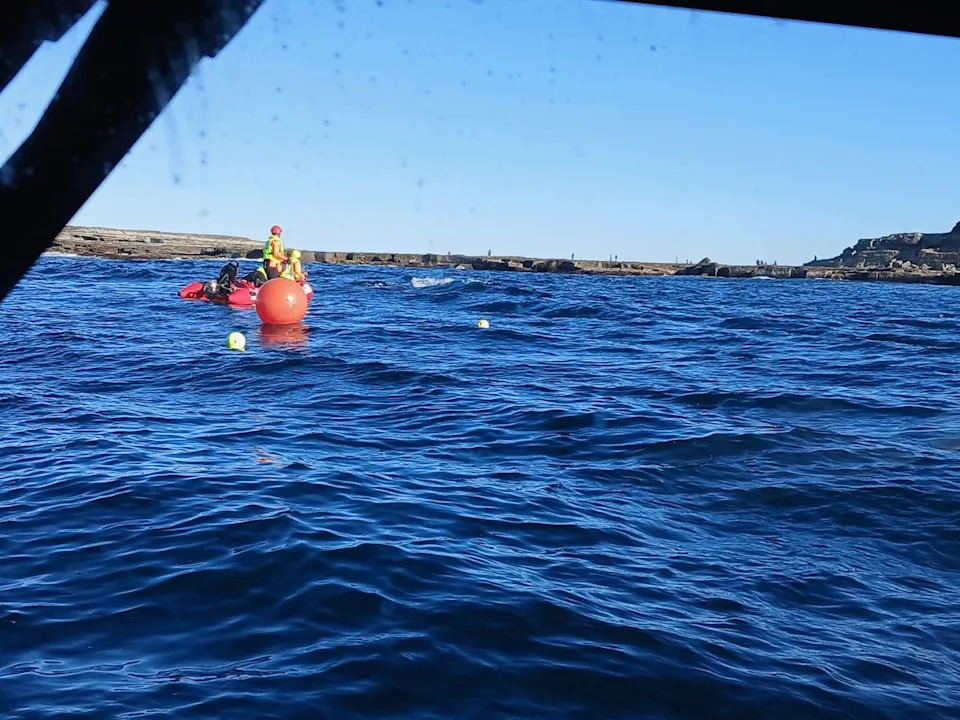
Experts from the National Parks and Wildlife Service (NPWS) Large Whale Disentanglement team cut the whale free.
(NPWS)
Climate change is also affecting them, depleting their main food source, krill, and altering their migration times.
Conservationists are also concerned about industrial krill harvesting off the Antarctic coast, which is often concentrated around key feeding grounds.
Do you have a story? Contact newsroomau@yahoonews.com
You can also follow us on Facebook, Instagram, TikTok, X and YouTube.