
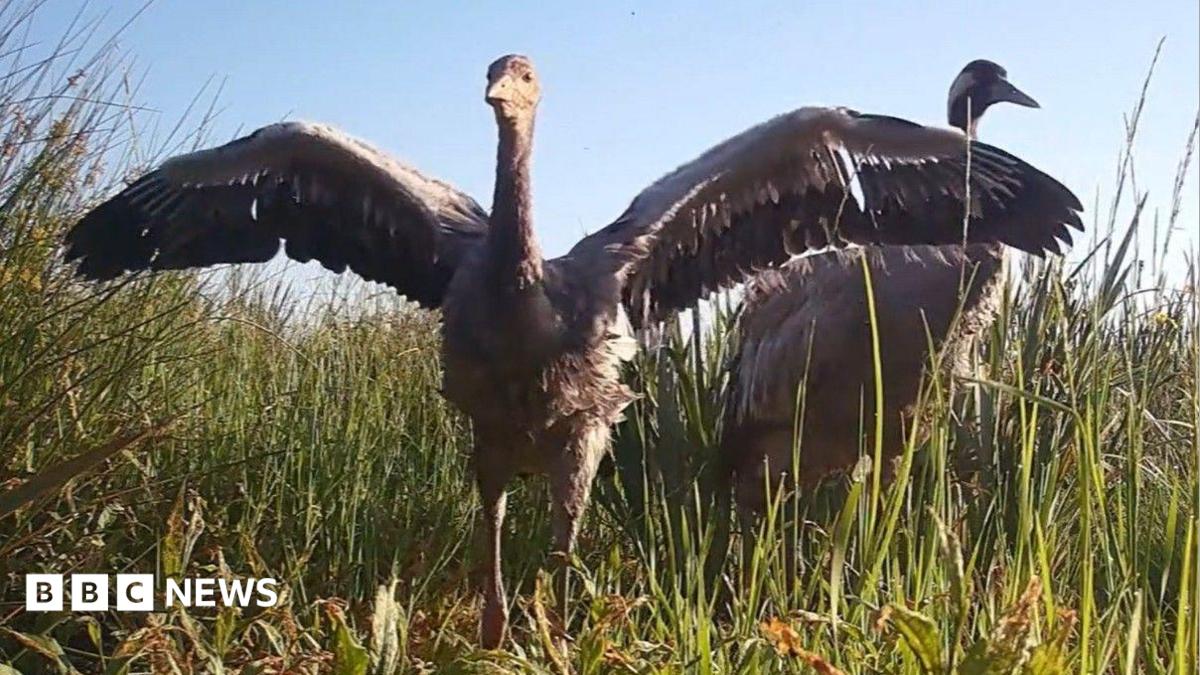
Cranes were once widespread and probably very common across the UK, but they were lost as a breeding species in the Elizabethan Era, according to experts at the RSPB.
It is believed this can be attributed to a combination of the birds being hunted for food and the widespread drainage of their wetland homes for agricultural purposes.
This is Meg’s third successful year of raising a chick at RSPB Ham Wall and it is likely that the unringed father is the same mate, as cranes often pair for life.
Couch added: “RSPB Ham Wall has great feeding areas for cranes too, such as Broomfields, which is more fen-like and dryer than other areas. Again, there are lots of tussocks and rushes there that they can safely hide in whilst munching seeds, roots, worms, snails, and insects.”
This summer the RSPB Ham Wall team are appealing to visitors for support in protecting all breeding birds and fledglings on the reserve, at this critical point in the breeding season.