
Funding to restore wildlife will support 130 projects to safeguard the future of 364 threatened species, some of which are only found in England, government nature agency Natural England said.
Projects from using detection dogs to find rare orchids to tracking “forever chemicals” in dolphins and protecting riverside beetles have secured a share of £60 million investment in nature.
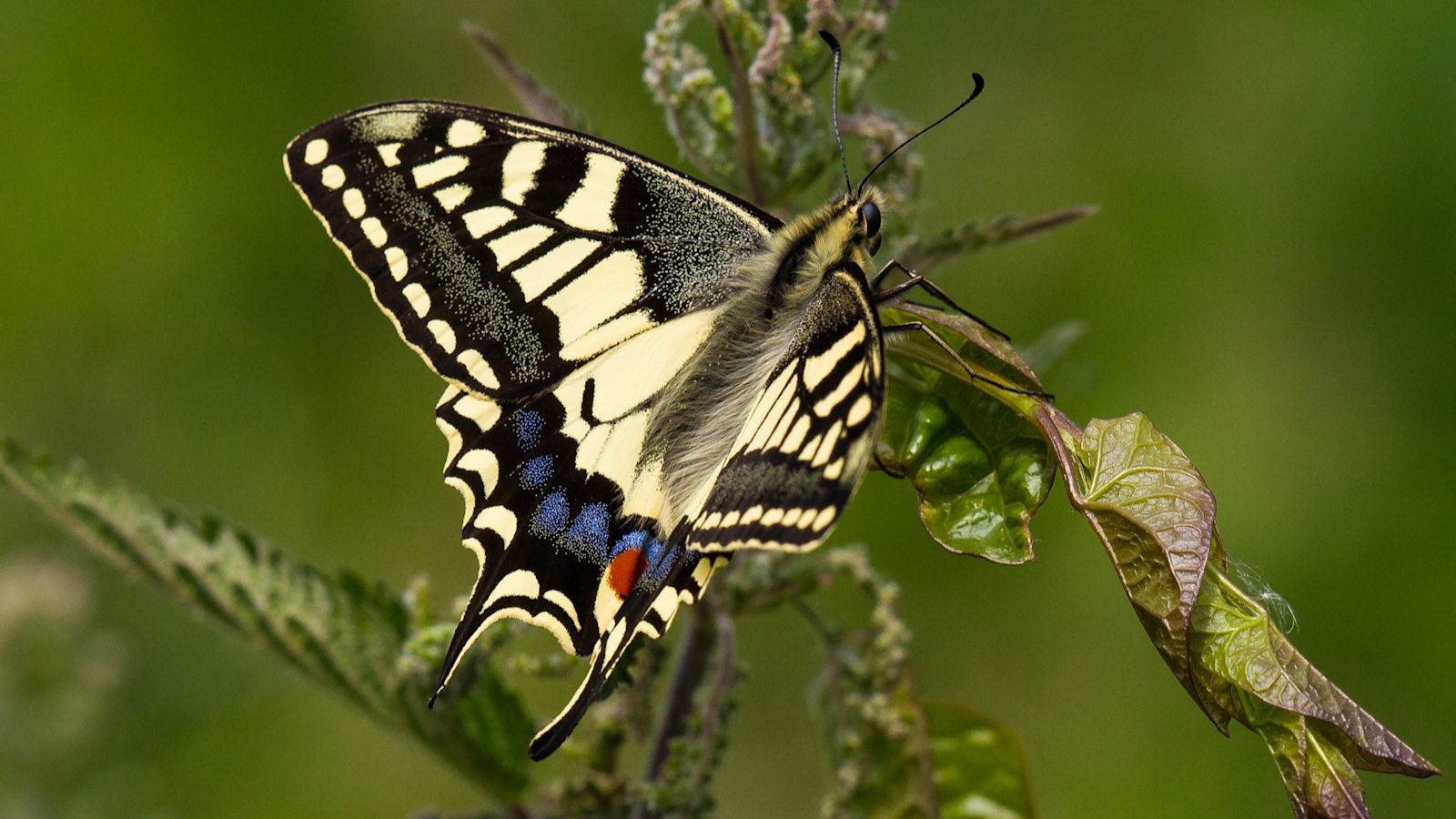
Swallowtail butterflies, white-clawed crayfish, New Forest cicadas, red squirrels, water voles, bats, bees, beavers, wildflowers, nightingales and turtle doves are among the wildlife the investment aims to protect.
The Government funding is part of efforts to meet legal targets to halt declines in nature by 2030, and comes in the face of long-term drops in wildlife populations which have fallen by a third since the 1970s, with one in six species at risk of extinction in Great Britain.
Swallowtail butterflies & white-clawed crayfish are among the wildlife the investment aims to protect. Credit: PA Images
Among the species set to benefit from the funding are the incredibly-scarce ghost orchid, which went unrecorded for 23 years before it was rediscovered in 2009.
Natural England is using detection dogs and eDNA technology to locate and protect populations of the rare plant.
The Zoological Society of London (ZSL) will work to quantify the exposure to PFAS, known as forever chemicals, in dolphins and harbour porpoises, while a project will track individual swallowtail butterflies and map their behaviour and geographic links to the food plant milk-parsley.
Other projects include conservation work in Cumbria to protect the northern dune tiger beetle, efforts to save the brilliantly coloured tansy beetle, whose survival depends on riverside habitats it shares with farmers, and moves to save white-clawed crayfish, at risk from invasive species.
With farmed landscapes seeing some of the sharpest declines in nature, and with healthy ecosystems essential for productive, resilient agriculture, a number of projects receiving funding will support farmers and land managers to restore nature alongside food production, Natural England said.
What is the reaction from Cumbria?
As part of the announcement The West Cumbria Rivers Trust has secured £820k to deliver river restoration and freshwater pearl mussel recovery work.
The programme combines targeted habitat restoration with species recovery work, bringing together WCRT, Eden Rivers Trust, South Cumbria Rivers Trust, the Freshwater Biological Association (FBA), farmers and landowners to deliver practical improvements for river health and biodiversity.
Planned work includes floodplain restoration, embankment lowering, riverbank improvements and measures to reduce sediment entering rivers.
Chris West, Project Manager for West Cumbria Rivers Trust said:
“This funding is a significant boost for river restoration work across Cumbria. While freshwater pearl mussels are at the heart of the programme, the benefits will be much wider, improving river habitat, water quality and resilience for a whole range of wildlife.
“It also strengthens long-term partnership working across catchments, which is essential if we are to restore and protect Freshwater Pearl Mussels.”
Louise Lavictoire, Head of Science for FBA said: “The FBA are so excited to be working once again with WCRT and partners, building upon our solid foundations of evidence-based restoration.
“In our most ambitious target to date, we plan on reinforcing struggling mussel populations with over 9,000 juveniles, pulling populations back from the brink of extinction.”
And “native species recovery hubs”, led by Biaza zoos and aquariums and their partners, will spearhead breeding-for-release programmes, supporting the recovery of 16 rare invertebrate species, officials said.
The £60 million funding is part of the Government’s “wild again: restoring England’s wildlife” initiative to restore nature in the country, and will be invested by the Environment Department over the next three years.
A further £30 million from the Government will be dedicated to helping species recover on the national forest estate.
Environment Secretary Emma Reynolds said: “Nearly one in six species in Britain are threatened with extinction and this Government is taking action to reverse that decline.
A further £30 million from the Government will be dedicated to helping species recover on the national forest estate. Credit: PA Images
“Through the largest-ever investment in species recovery, we are backing projects across the country to protect threatened wildlife, restore habitats and secure the future of some of England’s most iconic species.”
Natural England chairman Tony Juniper said the agency’s species recovery work over decades had revealed how “even the rarest of the rare” could be brought back from the brink of extinction.
“The red kite, lady’s slipper orchid, pool frog, beaver and large blue butterfly are among examples that demonstrate the many opportunities at hand and what can be achieved for nature and wider society.
“We know that good science and effective partnerships can help restore species to favourable status, and this funding will enable us to support many initiatives to help halt and reverse the decline of our wonderful wildlife.”
Reporting History sees journalists join News At Ten anchor Tom Bradby to revisit their remarkable on-the-day reports of the defining events of the modern age. Listen to the episodes below…