
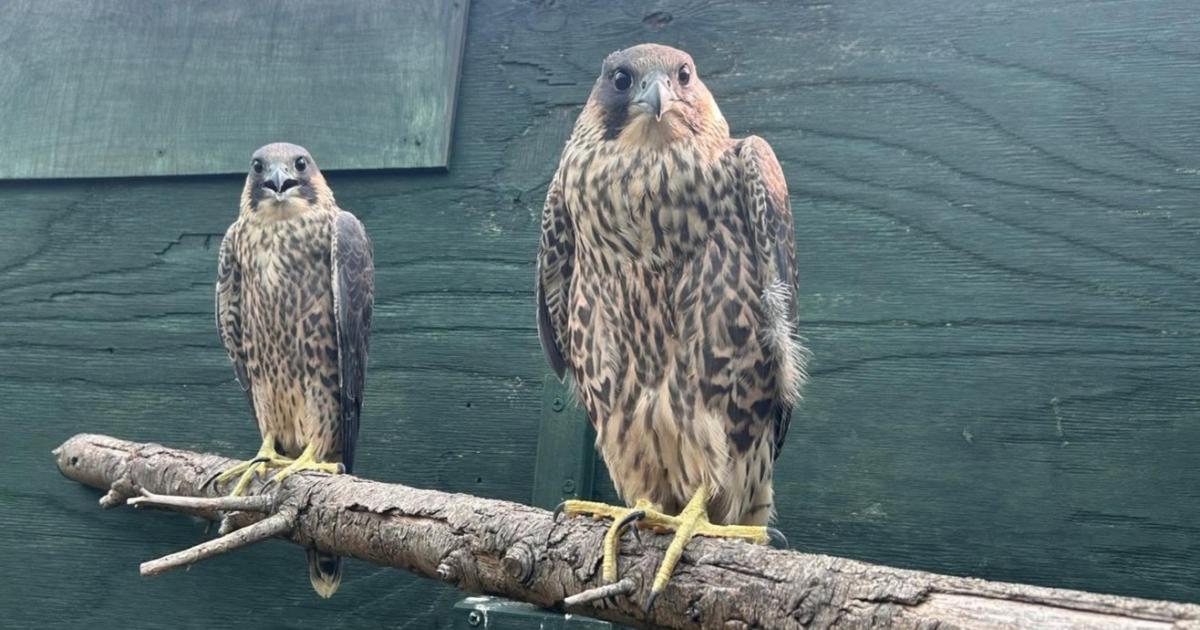
Believed to be siblings, the two young peregrine falcons were taken in by the RSPCA North Wilts wildlife centre in Cricklade after being found in distress.
A spokesperson for the centre said: “We have been blessed with the presence of two sibling peregrine falcons that came to us from Swindon, believe it or not.
“We suspect the pair likely became dehydrated due to the abnormally warm weather and became grounded.
“One of our fantastic volunteers came out to assess them and brought them back to the wildlife rescue centre, where they were given a health check and began their stay with us.
“After lots of hydration and feeding, the pair have now moved into our flight aviary where they are making great improvements and showing off their flying skills.
“We will look to release in the next few weeks.”
The sibling falcons were rescued from Swindon (Image: RSPCA North Wilts)
The peregrine falcon is the fastest animal on Earth, reaching speeds of more than 200mph in a hunting dive known as a stoop.
Once threatened by persecution and the effects of pesticides such as DDT, peregrine populations have rebounded in recent decades thanks to legal protection and targeted conservation efforts.
The species now has green status in the UK, indicating a stable and increasing population.
Peregrines have adapted well to urban environments, nesting on tall buildings such as cathedrals, towers, and industrial structures.
It’s believed that the unusually warm weather being experienced in Swindon throughout June and July, contributed to the birds’ dehydration and led to them needing medical care.
The RSPCA spokesperson added: “Even the worlds fastest animal is affected by our warmer weather.
“So too are the small, slower animals in our gardens and the best thing we can do for them is to provide a shallow dish of water.”
The RSPCA North Wilts centre, known as Oak and Furrows, treats more than 2,500 wildlife casualties each year.
The branch is independent and self-funded, relying on donations, and it is the only RSPCA branch in the region to operate its own wildlife rescue facility.
The centre operates 365 days a year, providing care and rehabilitation for injured, sick, and orphaned wild animals.