
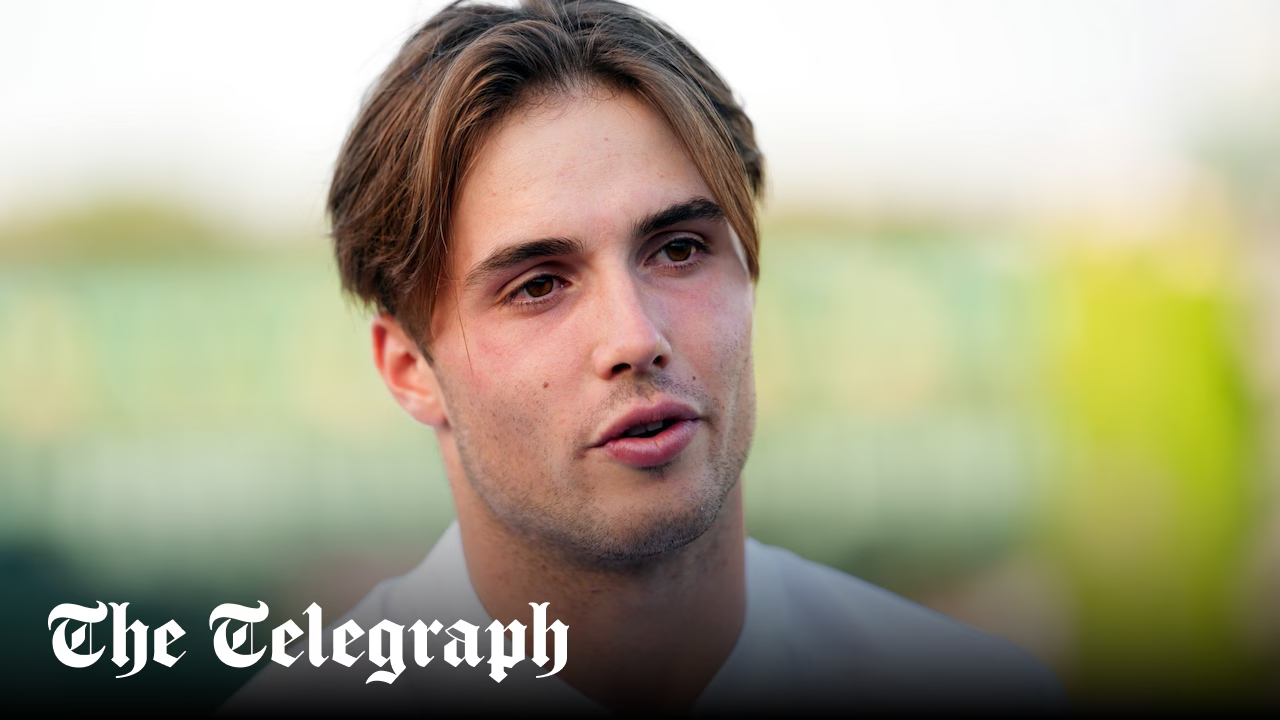
For Leon Smith, a lightbulb lit up when he saw Fery for the first time. “I can’t remember what age group it was, under-14 or under-16. We’re out in La Manga, we’re doing a clay-court training camp and I saw him. And I said to the guy that was running it, ‘This guy’s got a lot in his game’. I mean, he caught your eye. I think I might have said, ‘A bit like [former Monte Carlo champion] Fabio Fognini, that one’, because he had a great backhand, a lot of variety, a good confidence around him.
“I don’t want to use ‘arrogance’, not that, but you could just say he backed himself and that’s really important for a player when they get opportunities, that you do back yourself, because you have to perform in a bigger court and deal with expectations and whatnot. He’s done that really well on various occasions.”
This, above all, has been the most extraordinary aspect of Fery’s rise: the way in which his tennis improves on the biggest points. He also finds inspiration performing in the biggest stadiums, where players of his inexperience are more likely to shrink into themselves.
This is a man with remarkable sang-froid. After beating Cobolli on Wednesday, Fery, who turns 24 on Sunday, the day of the men’s final, was asked whether he could ever have dreamt, two weeks ago, of reaching the Wimbledon semi-finals. He almost shrugged in response, and replied: “I’ve always believed in myself and believed that I could, yeah, be a top player in the world.”
Whatever happens against Zverev, Fery is guaranteed to climb at least 78 places on the back of this tournament. He would be No 36 in the world as a semi-finalist, No 26 if he reached the final, and No 13 if he won the title. Having begun the event as an apparent outsider, amid much discussion of exciting youngsters such as João Fonseca, Arthur Fils, Learner Tien and Rafael Jódar, Fery must now be considered one of the world’s fastest-rising talents.