
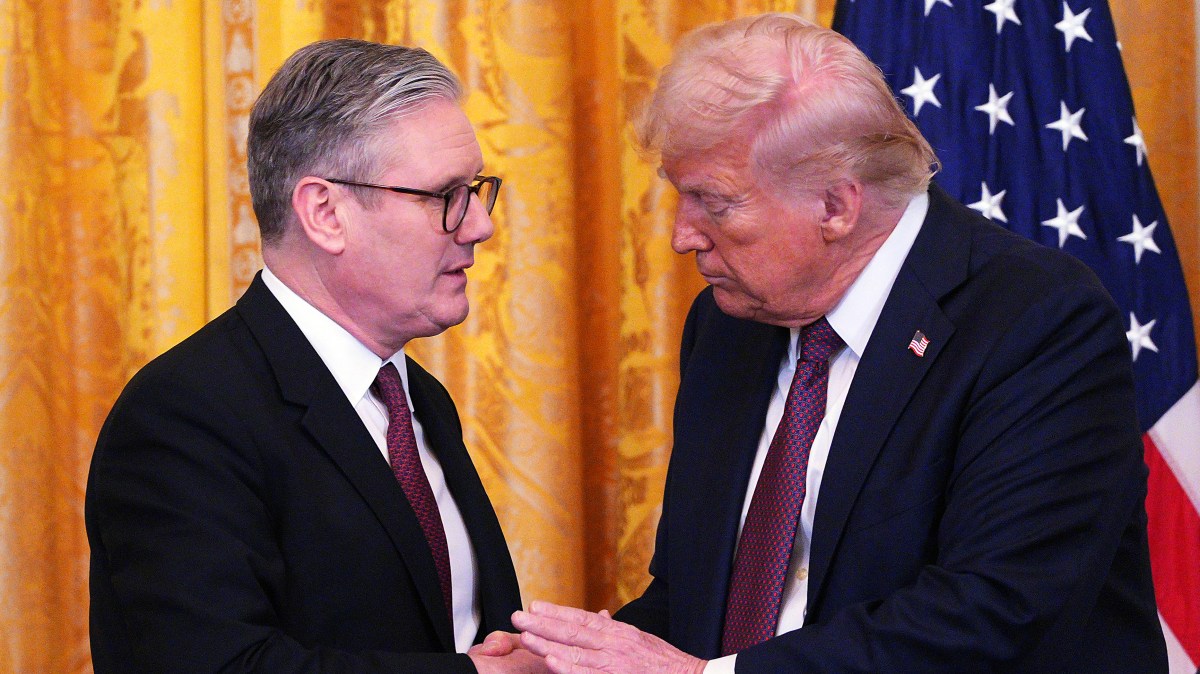
UK exports to the United States dropped to a three-year low after President Trump introduced sweeping tariffs on the world economy.
The latest trade figures showed the value of British goods exported to the world’s largest economy declined by 15 per cent, or £700 million, in June to the lowest since February 2022. Across the second quarter, exports to the US contracted by £4.7 billion after Trump announced a wave of tariffs on goods entering the country from April.
The figures do not reflect the impact of the UK-US trade deal, which limits most tariffs on British goods exports to 10 per cent and came into force on June 30. The agreement means the UK is facing an average tariff rate of 9 per cent on US trade, compared with about 1 per cent before April’s “liberation day” announcement.
Falling exports to the US partially reflected Trump’s import taxes on metals and the car sector. The Office for National Statistics said overall exports of machinery, transport equipment and chemicals fell by £200 million in June, indicating falling automotive sales to the US.
The UK-US deal, struck in May, reduced tariffs on most British car exports from 27.5 per cent to 10 per cent and eliminated levies on steel and aluminium.
William Bain, head of trade policy at the British Chambers of Commerce, said: “Implementation of the UK’s trade deal with the US in full is now needed to improve prospects, particularly for steel and aluminium goods. The agreement should be a platform to discuss further tariff reform with the US, especially in goods sectors where there is little competition on production.”
The UK’s overall trade deficit — which measures the difference between exports and imports —widened by £1.7 billion in the second quarter to £9.2 billion. This was due to a larger rise in imports than international sales, the ONS said. Good exports to the European Union rose over the second quarter by £1.5 billion, or 3.6 per cent.
The trade deficit reflects the gap in goods trade, where the UK has run a persistent deficit in recent decades. In services, where the UK is a major exporter to the rest of the world, the economy continued to record a surplus, which rose by £4.1 billion to £51.9 billion in the quarter.
UK exports to the US surged at the start of the year as American businesses attempted to get ahead of impending tariffs. Net trade boosted the economy by 0.34 per cent in the first quarter and had a marginally positive 0.02 percentage-point push on growth in the second quarter.
Anna Titareva, a European economist at UBS, said the economy would be weighed down by rising protectionism in the second half of the year. “We expect net exports to be the main drag on growth in the coming quarters, with the contribution to GDP growth likely remaining negative in 2026 and 2027 as well,” she said.
Almost a third of UK businesses that export to the US have said they have been impacted by US tariffs and are preparing to face higher costs, according to the ONS.