
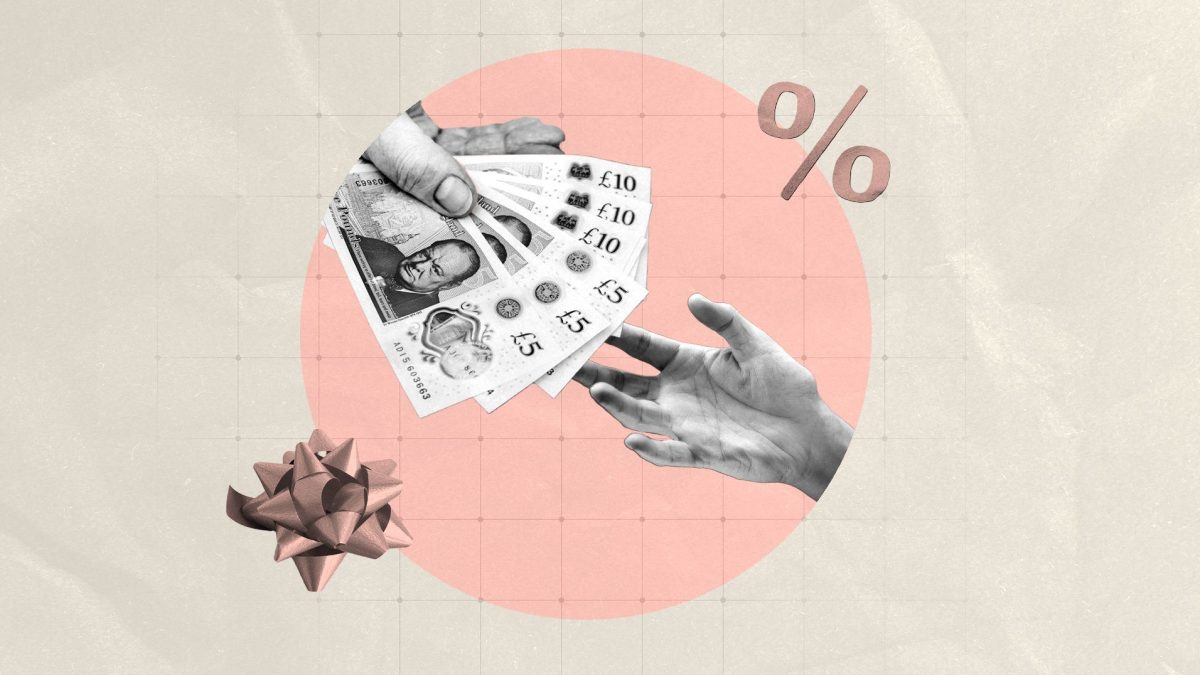
The great wealth transfer of wealth from baby boomers and Gen X to younger generations has been predicted for years, with economists estimating £7trn will pass between generations by 2050.
In some cases, this transfer is happening now – as parents aim to help children with the rising cost of living and difficulty getting on the housing ladder.
Many families also have a desire to cut their tax bills – especially with inheritance tax soon to be applied to pension pots come 2027.
Shorts
Scroll to previous short
Scroll to next short

Despite the job market hiring fewer entry-level roles, employers are still looking for grads…
But you should be prepared to keep an open mind.
We’ve compiled the sectors hiring graduate roles, what degree is required, and what they pay.
 Plan 5 applies to students who began university courses on or after August 2023
(Photo: Abraham Gonzalez Fernandez/Getty Images/
Source: Moment RF)
The degrees to choose for a career
Hiring in the UK could
finally be on the up
47%
of employers offered entry-level
positions from July.
That is up nearly 15 per cent from the same period last year.
700,000
But graduate unemployment rose to six per cent in 2025 and 700,000 jobless graduates were claiming benefits.
Finance and insurance
Around 42 per cent of UK finance and insurance employers say they will be open to graduate roles this summer.
Business loan company Portman Finance Group has taken on 50 graduates over the past four years.
 A lot of thought needs to be put into transferring a DB pension to a DC pot (Photo: Getty Images)
Portman graduates start on £36,000 for the two-year programme and the education you need to apply is a minimum “ABB” of A-levels, and a 2:1 or above university degree. But not in a specific subject.
 Loose, natural fabrics are the best clothing option when the temperature rises (Photo: Kate Wieser/Getty)
Trade and logistics
What makes it particularly rewarding is that there’s always something to learn.
Nearly half (47 per cent) of trade and logistics companies will be giving graduates a go this year.
Salaries start at £30,000 with an uncapped bonus, rising to £50,000 plus a company car as a senior account partner.
Technology and IT
More than half (52 per cent) of UK tech and IT firms are actively looking for graduates.
Successful entry-level candidates can earn a basic salary of up to £35,000, with the opportunity to triple that within their first three years of working.
 Caption: Young business woman searching for job online. Woman writing resume on laptop.
Photographer: Maria Korneeva
Provider: Getty Images
Source: Moment RF

LIFESTYLE
4 min read
Public sector, health
and social services
46 per cent of public sector, health and social services organisations are also ready to take graduates, according to a survey by Manpower.
 A policeman walking away from an elderly person’s home. – stock photo. (Photo: Getty)
For example, Police Now runs a graduate programme into policing. They recruit graduates from any degree field, as long as they achieve a 2:2 or above. Starting salaries range from £31,164 to £42,210 depending on location and rising each year.
Can we treat guests without blowing our budget?
According to Waitrose, a dinner party revival is underway led by younger people trying to reduce the cost of getting together.
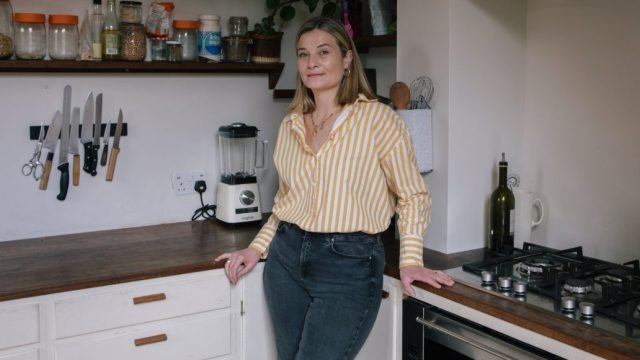
The i Paper food writer Sophie Morris [below] asks chefs for their best ideas for hosting at home.
Always have bread
People will feast on the
bread, and then need less fish/steak/expensive whatever. All small plates restaurants know this: this is why the first thing on the menu is always artisan bread and butter.
ELLA RISBRIDGER, AUTHOR OF THE KITCHEN BOOK – GOOD FOOD FOR EVERY DAY
 Female Hands cutting bread. – stock photo. (Photo: Getty)
Use vegetables as centrepieces
Chef and food writer Helen Graham turns vegetables into centrepieces to cut down on meat and fish expenses.
 Variety Fresh of organic fruits and vegetables and healthy vegan meal ingredients in reusable eco cotton bags on beige background . Zero waste shopping concept. Healthy food, clean eating, eco friendly, no plastic. Flat lay, top view – stock photo. (Photo: Getty)
 Beautiful woman unpacks a full fabric bag with fruits and vegetables on the kitchen. – stock photo. (Photo: Getty)
Add pantry items
Graham’s recipes include a braised cabbage with a preserved lemon sauce, a roast cauliflower with saffron, and harrisa roast carrots with mango labneh.
How to host on a budget
 Many of the dishes we take for granted in British curry joints are entirely unlike anything you might find to eat in the subcontinent (Photo: Getty/E+)
Improve the everyday
Guests will always appreciate a stellar interpretation of the ordinary. Think lasagna or curry.
Generosity
Cooking dinner for your guests is spoiling them – you’re being generous with your time, your effort, and your home. So don’t feel the need to go overboard elsewhere.
 (Photo: FilippoBacci/Getty Images/E+)
 Man serving friends salad at backyard dinner party – stock photo. (Photo: Getty)
Ask for help
Ask friends to bring a contribution, be it a nibble or a pudding.
Big platter energy
[Presentation] can be the key to elevating something . Spaghetti and tomato sauce suddenly looks like a feast when tumbled on a lovely big plate, dressed with olive oil and parmesan and placed in the middle of the table.
Food writer and editor Eleanor Steafel
 Entertaining doesn’t have to be stressful (Photo: The Good Brigade/Getty/Digital Vision)
How to host on a budget
Taco party
Have one expensive filling, like shredded chicken, and two cheaper options, like refried beans, says Ella Risbridger.
 Traditional ice cream parlours are still going strong (Shutterstock)
 Tacos are a popular dish throughout the country (Photo: Daniela White Images/Getty)
Sundaes
Shop-bought ice cream is so easily zhuzhed up with the help of handy toppings, says Eleanor Steafel.
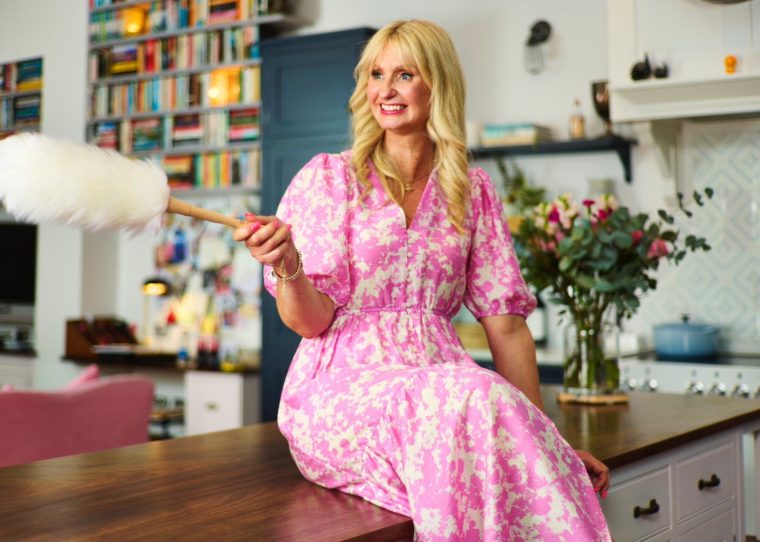 Caption: Lynsey Crombie @lynsey_queenofclean, home expert and TV presenter
Low-effort tricks for
a cleaner house
While many Britons feel inspired to tackle their homes during summer, the warmer months can also make cleaning harder.
But Lynsey Crombie, known as the Queen of Clean, says the hotter months can increase mould, musty smells and sweaty clothes.
Here, she shares the tips and practical
hacks she lives by.
Every 30 washes, clean the machine
A study of 1,000 UK residents by Domestic & General revealed that almost one in 10 Brits have never cleaned their washing machine, yet it could be grubbier than the toilet seat.
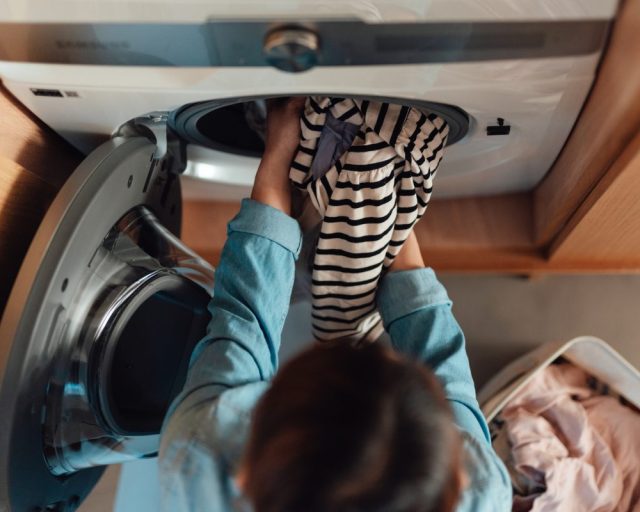 Overhead view of young Asian woman loading the washing machine with laundry – stock photo. (Photo: Getty)
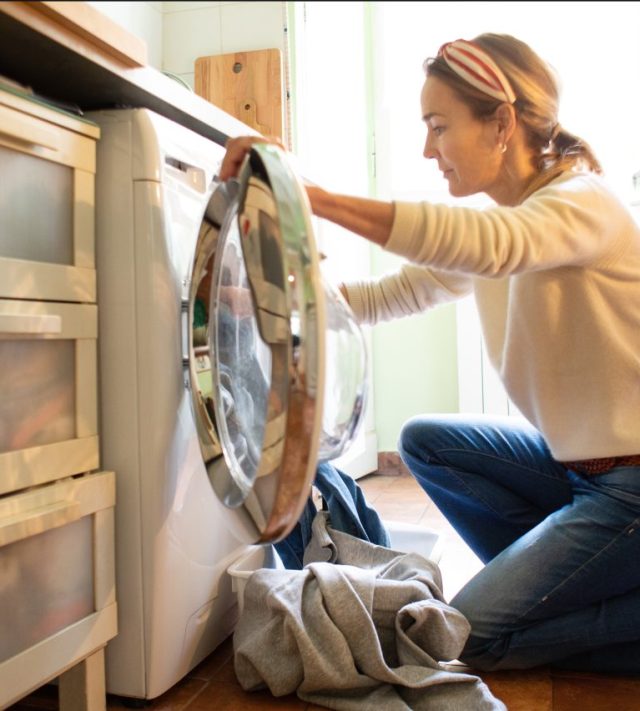 Woman loading washing machine in the kitchen – stock photo. (Photo: Getty)
Crombie says after 30 washes, use 500 grams of soda crystals on the hottest wash to clean out the drum. If there’s sludge, run a quick rinse cycle with some white vinegar.
Always make sure to leave the door and drawer ajar for 10 minutes to dry out too and avoid stale smells.
Household ingredients to use
 Prolonged exposure to forever chemicals has been linked to health problems (Photo: Olga Rolenko/Moment RF/Getty)
White vinegar
This is Crombie’s go to. It can descale the kettle and taps and deodorise places in her home.
Table salt
For tough stains like red wine, rub salt into the stain, leave overnight and wash as normal.
 The drunken monkey theory could explain humans’ drinking habit (Photo: Olga Pankova/Getty)
 The fridge extends a lemon’s lifespan (Photo: Paul Calinescu/500px/Getty)
Lemons
For stubborn water marks, use half a lemon and bicarbonate of soda and leave on for 30 minutes before rinsing.
 For Valentine’s Day, try giving her something she’ll really love (Photo: Getty)
Cold water is better
You’re damaging [wooden] floor [with hot water], making it expand, stretch
and cause gaps…
During hot days, Crombie says to avoid cleaning with hot water altogether to avoid adding humidity to the home.
“Cold water is much better, and if you’re using the right floor cleaning product, it’s still going to be clean,” she says.
Hacks for a cleaner home
Three is the magic number
Wash your towels after two to three uses and make sure they dry properly in-between.
 As it turns out, a human towel is like Alton Towers for bacteria. A lot of fun can be had. (Photo: Joxxxjo/ iStockphoto/ Getty)
 Caption: TOTO Neorest WX
TOTO toilets
www.gb.toto.com
Image supplied by
Julienne Webster
Focus on hotspots
Clean the “high traffic” areas, like the toilets, kitchen worktops and the hallway daily.
Open the windows
To keep a home fresh open the windows for 15 minutes each day – even in colder months.
 Keep your curtains closed (Photo: Mireya Acierto/Getty/Photodisc)
Weekly habits
Do it more frequently, to cut down how long it takes
 He doesn’t always have time to do the cleaning, the ironing, or walk the dog
Photographer: Maryviolet
Provider: Getty Images/iStockphoto
Source: iStockphoto
One task Crombie does weekly is her fridge. This includes a 10-minute wipe-down, focusing on the salad and vegetable tray. “If you save that job up and do it every other month, it’s going to be a very big chore.”

LIFESTYLE
4 min read
Hacks for a cleaner home
 Caption: An employee of the French pan maker Cristel, wipes a frying pan at the Cristel factory, on May 23, 2024, in Fesches-le-Chatel, eastern France. At Fesches-le-Chatel, in the Doubs region of France, the Cristel factory is on a roll: France’s number-one manufacturer of stainless steel kitchen equipment has seen “demand explode” since the National Assembly passed a law restricting the use of PFAS in April. (Photo by SEBASTIEN BOZON / AFP) (Photo by SEBASTIEN BOZON/AFP via Getty Images)
Photographer: SEBASTIEN BOZON
Provider: AFP via Getty Images
Source: AFP
Copyright: AFP or licensors
Stainless steel
Crombie’s hack is one product: Barkeeper’s Friend in powder form.
The expensive products
“If you spend more money, you get the floral scents. The difference is scent, not performance.”
 Deep cleaning glass door handles for Covid-19 disease prevention. alcohol,disinfectant spray on Wipes of Banister in home for safety,infection of Covid-19 virus,contamination, germs – stock photo. (Photo: Getty)
 Cleaning day at home – stock photo. (Photo: Getty)
Ignore online advice
The biggest issue she sees is product overuse. “You don’t need half a bottle of washing up liquid to clean a surface.”
Crombie’s essentials
Four products can do do a full clean of the house.
Antibacterial washing-up liquid: “It can clean almost anything, and any brand works.”
M&S Fabric Refresher spray: It’s pet-friendly, eco-friendly and “ticks all the boxes.”
Cif cream cleaner: “It’s an old school product. It’s so good.”
White vinegar: ““It’s great for washing sportswear, gym kits and is a great stain remover.”
 Most British houses are built to retain heat (Photo: Antonio Diaz/Getty/iStockphoto)
How to keep your sex life going in a heatwave
Don’t endure it
For some people, the heat and the sun boost the production of hormones responsible for joy, pleasure and connection like serotonin and dopamine. For others, the heat causes fatigue and irritability. For them, being touched can set off an anxiety response.
GEMMA NICE [BELOW]

Don’t endure sweaty cuddles
Long-term partners can be upfront and honest with each other and say that it’s too hot to touch right now.
For others, break the tension by having an open and honest conversation.
Choose dates with built-in air conditioning, like the cinema.
Don’t ignore the issue or
power through if you’re too hot.

LIFESTYLE
5 min read
How couples can manage a heatwave
Take penetrative sex off the table
It may make you feel lightheaded, tired, and can even lead to erectile dysfunction because the body is overheating.
 The UK had pretty low numbers of libidinous romantic lovers, suggesting that ‘Brits may not be having as much fun between the sheets as people in other countries’
(Photo: RealPeopleGroup/ Getty Images/ iStockphoto)
 (Photo: Dmitrii Marchenko/Getty).
Indulge in dirty talk instead
Because you aren’t distracted by physical movement, your focus is entirely on your partner’s voice. This can help build a massive amount of tension and sexual desire.
How couples can manage a heatwave
 Caption: Young couple at home practicing yoga. They are watching online fitness live streaming classes.
Photographer: svetikd
Provider: Getty Images
Source: E+
Copyright: SVETIKD
Breathwork
This syncs up your nervous systems and can trigger a deep, full-body energetic response.
Mutual play
Set up a fan and touch yourselves while looking directly into each other’s eyes, says Nice.
 ‘Humid heat is harder heat,’ one expert says (Photo: Getty)
 Our reader’s new partner always wants to ‘chill’ at home rather than go for walks or dinner or come up with ideas (Photo: vm/E+)
Strip and chill out
Just sharing the space and being close to each other can strengthen your bond.
Why you shouldn’t have
sex in the sea
Water actually washes away
your body’s natural lubrication.
It creates friction against the delicate tissue.
This can cause micro tears and severe irritation.
It drastically increases the risk of getting a urinary tract infection (UTI) or a yeast infection.

LIFESTYLE
4 min read
The one easy habit which keeps your
brain young
From adopting a different running route to taking up a new hobby, here are seven ways in which new experiences can dramatically alter your brain health for the better.

 Making friends at work can have a profound impact on happiness (Photo: Tim Robberts/Getty)
Why we need new experiences
A well-connected brain is more resilient to stress, illness and the effects of ageing.
Neurologist Dr Steve Allder says when we try unfamiliar things, our brain is forced to work in new ways.
Over time, this improves the brain’s ability to adapt to change and respond to challenges, helping us to preserve thinking skills and emotional balance.
Why we need new experiences
They strengthen memory formation
Regularly exposing yourself to new situations – even small ones – helps exercise your memory systems, which improves your ability to store and retrieve information.
 A human brain made of wool with folded paper brainwaves – stock photo. (Photo: Getty)
 Puzzles like sudoku have now been widely shown not to protect against cognitive decline (Photo: Getty Images)
They improve overall learning ability
Just as muscles adapt to new exercises, the brain adapts to new mental demands. As we age the brain then benefits from regular stimulation and maintains sharpness.
Why we need new experiences
 Caption: Happy woman walking with male partner in vineyard during sunset. Elderly couple are touring in field against sky. They are enjoying during weekend.
Photographer: Morsa Images
Provider: Getty Images
Source: Digital Vision
Boosts dopamine
New experiences naturally stimulate dopamine, which encourages positive behaviour patterns.
Reduce cognitive decline
New experiences activate different brain regions, helping to keep more areas working.
 Happy pregnant mother sitting close to smiling teen daughter while taking selfie on smartphone – stock photo. (Photo: Getty)
 Caption: Portrait of elderly woman solving sudoku puzzles at home, sitting in living room. Sudoku as popular game for aging people, logical thinking, problem solving.
Photographer: Halfpoint Images
Provider: Getty Images
Source: Moment RF
Problem-solving
Your brain must evaluate options, test ideas and adjust its approach.
The benefits of new experiences
Each time you adapt successfully to something new, your brain learns that change can be handled. This improves emotional flexibility, making it easier to cope with stress and unexpected events.
They also often involve other people, whether through travel or social activities. This stimulate areas of the brain
responsible for communication, empathy and understanding others’ perspectives.
 Running might not seem like the most appealing hobby, but if you give it a try, you might be surprised (Photo: EMS-FORSTER-PRODUCTIONS/Getty/Digital Vision/ems-forster-productions)

Your sleep has a huge impact on your heart health
How sleep and your heart
health are linked

Adults who regularly sleep fewer than seven hours are at increased risk of high blood pressure, obesity, heart attack and diabetes.
The risk of coronary artery disease is 45 per cent higher in adults with short sleep durations at night.

LIFESTYLE
4 min read
The bedtime habits that reduce risk
 Sleep tourism in hotel. Exhausted woman sleeps sweetly in bed in the morning – stock photo. (Photo: Getty)
Consistency
Keep daytime naps to less than 20 minutes and aim for seven to eight hours sleep per night.
Wind down
A reasonable 20-30 minute bedtime routine can include reading, light stretching, and meditation.
 A mature man meditates in the last sun rays coming into his bedroom – stock photo. (Photo: Getty)
 Caption: Close-up view of female jogger tying laces of her sport shoes before running exercise routine. Motivation, healthy lifestyle and fitness concept.
Photographer: Xavier Lorenzo
Provider: Getty Images
Source: Moment RF
Time your exercise
Vigorous exercise within three hours of bedtime can cause insomnia.
The bedroom environment
 Pensive young Asian woman sitting on bed writing on journal in cozy bedroom. Copy space. – stock photo. (Photo: Getty)
Sleeping in a bedroom with bright overhead light has been associated with a higher risk of major cardiovascular events, including heart attack (47 per cent higher risk), stroke (28 per cent) and heart failure.
Darken the room with blackout blinds or an eye mask, avoid blue light and leave your mobile phone outside your bedroom.
The bedtime habits that reduce risk
Food and drink
Alcohol, nicotine, caffeine and large evening meals can all disrupt sleep quality.
 One theory is that alcohol and drugs can hijack the brain’s pathways (Photo: Guillermo Spelucin/Getty Images)
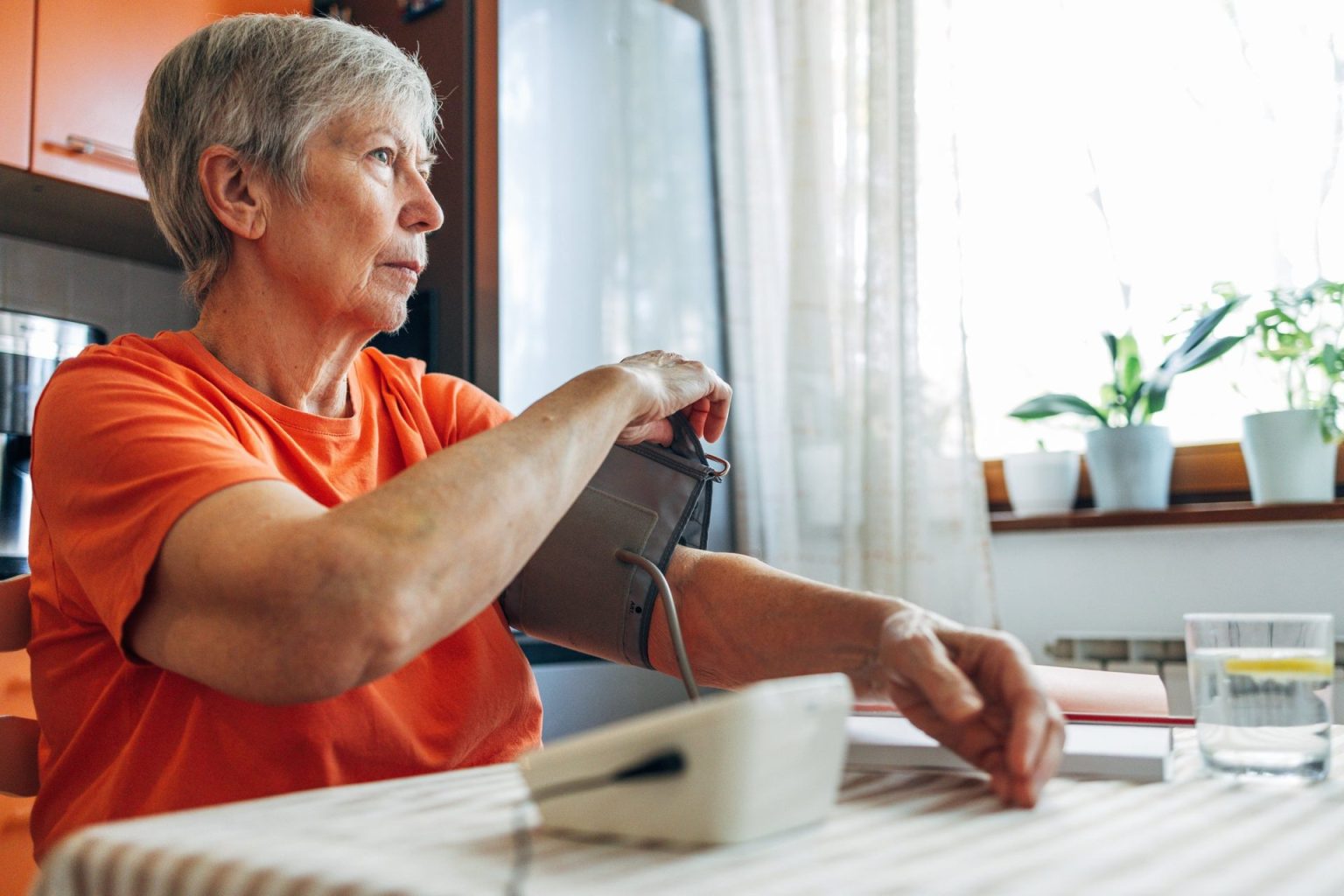
Know your numbers
If your blood pressure at bedtime is consistently high, consider discussing medication with your GP.
Beware of snoring
Sleep-disordered breathing is linked with cardiovascular conditions, so it could be time for a GP evaluation.
 Separate bedrooms is not the first step on the road to dissolution; it’s the route to joint survival (Photo: LordHenriVoton/E+/Miljan Lakic/Getty)
 Alzheimer’s can be seen on brain scans (Photo: Tek Image/Getty)
HEALTH
Reflecting on the early signs of dementia
Three families reflect on the early signs of the illness, which affected their parents.
They include the things they missed or dismissed, what they’d do differently and what they’d want other people in the same position to know.
Robert and his mother Joyce
She fell for a scam
 Robert’s mother Joyce spent her last six years in a care home
One of the first incidents that rang alarm bells for Robert was his mum falling victim to a suspected scam from someone selling mattresses door-to-door.
She also started to struggle with cooking and making her special dishes she’d been making for decades without a problem.

LIFESTYLE
5 min read
Did he tell his mother?
We [had] just sort of played along with everything. But on one particularly bad day, I blurted it out over the phone, ‘Because you’ve got dementia, mum!’ She threatened to kill herself, which was very scary. Maybe it’s something I should have explained properly to her from the get-go.
JOYCE WAS DIAGNOSED WITH ALZHEIMER’S IN HER EARLY SEVENTIES
 Old man with dementia enjoys sunny weather – stock photo. (Photo: Getty)

Rosie became a carer
in her early thirties
I think we missed some of the really early subtle signs.
Rosie’s mother was diagnosed with Young Onset Alzheimer’s Disease at 58 but some symptoms, like brain fog, were put down to the menopause.
She had become more forgetful, and was repeating herself, but as she had always “been scatty” it was dismissed.
She became fixated
It was on strange things like going to the same buffet.
Chloe was just 14 when her mum, Sarah, was diagnosed with young onset frontotemporal dementia, a rare form of the disease.

Another time Sarah, who was diagnosed in her forties, forgot how to boil an egg.
On Saturdays, when she’d usually go shopping, she’d go out and come straight back home, almost like she was forgetting
what she was going out for.
Unused or unwanted subscriptions cost consumers £1.6bn.
Writer Sadhbh O’Sullivan looked into her own forgotten subscriptions when she became a first-time buyer, and realised how much she was wasting on things she wasn’t using.

 Are you good at managing money (Photo:
Peter Dazeley/Getty/The Image Bank RF)
The hidden spends that go unnoticed
I’d long considered myself to be quite a reasonable spender.
But the hidden costs across her bank accounts, like free trials that hadn’t been cancelled and memberships for abandoned services, proved otherwise.
It was full of small amounts, £2.99 here, £4.50 there. These small amounts added up.
The ghost subscriptions
Sadhbh isn’t alone.
19%
According to a Nationwide survey almost one in five Brits don’t use every platform they pay for.
The bank suggests they could save as much as £400 a year by ditching them.
4.7 million
National Trading Standards’ 2025 research found 4.7 million people were paying for subscriptions they didn’t know they’d signed up for.
In 2024, a government report found unused and unwanted subscriptions cost consumers up to £1.6bn a year.
How to deal with the subscriptions
Hunt them down
Banking apps usually list your ‘subscriptions’ separately from direct debits and standing orders so you can easily spot what you’re shelling out on.
 Pensioners have some flexibility over the timing and payment of their state pension
(juststock/Getty Images/iStockphoto/ NIPITPHON)
 Edge will give customers cashback on debit card and direct debit spending
Check everything
You can be debited through credit cards, E-payment services, your mobile phone bill, Apple Pay or Google Pay.
How to deal with subscriptions
 Dating apps have failed the black community, says Amber (Photo: Morsa Images/Getty)
Be honest
Don’t vow to use a subscription you’re not going to, even if you
have good intentions.
Look over 13 months
Many businesses have changed from monthly to annual payments so look further back.
 Changes are due to kick in on everything from inheritance tax to filling in self-assessment forms (Photo: Getty).
 Customers struggling with debts are highly likely to be in vulnerable circumstances, regulators warn
(Photo: Martin Prescott/Getty)
Future proof
Make sure to track any subscriptions you have kept so you can cancel them, if need be, in future.
Don’t be afraid of phone calls
If companies don’t let you cancel online, don’t fear the customer service line.
With TV and broadband, call the new customer number as it’s often answered more quickly.
If you’re happy with the service, but not the price, speak to a real person that may offer a better deal.
Look for a phone number and press the ‘thinking of leaving us’ option. It’s usually a fast track to a team with authority to offer bigger discounts.
But on the other hand, some remain reticent to part with their cash early – with financial advisers saying their clients often have concerns about “access and control”.
Why do people gift money?
Gifting is a tax-efficient way to pass down wealth while someone is still alive, crucially cutting inheritance tax (IHT) bills.
IHT is calculated upon a person’s estate, which includes a property, money and possessions, when they die.
A person only pays IHT if the value of their estate exceeds the £325,000 threshold. If the deceased’s estate is passed on to a spouse or civil partner it is free from IHT regardless of the value.
If you give away your home to a direct descendant – adopted, foster and stepchildren are included – your IHT threshold increases to £500,000.
If you are married or in a civil partnership any unused allowance can be passed on to your partner – so in theory a married couple could have an IHT allowance of up to £1m.
However, from April 2027, pensions will form part of a person’s estate when IHT is calculated, meaning those with large pension pots may begin paying the tax for the first time.
Gifting can be a way to mitigate these bills. No tax is due on any gifts if the person lives seven years after giving it – known as the seven-year rule.
If a person dies within seven years of giving a gift and IHT is due on it, the amount of tax due will depend on when the gift was given.
Gifts given in the three years before a person dies are taxed at 40 per cent, while gifts given three to seven years before their death are taxed on a sliding scale between 32-8 per cent.
Why are some people reticent
Despite gifting having tax benefits, some parents are reluctant to do so.
To effectively reduce IHT, a gift must be given with strings completely detached, so it means a parent parting with their money for good.
Les Cameron, retirement savings and tax expert at M&G, said people are worried about gifting even if they can afford to – and risk a high tax bill for family because they are concerned about access and control.
He said: “Money can represent security, independence, or something people have spent a lifetime building so letting go of it isn’t always an easy decision.”
According to Will Stevens, partner at advice firm Killick & Co, fears about need for money in the future can limit how much a family is prepared to gift.
“Fear around rising care costs contributes to this cautiousness, but the result is an estate that incurs inheritance tax, which can cause unnecessary financial strain for younger generations,” he said.
James Burnham, financial planner at One Four Nine Wealth, said in some cases reticence can be sensible. He said families need to consider how their expenditure in retirement may change.
He said : “For couples who are particularly reliant on one individual for their retirement income, thought needs to be given as to how the other would manage if the higher-income pensioner died significantly earlier.”
Giving money ‘devastated’ me
In David Maas’s case, giving £72,000 to a family member left his and his wife’s finances “devastated”.
The 61-year-old from Oldham dipped into his and his wife’s savings to help the family member pay off debts he had racked up.
He said: “It devastated us. Most of our savings were gone, we couldn’t go on holiday anymore. The cost of running my car became difficult.
He said his family member told the couple not to gift him money, and that he would repay the debt, but David said he didn’t believe it was right for the couple not to help out.
 David Maas says gifting money to a family member left him ‘devastated’
Over the past 10 years the couple have been trying to slowly save up again and now have £110,000 in part to an inheritance from David’s father-in-law they received, which allowed them to pay off their mortgage.
David is wheelchair-bound and makes money by participating in high-paying surveys – getting around £600 a month from them.
He is also on the highest level of PIP which is around £670 a month and goes on paying for his car.
“We manage to save about £200 a month but I haven’t contributed to a pension for 18 years now. My savings are meant to be a cushion for my retirement,” David explained.
He said gifting money has been the catalyst in making him concerned about his retirement and admits “I don’t know what is going to happen to me”
David says he was highly upset at having to use money from important savings pots, leaving him feeling less financially secure than before.
He added: “The money I am making now just covers the food bills and petrol costs. My wife is 70 and she has a teacher’s pension and state pension which covers the outgoings like electricity and gas. I am concerned if I am going to be able to retire.”
What should you do?
Burnham said that before making any gifts you need to do a detailed analysis of expenditure, broken down between essentials, non-essentials and luxuries.
The financial expert added: “There then needs to be an honest discussion between parents about the minimum standard of living they would be prepared to accept in a worst-case scenario, and how they would fund unplanned events such as long-term care.”
Cashflow modelling with appropriate stress-testing can help parents visualise and quantify their lifetime capital needs so they can make gifts with more confidence, according to Burnham.
Cashflow modelling is the process of forecasting your future financial position based on things like your current income, expenses and assets. It helps you understand how your finances will change over time allowing you to make informed decisions about your spending and saving.
Burnham said for those with personal pensions, securing the agreed minimum standard of living via an annuity can ease worries.
Annuities convert savings into an annual pension providing you with a guaranteed income in retirement, so they give you more certainty than flexibly drawing down from a pension.
If outright gifting doesn’t feel right for you, there are other options you can go for.
Cameron said: “A financial adviser can help structure wealth in a way that balances tax efficiency with flexibility, for example through trusts or other arrangements that allow people to retain an element of access or control.”