
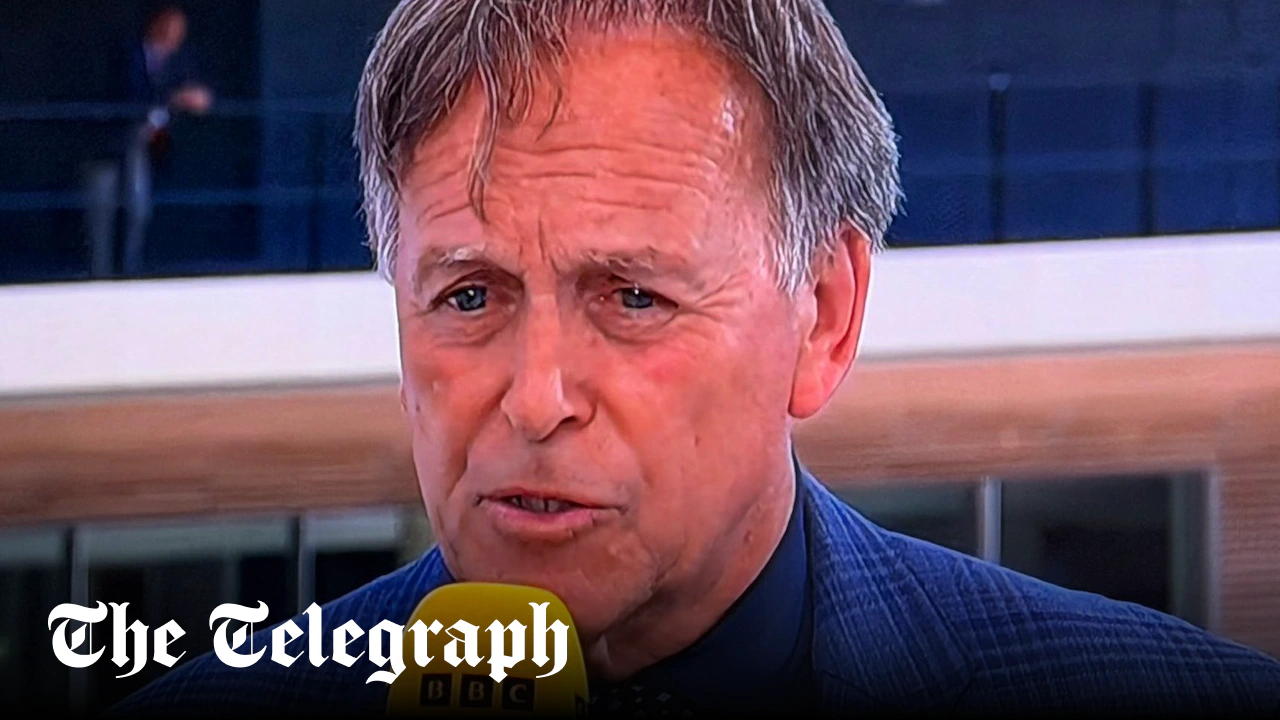
“I’ve got no regrets,” added Lloyd, whose urbane tones have been a reassuring constant during the BBC’s coverage of Queen’s and Wimbledon for decades. “I’m very fortunate to do it. I’ve been a lucky guy. It feels strange to be doing my last match, but I’m happy, because it’s been a really good ride. I can’t even tell you whether it’s 25 years now or 27, because I’m not very good at dates. But I think I must have started when it was black-and-white TV.”
The BBC has been looking to modernise its coverage this year after reports that senior figures at the All England Club had complained of a lack of innovation. Laura Robson is among the pundits who have popped up in new courtside reporting roles during matches, and Jamie Murray is fulfilling a data-driven role as a technical analyst.
Lloyd, however, is not a broadcaster with a close interest in statistics. “It’s a different audience now,” he said. “Much more analytics. There’s stats going left, right and centre.
“But when I was starting out, [former BBC legend] Dan Maskell said to me, ‘Always remember your audience.’ He didn’t mean it in a condescending way, but he said ‘75 per cent of the viewers are housewives who tune in for two weeks, but don’t follow tennis for the rest of the year, and don’t know how to score a tie-break. If you talk about pronating the wrist on the serve, they really won’t understand what you’re on about, so keep it general.’
“Dan would use very short, very simple phrases. ‘Oh, I say.’ Or ‘A peach of a shot.’ He also had one of the greatest voices of all time, which helped. I always tried to listen, not to over-talk, and just to be conversational as much as I could.”
Lloyd’s first experience of broadcasting had come in 1993 on American cable network HBO, after Jimmy Connors and his great pal Vitas Gerulaitis had both turned down the post. That was a testosterone-fuelled environment where commentators were allowed to swear – as long as it wasn’t the F-word – and the directors used even more industrial language over the talkback system.