
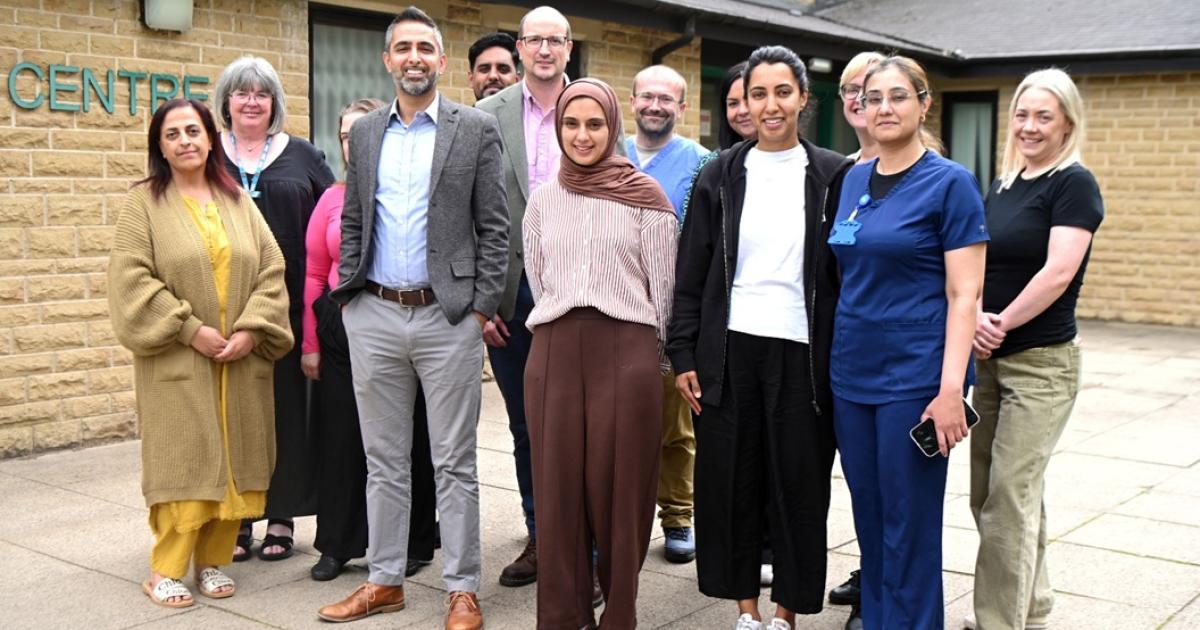
Leylands Medical Centre, based in Heaton, Bradford, received the top grade following a Care Quality Commission (CQC) inspection that took place from March 16 to 19.
The practice, which was previously rated as “requires improvement,” cares for around 18,735 patients across three sites on Leylands Lane, Haworth Road, and Five Lane Ends.
Staff at the ‘Outstanding’ at Leylands Medical Centre (Image: Newsquest)
Dr Mohammed Bhamani, senior partner at the Leylands Medical Centre, said: “It’s recognition for the hard work that gone in over the years.
“Our previous Ofsted came at a bad time and a period of instability, and it didn’t reflect the work we are doing at the practice.”
Dr Bhamani emphasised the impact of geographic health inequalities in Bradford.
He said: “If you travel 10 miles north to Baildon, the average life expectancy is 10 years different.
“We want to close that gap and detect conditions earlier by focusing on prevention.
“We want to identify groups who have experienced greater barriers to accessing health care.”
He acknowledged that phone access remains a challenge for some patients, particularly during the 8am rush.
Dr Bhamani said: “We’ve dropped barriers for needing doctor’s appointments.
“We are trying to be as accessible as we can be so we can better understand our patients’ needs and direct them to the right person.”
Tom Baker, manager of the medical centre, said: “We’re looking at the patient holistically using a better, more bespoke service.
“We’re looking at the person, not just the problem they bring in on one day.”
He said the new approach is making a difference.
Mr Baker said: “We find that patients are more engaging.
“It is much better for them.
“They’re more likely to keep up to date with vaccinations and cancer screenings.”
Dr Bhamani said the focus on prevention helps to catch and manage conditions like diabetes and hypertension earlier.
He said the centre’s clinical support team works closely with nurses, pharmacists, and GPs to deliver coordinated care, with non-clinical staff also involved in patient discussions.
Dr Bhamani said: “Sometimes a 30-second conversation can make a big difference.
“This has been revolutionary for us.”