
Your support helps us to tell the story
From reproductive rights to climate change to Big Tech, The Independent is on the ground when the story is developing. Whether it’s investigating the financials of Elon Musk’s pro-Trump PAC or producing our latest documentary, ‘The A Word’, which shines a light on the American women fighting for reproductive rights, we know how important it is to parse out the facts from the messaging.
At such a critical moment in US history, we need reporters on the ground. Your donation allows us to keep sending journalists to speak to both sides of the story.
The Independent is trusted by Americans across the entire political spectrum. And unlike many other quality news outlets, we choose not to lock Americans out of our reporting and analysis with paywalls. We believe quality journalism should be available to everyone, paid for by those who can afford it.
Your support makes all the difference.Read more
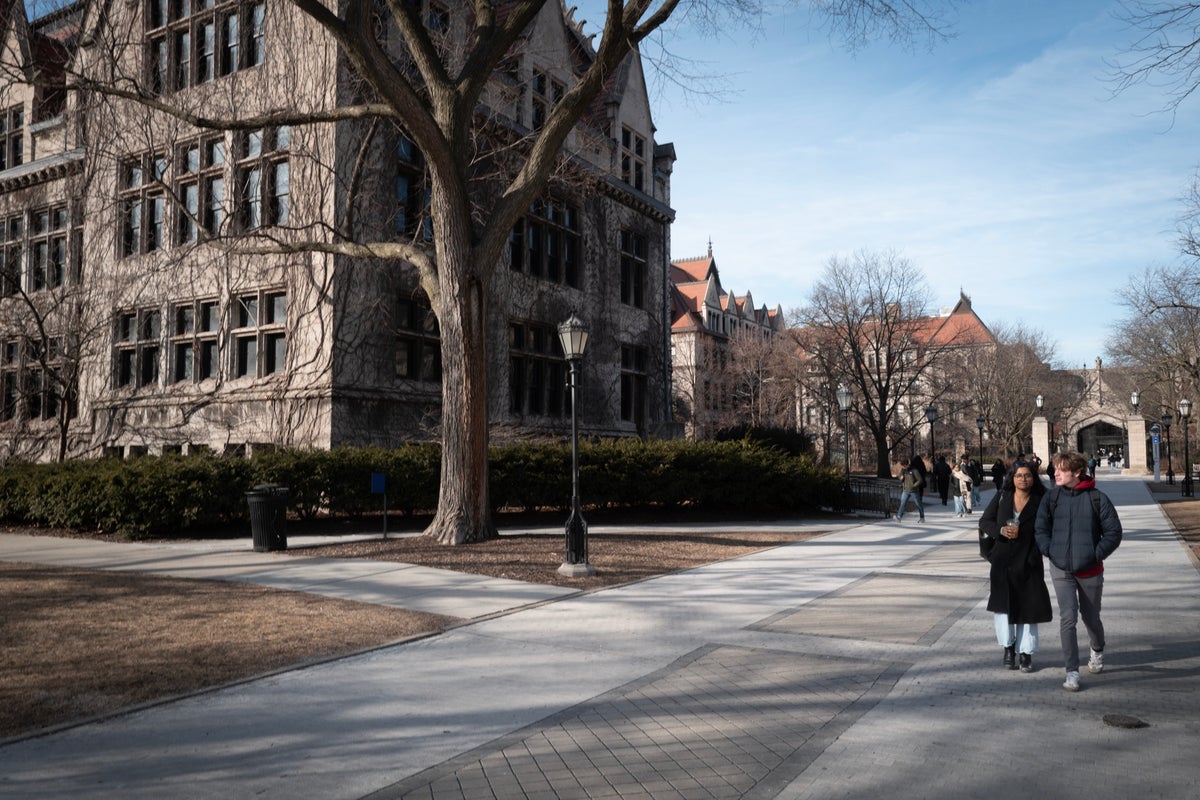
A US university has announced a ban on laptops and smartphones for incoming law students in an effort to combat AI usage.
The new policy will prevent first year students at the University of Chicago Law School from accessing any electronic devices during classes, starting from the 2026-2027 academic year.
The ban is part of the law school’s strategy to develop “AI-resilient pedagogy and assessments” in an effort to elevate “essential human skills that distinguish excellent lawyers” in the AI era .
“We need to ensure that our students actually learn to think critically, strategically, and independently without relying on AI,” the law school’s new AI strategy states.
“Technology is changing too fast. Thus, all the changes we are currently making will be subject to review, reconsideration, and revision as we learn more and as both technology and the practice of law evolve.”
In addition to the ban on electronic devices, examinations will be in-class without access to the internet, electronic files or apps.
In its AI strategy statement, the University of Chicago acknowledged that artificial intelligence is already a pervasive part of legal practice, and that part of the program will be to ensure students learn how to use AI “responsibly, effectively, and ethically”.
The legal sector is one of the most at risk professions when it comes to automation, according to research conducted in April.
The AI Exposure Index found that 100 per cent of legal occupations were classified as “high exposure”, meaning cognitive tasks in the profession can be performed by AI.
Last month, an artificial intelligence-powered law firm in the UK made history by becoming the first to use an AI lawyer to build a successful case.
Garfield AI used the AI lawyer to gather witness statements and prepare the trial before a human barrister presented the case in court.
“This is the first trial ever won by an AI lawyer against human opposition, anywhere, ever,” Garfield AI CEO and founder Philip Young wrote in a LinkedIn post. “It’s the dawn of a new age of access to justice.”