
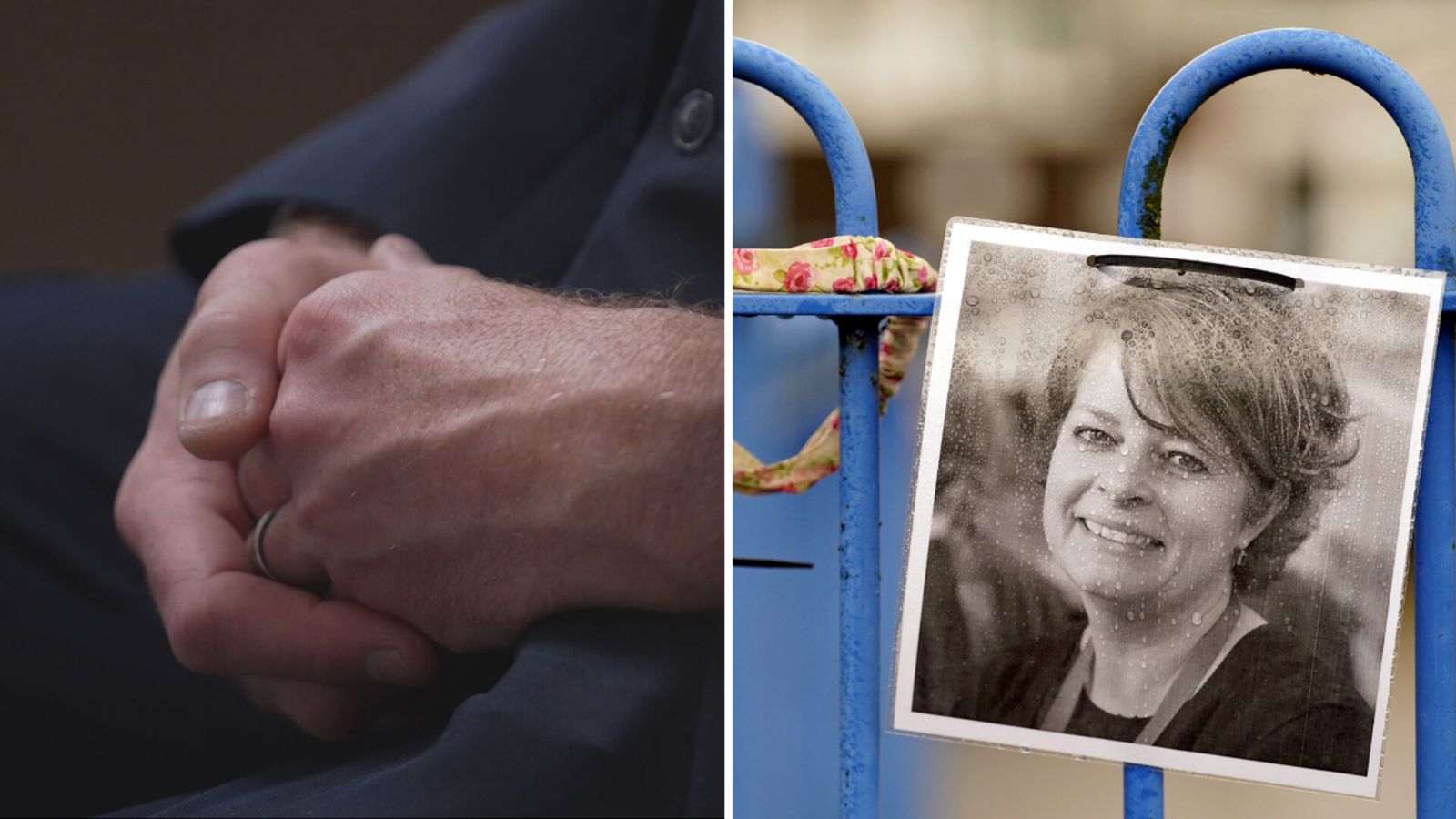
ITV News Midlands Correspondent Stacey Foster spoke to headteachers across the country who say the new Ofsted inspections system is still putting school staff under immense pressure
Warning: This report contains references to suicide.
Earlier this year, I was contacted by a school governor who was worried about a headteacher following a recent Ofsted inspection.
She knew that I had previously reported on the death of Ruth Perry, following an Ofsted inspection, which a coroner later concluded had contributed to her death.
I agreed to speak to the headteacher. But she wasn’t ready. It would be another three months before she felt able to contact me.
The full story, I still can’t tell, because she has been warned of the consequences.
But I can share this message she sent me when I told her we were about to report on the issues headteachers are facing under the new Ofsted inspections that have left her so bruised:
“My recent experience of Ofsted was incredibly distressing and has been severely detrimental, both personally and professionally.
“Sweeping conjectures based on minutes in classrooms and a lack of opportunity to evidence and validate what’s typical left me feeling that my vast headship experience counted for nothing.
“The negative impact upon myself and the staff team is far-reaching. In my experience, no lessons have been learnt. If anything, the framework is significantly worse and the stakes are even higher.”
It was this headteacher’s story that prompted me to investigate the impact of Ofsted’s new inspection framework, brought in at the start of 2026.
It wasn’t long before I found others with similar accounts. Two others agreed to be interviewed on camera. One headteacher spoke to us anonymously.
Before filming began, he broke down several times, apologising for being upset. I could tell he cared deeply about his school, but the frustration of not being able to show inspectors the good work being done was palpable.
He told me he knew the school needed improvement, but said the way he was treated by inspectors left him feeling as Perry did. He described the inspection as “the worst two days of my entire career… possibly the worst two days of my adult life”.
He told me he had experienced suicidal thoughts following the inspection.
“I felt that I’d achieved absolutely nothing here. Well, I didn’t feel that — I was told that by an inspector in a meeting on my own.
“And my thoughts on the way home were mostly around what I was going to do. I found myself wondering that for [headteachers] who didn’t go home to a family in the same way that I was going to, how easy it would be to take one for the team because when there’s a second death, I suspect that this will have to stop.”
This headteacher told me he had experienced suicidal thoughts following an inspection. Credit: ITV News
After Perry’s death, Ofsted carried out a consultation exercise called “The Big Listen”. Designed to improve headteacher wellbeing while maintaining standards in schools, the inspection framework and new report card system were trialled last autumn before being adopted across England from January 2026.
As I write this, I have now been contacted by 12 headteachers who all say the new framework has failed to address concerns around headteacher wellbeing.
A school leader contacted me anonymously after an inspection this month to say that while they were pleased with the outcome, the experience was “incredibly challenging and far away from something that was promised in light of the death of Ruth Perry”.
They said: “Staff were sent an email at 7.30pm requesting more than 10 pieces of evidence that inspectors wanted for 8.30am the next day.
“Teachers were in school until 11pm the night before and on day one of the inspection.”
There were recurring themes in what headteachers told me about the emotional toll of inspections. Several questioned aspects of the new framework itself.
Some said linking behaviour and attendance was unhelpful when schools performed differently across those categories. Others argued it is difficult for parents to understand how close a school is to achieving the next rating.
One headteacher told me: “You can be one tick away from Strong, but they can’t give you a Strong grade, so it just looks like you’re Expected Standard.”
Perry, the headteacher of Caversham Primary School, took her own life in 2023 after learning her school was likely to be downgraded following an Ofsted inspection.
Julia Waters, sister of Ruth Perry, with other family members speaking at the end of the inquest for the headteacher in December 2023. Credit: PA
A coroner later concluded the inspection had contributed to her death and issued a Prevention of Future Deaths report to both Ofsted and Reading Borough Council.
Three years on, Perry’s sister, Julia Waters, remains concerned that not enough has been done to address the issues identified following her sister’s death.
She said: “They should have been doing everything in their power to ensure that headteachers are not left feeling as Ruth did, and it’s very worrying and very depressing and actually quite frightening.”
She added: “What really worries me is for each person who has contacted me or you, there are probably others who haven’t spoken to anyone because they feel ashamed or frightened or bullied into not speaking.
“And in a way it’s them that I’m more worried about.”
Miss Waters has spent years lobbying ministers, Ofsted and parliamentarians. She welcomed some reforms, including the removal of single-word judgements, but believes that bigger cultural change is still needed.
Julia Waters, sister of headteacher Ruth Perry who took her own life after an Ofsted inspection. Credit: PA
Amanda Hulme, the headteacher of Claypool Primary School, wrote to Chief Inspector Sir Martyn Oliver after her Ofsted inspection in February 2026.
She said it was not a letter of complaint, but a letter of reflection about what she described as a very stressful experience.
Miss Hulme said the inspectors were courteous and professional but that she was frustrated that a set of disappointing exam results resulted in the school receiving a “Needs Attention” rating for achievement.
The school then waited more than three months for its report to be published — something Miss Hulme told me added significantly to her stress.
She said. “I feel quite demoralised by the report. It was damaging to my health at the start of it. I actually contacted three of my closest colleagues and said, if something was to happen to me, please will you come in to look after my children and my staff during that absence … that was how worried I was about my own health.
She continued: “My blood pressure rose, my pulse rate was higher, I couldn’t sleep properly, and it’s because you care so much about the school and the children and the staff, and I didn’t want to let any of them down.”
Ofsted said it replied to Amanda’s letter and apologised for the delay.
Amanda Hulme, the headteacher of Claypool Primary School, wrote to Chief Inspector Sir Martyn Oliver. Credit: ITV News
Gospel Oak Primary School in London received a top report under the new system. But its headteacher, John Hayes, says he will not go through another inspection after his long career because of his experiences under the new framework.
“During one of the meetings we had with the inspection team, a member of my senior team cried and had to leave the room.
“I cried too and that caused my deputy to call the Ofsted emergency helpline. In my professional career I’ve never been affected as badly by something as I was on this occasion.
“And I want to add that we did extremely well, but the journey was traumatising and harrowing.”
He added: “At one point I said, ‘I’m not OK. I’m terrified. And they had nothing to offer me at that point, so it does beg the question — is it just piecemeal? Are they just asking because they are told to ask?”
Ofsted said it received two calls to the emergency wellbeing line during Gospel Oak’s inspection. Inspectors offered to pause the process, which was declined. Ofsted has since apologised.
The inspectorate says it has introduced significant changes, including replacing headline judgements with report cards and introducing wellbeing measures for inspections.
Ofsted said it received two calls to the emergency wellbeing line during Gospel Oak’s inspection. Credit: ITV News
In a statement, Chief Inspector Sir Martyn Oliver said: “I am very sorry to hear that these head teachers feel the way they do. Our new framework has been designed with head teachers’ wellbeing firmly in mind. And our inspectors all complete mental health training that helps them recognise and respond to signs of distress.
“However, I cannot remove all the pressure from the inspection process. Our priority is always the education and welfare of children. That means holding schools to account and, sometimes, conveying difficult messages where standards are not high enough.
“I am pleased that a great many school leaders have told us that inspection now feels more collaborative and constructive. But we take all feedback seriously and we will continue to listen.”
A Department for Education spokesperson said: “A robust inspection system is essential to help every child achieve and thrive – Ofsted’s new report cards give parents and teachers a clearer, more transparent picture of what’s working and where change is needed.
“We’re continuing to work closely with Ofsted and school leaders to make sure inspections are collaborative, constructive and fair.
“Great headteachers transform schools – that’s why we’re backing them with mentoring, coaching and wellbeing support through our Excellence in Leadership offer, keeping the best heads where they belong: in schools.”
Every headteacher I spoke to supported accountability. Several explicitly told me they believed inspections were necessary.
Ofsted chief inspector Sir Martyn Oliver. Credit: PA
One headteacher told me: “I wouldn’t want to work in a system where they didn’t [have inspections].
“What I want is for inspectors to be accountable … But inspectors must also be held to account for how they conduct themselves and how they conduct an inspection.”
Of course, these 12 headteachers do not represent every school leader’s experience of the new framework. More than 1,400 schools have been inspected since January, and many leaders report positive experiences.
New research from the campaign group “The Alternative Big Listen”, fronted by two former senior Ofsted Inspectors asked 100 schools for their views on the new inspection framework.
Of those responding to the questionnaire, almost 70% expressed negative views on Ofsted’s impact on headteachers’ well-being, including eight who stated that they had decided to retire before another Ofsted inspection.
As MPs prepare to question Chief Inspector Sir Martyn Oliver about the impact of the new framework, the central issue remains the same as it was after Perry’s death: can schools be held accountable without damaging the well-being of those who lead them?
If you have been affected by any issues raised in our programmes, support is available.
Whether you are concerned about yourself, or someone you know, there is always help available.
Here are some of the places you can turn to, from national charities to smaller organisations in your local area:
Suicide and emotional distress
CALM, the Campaign Against Living Miserably, runs a free and confidential helpline and webchat. It also supports those bereaved by suicide, through the Support After Suicide Partnership (SASP). Call 0800 585858 (daily, 5pm to midnight).
Mind is a mental health charity which promotes the views and needs of people with mental health issues. It provides advice and support to empower anyone experiencing a mental health problem, and campaigns to improve services, raise awareness and promote understanding. Call 0300 123 3393 or email info@mind.org.uk
PAPYRUS aims to reduce the number of young people who take their own lives by breaking down the stigma around suicide and equipping people with the skills to recognise and respond to suicidal behaviour. It provides practical, confidential suicide prevention help and advice over telephone, text and email service which is staffed by trained professionals. Call 0800 068 4141, text 07860 039967 or email pat@papyrus-uk.org.
Samaritans is an organisation offering confidential support for people experiencing feelings of distress or despair. Phone 116 123 (a free 24 hour helpline) or email jo@samaritans.org
YoungMinds is a resource with information on child and adolescent mental health, but also offers services for parents and professionals. It is the UK’s leading charity fighting for children and young people’s mental health, and wants to make sure all young people can get the mental health support they need when they need it. Visit youngminds.org.uk
Shout is a 24/7 text service, free on all major mobile networks, for anyone struggling to cope and in need of immediate help. Text SHOUT to 85258.
SOS Silence of Suicide provides a listening service for children and adults who need emotional support, understanding, compassion & kindness. Phone 0300 102 0505
Want a quick and expert briefing on the biggest news stories? Listen to our latest podcasts to find out What You Need To Know…