
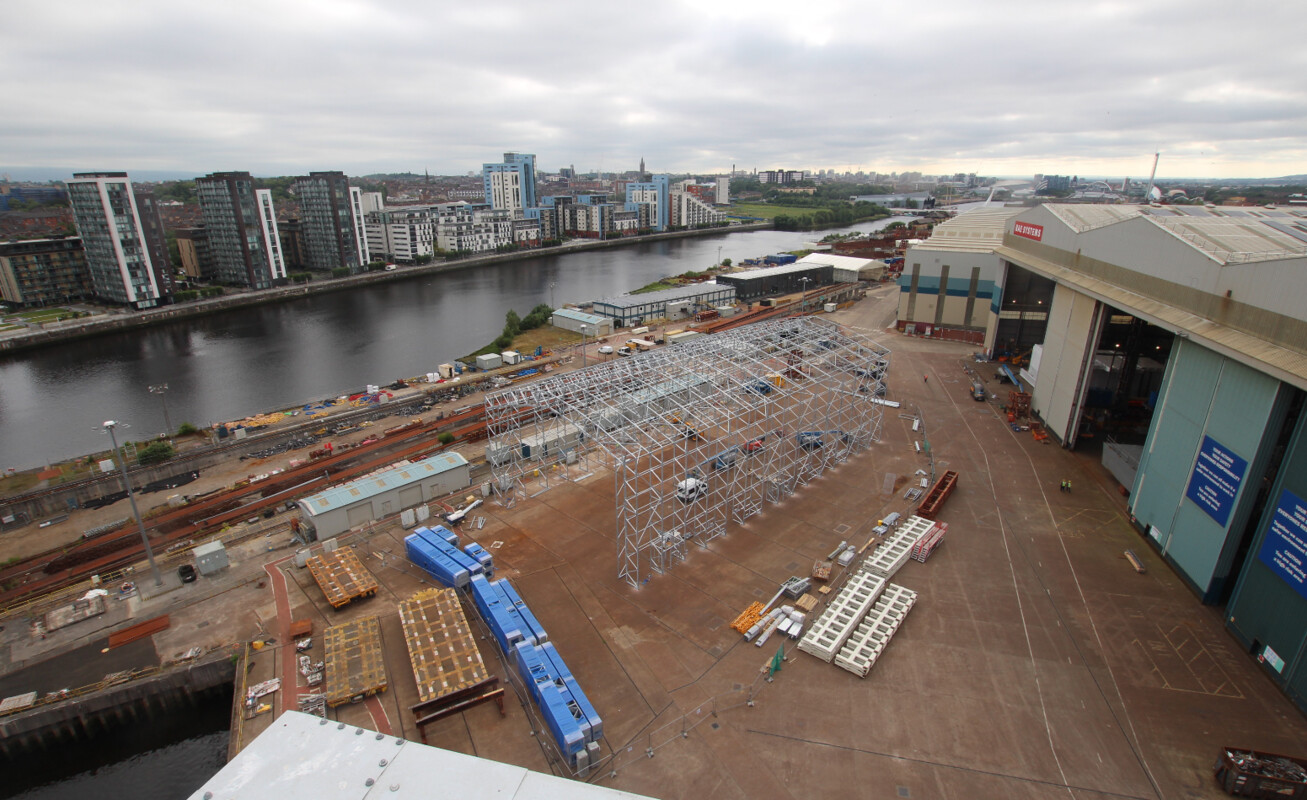
Construction has begun on a new £3.3 million paint facility at BAE Systems’ Govan shipyard in Glasgow, part of a modernisation programme worth more than £360 million across the city’s two yards as the company builds the Royal Navy’s Type 26 frigates, the company stated.
The 1,100 square metre fabric-covered structure, being built in partnership with Norwegian construction firm Hallgruppen, is large enough to paint four ship units at once and tall enough to take the biggest sections of the frigates, the bow and stern blocks. Moving painting into a dedicated facility frees up other areas of the yard to continue Type 26 production at pace, according to BAE Systems, with construction due to be completed later this year.
“The new paint facility is another important step in our continued investment in Glasgow’s shipyards, helping to modernise our infrastructure and improve production efficiency. By optimising the use of space at our Govan site, the facility will increase painting capacity and support the demands of our shipbuilding programme,” said Simon Lister, Managing Director of BAE Systems’ Naval Ships business, as quoted in the press release. “This investment strengthens our ability to deliver the Type 26 frigates efficiently, at pace and to the highest standards of quality. It reflects our commitment to continuously improving our shipbuilding capability and ensuring we remain well positioned to meet the needs of our customers, both now and in the future.”
The paint building joins a run of infrastructure investment on the Clyde, the centrepiece of which is the Janet Harvey Hall, the ship build hall opened at Govan last year that allows two Type 26 frigates to be constructed in parallel under cover. Alongside automation improvements, the company is introducing digital technology on the shop floor, including tablets and kiosk screens intended to streamline production processes.
The pressure on the yards is set to grow rather than ease, with eight Type 26 frigates on order for the Royal Navy and Norway having selected the class last year in a deal for at least five more ships, making efficient use of space and faster block throughput at Govan directly relevant to a programme that now stretches well into the 2030s. First-of-class HMS Glasgow is fitting out at Scotstoun and was powered up for the first time in December, with the class set to replace the Royal Navy’s anti-submarine Type 23 frigates, a transition given added urgency by the retirement of HMS Richmond and HMS Iron Duke confirmed earlier this week.
BAE Systems says the Type 26 will provide the Royal Navy with the most advanced anti-submarine warfare technology available, while offering the flexibility to adapt the ships’ role to tasks including transporting medical facilities and supporting humanitarian aid missions. Hallgruppen, established in 2015 and headquartered in Oslo with offices across Europe including the UK, is one of the continent’s largest contractors for engineered fabric-covered and steel structures, with buildings delivered in more than 86 countries.