

The tap-to-pay push is best understood alongside TrueMoney’s other project: a licensed virtual bank, one of only three the Bank of Thailand approved from five applicants in 2025, expected to launch later this year.
“The Virtual Bank assessment is moving along smoothly according to the official timeline, and we are fully prepared,” said Monsinee Nakapanant, co-president of Ascend Money, who added that fellow co-president Tanyapong Thamavaranukupt will oversee the new entity directly.
TrueMoney’s existing AI-driven credit tools, built for products such as Pay Next and Pay Next Extra, are expected to underpin the bank’s lending decisions, with the wallet’s high-frequency, cardless transaction data doubling as a live credit-scoring feed for customers banks have traditionally found too costly to assess.
That ambition sits inside a wider pattern that has proved harder to execute than to announce: globally, digital-first banks typically take three to eight years to reach profitability, and only 61 per cent of the world’s top 100 digital banks were profitable in 2025, up from 48 per cent the year before, according to Capco analysis. Thailand’s regulators, having deliberately capped the market at three licences, are watching that arithmetic closely.
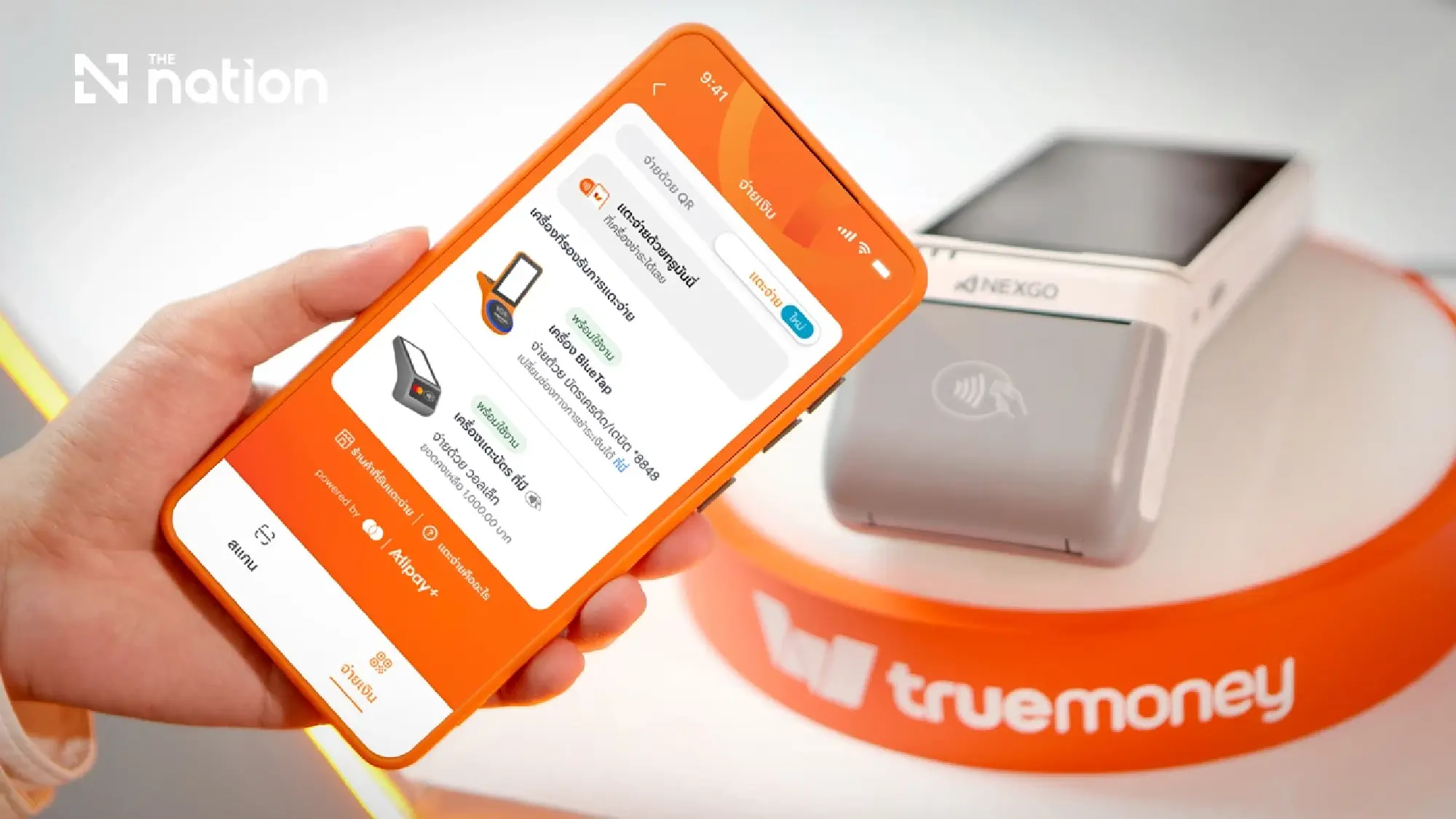
TrueMoney is also extending tap-to-pay into public transport. Roughly 6,000 Bangkok Mass Transit Authority buses already accept phone taps, with tap-at-gate entry to the MRT Blue and Purple Lines due by the fourth quarter of 2026, and the company plans reciprocal acceptance that would let Chinese Alipay+ users tap-pay at Thai BlueTap terminals.
Security, it says, rests on a “3X Protection” system that uses AI to screen transactions for fraud and so-called mule accounts; by its own account, TrueMoney ranks 13th among Thai financial apps by number of registered accounts, a scale it says its detection models are built to match.
The stakes reach beyond one company. Thailand’s digital economy is projected to hit $56 billion in gross merchandise value this year, the second-largest in Southeast Asia, according to the Google-Temasek-Bain e-Conomy SEA 2025 report, and the government has long targeted a 25 per cent GDP contribution from the digital sector.
Whether tap-to-pay and a forthcoming virtual bank actually pull Thailand’s cardless majority into that economy, rather than simply adding a faster lane for those already inside it, will be the real measure of whether this counts as inclusion or just better marketing for it.