
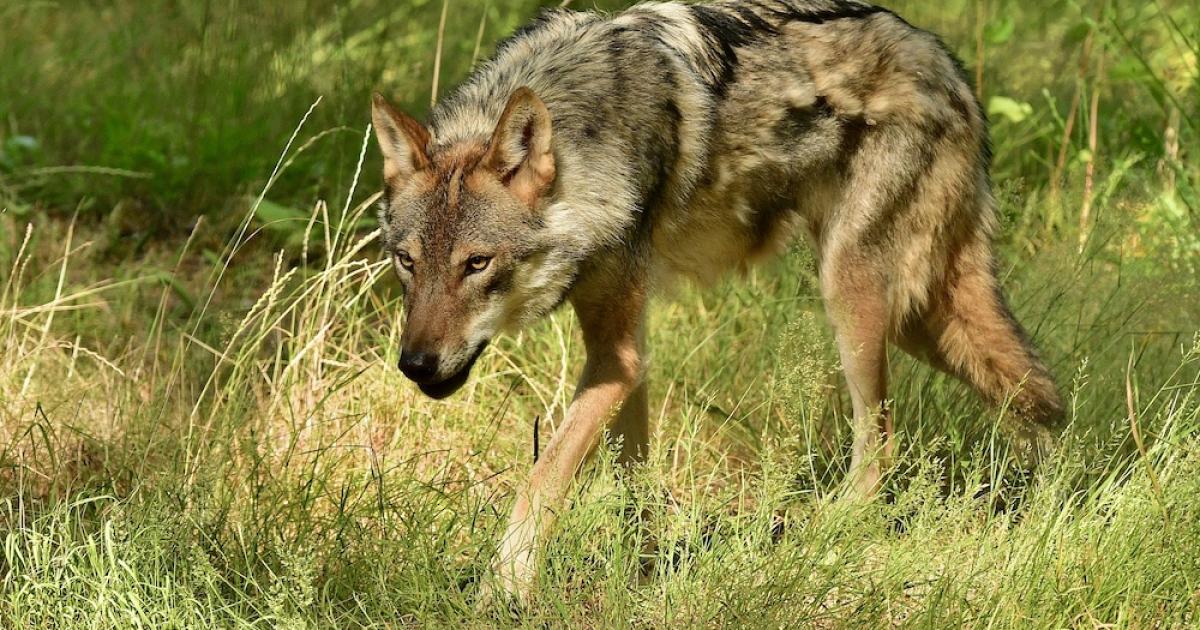
They are the first wolves to live at the New Forest Wildlife Park since 2024, when their five predecessors either died or were put down.
The new arrivals have already settled in at the attraction after their journey across part of western Europe.
A two-year-old female at the Reserve d’Animaux Sauvages in Belgium and a one-year-old male at Parc Animalier de Sainte Croix in France bonded in Belgium before being transported to Hampshire together.
Two European grey wolves have gone on show at New Forest Wildlife Park (Image: Helen Pinchin)
Staff at the park in Deerleap Lane, Longdown, are hoping the carefully selected pair will breed.
Jason Palmer, curator of collections, said: “We’ve always had the intention of bringing wolves back to the park and our visitors have been incredibly patient. Post-Brexit paperwork for moving animals across borders is a real challenge.”
A park spokesperson described European grey wolves as apex predators and a keystone species.
“By regulating prey populations, they promote biodiversity and support the health of forests and grasslands, while their control of smaller carnivore populations indirectly benefits a wide variety of prey species further down the food chain.
“They are highly social animals and typically live in packs of around seven, led by a dominant mated pair. They are remarkably adaptable and capable of surviving across various environments.”
Two European grey wolves have gone on show at New Forest Wildlife Park (Image: New Forest Wildlife Park)
Wolves were once a common sight in Britain but disappeared in the 1700s after centuries of hunting and persecution.
“Since hunting was banned in Poland in the 1990s, populations have been steadily recovering, with wolves now re-establishing themselves in Germany and spreading naturally into the Netherlands, Denmark and France.
“Although wild wolf populations are recovering, accredited wildlife parks continue to play an important role in their future.”
The park was previously home to five wolves that arrived in 2010.
Two years ago, three of the animals died after developing age-related health problems. Another wolf was also taken ill and was put down along with its only remaining companion.
Announcing the deaths, the park said: “Wolves are a highly complex species that thrive on companionship.
“After much observation, careful discussion, and consultations with our veterinary specialist, we made the incredibly difficult but kindest decision to humanely put both elderly wolves to sleep together.”