
Despite the advantages of hybrid renewables, regulatory frameworks for such projects remain underdeveloped across much of the EU. This limits their use as a solution to grid scarcity, as project developers have to grapple with grid connection rights, capacity allocation and permitting rules designed for single-technology projects.
Hybrid projects are still being developed, even in the absence of specific legislation, as a practical response to grid constraints. However, their wider deployment will depend on regulatory frameworks that explicitly recognise and accommodate hybrid configurations. Practices that are already emerging across Europe provide a foundation for such reforms.
Out of the seven focus countries, only Portugal and Spain provide supportive regulatory frameworks for hybrid projects
Among the seven focus countries examined in this report, only two – Portugal and Spain – have explicit regulatory frameworks or market mechanisms designed to facilitate hybrid projects.
Spain and Portugal are clear frontrunners, having introduced dedicated regulations for hybrid projects as early as 2020 and 2022, respectively. Since then, both countries have continued to refine their frameworks to remove administrative and financial barriers and speed up hybridisation. Both waive environmental screening for hybridisation of existing generation, provided that the additional asset remains within the existing perimeter. In Spain, hybrid connection permits can bypass the “first come, first served” connection process, where many renewable projects often get stuck, and financial guarantees for such connection requests are reduced by 50%.
Both countries also plan to anchor hybrid projects in renewable acceleration zones, which are areas for streamlined renewable deployment. Portugal’s Green Maps, published for public consultation in May 2026, explicitly charts the geographic areas with the greatest hybridisation potential, based on the natural complementarity of wind and solar profiles. Other technologies, such as hydropower, were not included due to time constraints. Spain’s Royal Decree-Law 7/2026, published in March 2026, sets out the legal obligation for Renewable Acceleration Zones (ZAR), explicitly including hybrid projects.
Hybrid projects are already online, even where regulatory frameworks are absent
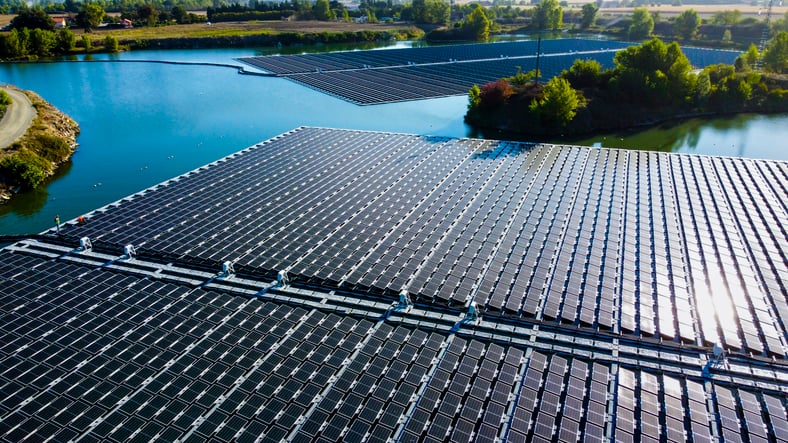
In several countries, commercial deployment is advancing ahead of regulation as developers seek ways to overcome grid constraints and improve project economics. This is evident in existing hybrid sites in France, such as the Lazer 20 floating solar and hydropower site and the Savigné wind and solar site. Bulgaria also illustrates this trend: although it lacks a dedicated regulatory framework for hybrid projects, the state-owned utility NEK is converting several hydropower facilities into battery-coupled hybrid assets and considering the development of two floating solar plants at existing dams.
Targeted policy reform can accelerate the rollout of hybrid projects
National regulation is required to fully unlock hybridisation
Legal clarity and established procedures provide investors with market and regulatory certainty, while also highlighting options to bypass grid bottlenecks. Indeed, setting up national rules allowing for hybridisation of assets is one of the recommendations put forward by the European Commission in its toolbox for timely grid connections, published as part of the December 2025 Grids Package. The robust frameworks already operating in Spain and Portugal, alongside those of other EU Member States such as Lithuania, offer a blueprint for regulatory authorities in other countries. Integrating hybrid projects into other policy documents, such as Renewable Acceleration Zones, would further serve to embed hybridisation in strategic energy plans.
EU guidance would expedite national reforms
Small steps have been taken at the EU level that lay the groundwork for developing a dedicated guidance document on hybrid projects. These include a definition of hybrid projects and hybridisation in the Commission’s Proposal to Accelerate Permit Granting Procedures, as well as their implicit inclusion in the draft revision of network codes for grid connection of generators.
Publishing a dedicated guidance document in the near term would provide additional support and likely accelerate national reforms. This would follow similar precedents, such as the Commission’s recent guidance on the design of 2-way contracts for difference. Additionally, EU-level guidance would foster regulatory harmonisation across the bloc, lowering barriers for project developers investing across multiple countries.
Hybrid projects should move faster through connection requests and permitting
Hybrid projects should benefit from simplified and accelerated grid connection procedures, given their negligible network impacts and ability to unblock grid bottlenecks. In recognition of this, the Commission’s Proposal to Accelerate Permit Granting Procedures establishes a maximum timeframe of three months for a grid connection permit for hybrids. This should ensure hybrid projects are given preference in the currently backlogged grid connection queues. Countries may need to adopt legal provisions similar to those in Spain to allow hybrid projects to bypass the “first come, first served” queue.
Streamlining also extends to environmental requirements. Where adding a secondary generator and/or storage to an existing site does not exceed the original site specifications, environmental screening requirements could be reduced or even waived, as in Spain and Portugal.
Where feasible, national legislation should allow overcapacity in hybridisation
In this case, overcapacity refers to adding a secondary generator with a capacity that exceeds the nominal connection capacity of the existing plan, while retaining the condition that combined injection of the two generators will never exceed the grid connection capacity. In other words, at a 200 MW hydropower site, it may be financially advantageous to add a 300 MW solar plant. This reflects the complementarity between their generation profiles, the limited hours during which solar production nears its nominal capacity and the potential role of on-site storage to absorb excess production.
To make the best use of existing grid connections, provisions that specifically allow for overcapacity during hybridisation should be incorporated in national legislation.