
“You’re never alone, but you can be completely unseen.”
This observation comes from a participant in our eight-country investigation of social connection, which conducted in-depth interviews across Brazil, China, India, Morocco, the Philippines, Türkiye, the United States, and Zimbabwe. In earlier posts in this series, we described how loneliness hides behind Brazil’s smile, behind Turkish hospitality, behind Filipino cheerfulness, and behind Chinese harmony.
Morocco adds a new chapter to this pattern—and a distinctive mechanism.
We interviewed 50 Moroccans across ages, regions, and loneliness levels, and what they described challenges one of our most stubborn assumptions: that loneliness is a problem of empty rooms and absent people.
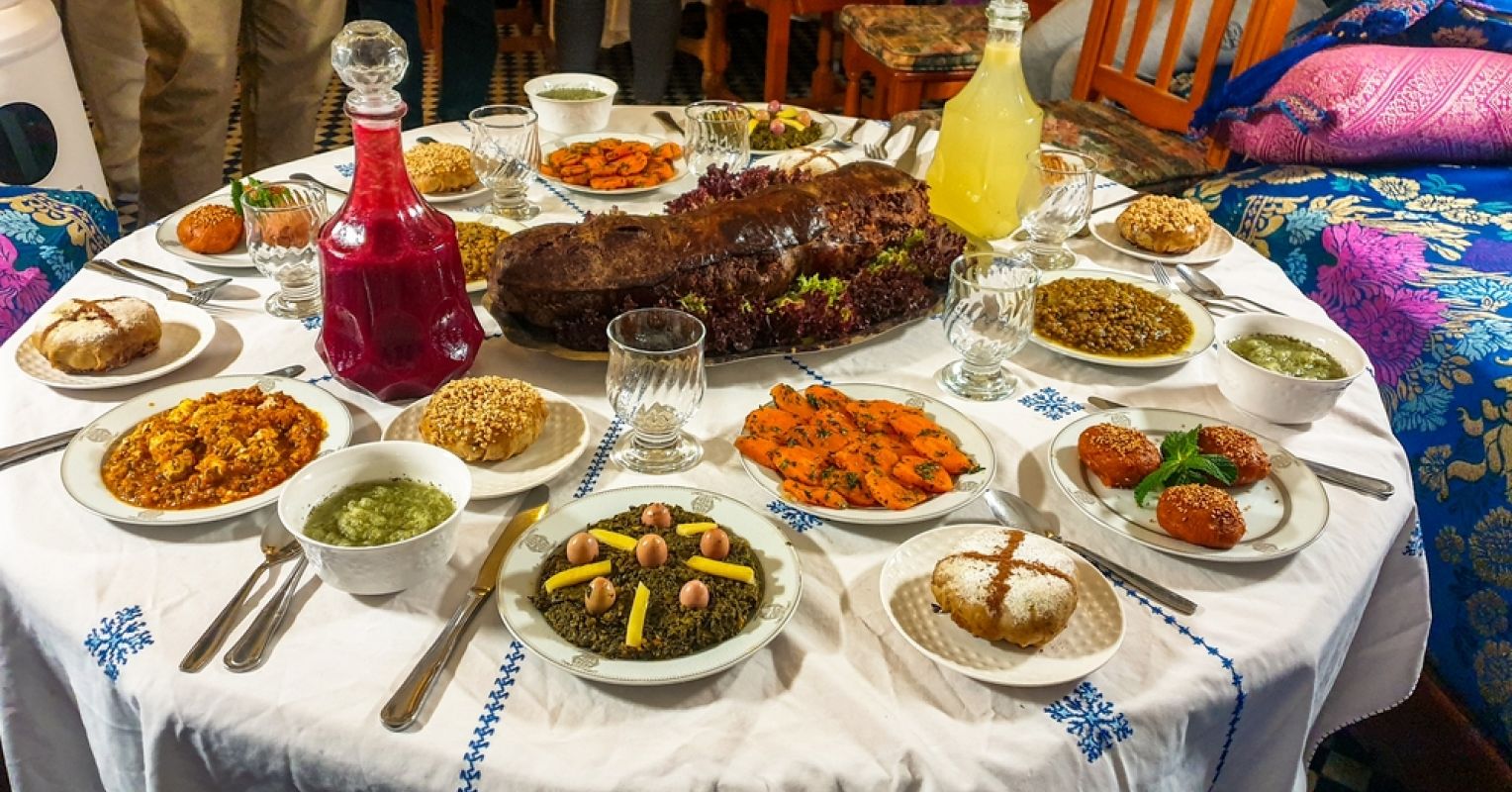
In Morocco, the rooms are full. Doors open for unannounced relatives bearing oranges. Neighbors comment on your grocery bags. Extended families gather for Friday couscous, for Eid, for weddings and condolence visits. And yet, within this dense social fabric, some of our participants described a loneliness so profound they compared it to drowning in silence.
When Being Social Is a Moral Test
For many participants, social connection in Morocco is not simply valued, it is moralized. As one young woman put it: “Moroccans don’t know the notion of introverts… if you are someone who likes to spend time alone, you will be called autistic, or you have some kind of disease. The more you are socially connected, the more you are seen as a good person.”
Another participant framed it as “almost a test of good character… Being sociable is linked to warmth, hospitality, even patriotism. People who prefer quiet are often misunderstood, tagged as strange or aloof. Social connection isn’t just valued; it’s expected.”
The consequence is a distinctive expectation our participants called woujoud fi lwaqt—being present when it counts. Family expects you at weddings and funerals. Friends expect you at 2 a.m. when someone’s heartbroken. As one participant summarized: “When you need someone, they show up, and when they need you, you show up. That mutual reliability defines a real connection here.”
The Loneliness That Cannot Be Spoken
But this same moral scaffolding makes loneliness nearly impossible to admit. “The unique thing is that Morocco doesn’t believe in loneliness,” one participant told us. “It’s like something out of our jargon… They say, ‘You have your health, you eat, you drink, you’re good.’ It’s like you’re just victimizing yourself if you’re saying that you’re lonely.”
Another explained the arithmetic of disbelief: “We live packed in big families, so admitting loneliness sounds crazy to others: ‘How? House is full!’ That makes you hide it more.” Admitting loneliness can even sound ungrateful: “You have family, food, a roof. What else do you want?”
The result is concealment. “Some of the loneliest people are great performers,” one woman observed. “They laugh, socialize, seem energetic… but when you’re close enough, you notice the little things: how fast they change the topic when things get real.”
When Couscous Makes It Worse
Perhaps most striking: the very rituals designed to sustain connection can sharpen loneliness for those who already feel unseen. One participant described Fridays—the day of communal couscous and mosque—as her hardest: “Weddings—they amplify the loneliness. The joy in the air makes the silence in your phone feel louder.”
Others described attending obligatory gatherings in a state of internal absence—one participant described going on “airplane mode” internally: politely present, entirely disengaged. As one man put it: “You can be surrounded and still feel like nobody sees you. That contrast creates a special kind of quiet pain.”
What Connection Actually Means
When we asked Moroccans to define connection, almost no one mentioned how often people meet. Instead, they described a felt quality: “It’s when you feel seen. Not just when someone talks to you, but when you speak and they actually hear you.” The sample’s most isolated participant, an elderly man, reduced it to its essence: “Social connection is someone remembering you exist. Someone calling without needing something.”
Loneliness Essential Reads
This is the crucial insight. If connection is defined by being witnessed rather than by contact frequency, then a full house guarantees nothing—and loneliness surveys that count interactions will miss what matters most.
Where Moroccans Turn
Faith emerged as the most consistently genuine source of comfort. “Reading the Qur’an or praying helps me feel connected to God. That eases loneliness,” one participant said. Another described prayer as “a reset button, not a hang-out.”
Professional help, by contrast, remains distrusted. Among those who tried it, none reported a positive ongoing relationship with a mental health professional. Yet there are signs of change. “Older generations saw loneliness as weakness, or worse, something supernatural—like being masḥūr (cursed),” one young woman noted. “That mindset is shifting. Our generation talks more openly about depression, burnout, isolation.”
Across our eight countries, a common thread is emerging: Different peoples develop their own ways of making loneliness invisible. Brazil masks it with a smile, the Philippines with cheerfulness, Türkiye with hospitality, China with harmony. Morocco’s version may be the most structural of all: a social world so full, so ritually dense, and so morally committed to togetherness that the lonely have nowhere to stand and say so.
Morocco’s lesson for the rest of us is uncomfortable: Abundant social contact is not the cure for loneliness, and mandating togetherness can deepen the wound. What lonely people need is not more rooms full of people. It is one person who notices when their “I’m fine” sounds different.