
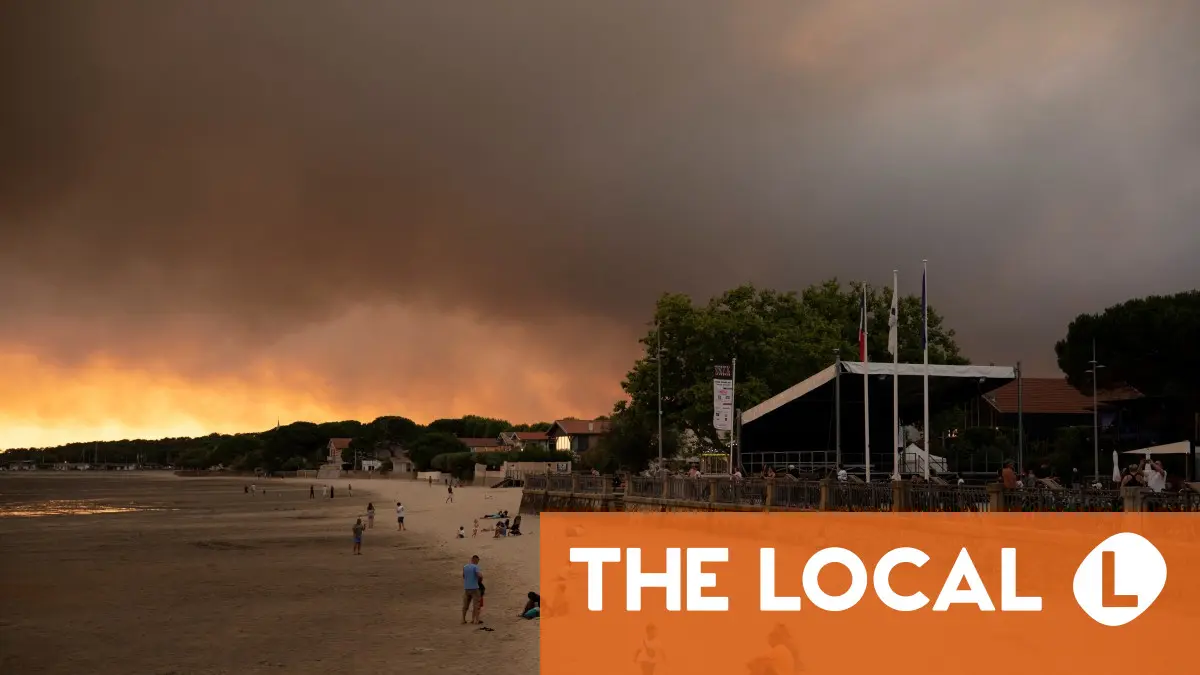
Headlines in France in recent days have been dominated by a series of huge wildfires, with thousands of hectares burned, homes evacuated and others left without power. So is it still safe to holiday here?
France has already faced its worst wildfire season in years, and it’s still only July.
Nearly 40,000 hectares have burned in France since the start of the year, “far more than was burned during the whole of last year”, Interior Minister Laurent Nunez said on July 20th, meanwhile the British government has issued a warning about travel to France, due to the fires.
Although wildfires have been a regular occurrence in southern France for hundreds of years, increasingly severe heatwaves and droughts are making fires more common.
READ ALSO: Do heatwaves cause wildfires in France?
The wildfire season is also starting earlier and is no longer confined to southern France – Brittany and the greater Paris region have already suffered major fires this summer.
So should tourists be worried?
Alerts
France has a well organised system of wildfire alerts in varying stages of seriousness.
Météo des Forêts – First is the Météo France forest fire map – over the summer, the French weather forecaster provides a daily update of the risk level for each French département, ranging from green (low risk) through to red (very high risk).
Anyone in a département on an orange or red alert level is advised to keep an eye on local media and monitor other alert systems. There may also be extra restrictions imposed by local authorities in those areas, such as closing natural parks or forests to visitors or cancelling events such as fireworks displays.
Find the latest forecasts here.
Feux de Forêt – this government-backed app provides real-time updates on ongoing fires. The app is updated regularly and shows where fires have broken out and what their status is (à confirmer – to be confirmed; feu en cours – fire in progress; éteint – extinguished).
You can set your location on the app and also elect to receive app notifications for your area.
Find the app here.
Google Maps – once a wildfire is confirmed, Google Maps shows the outlines of the affected areas, plus any road closures linked to the fire.
This isn’t updated as regularly as the Feux de Forêt app, but is a useful extra, and is also useful for drivers in the affected area, since road closures can be spread over a wide area in order to help firefighting efforts, or due to the effects of drifting smoke.
Click on the red-and-white wildfire symbol on the map to get more details on the area affected.
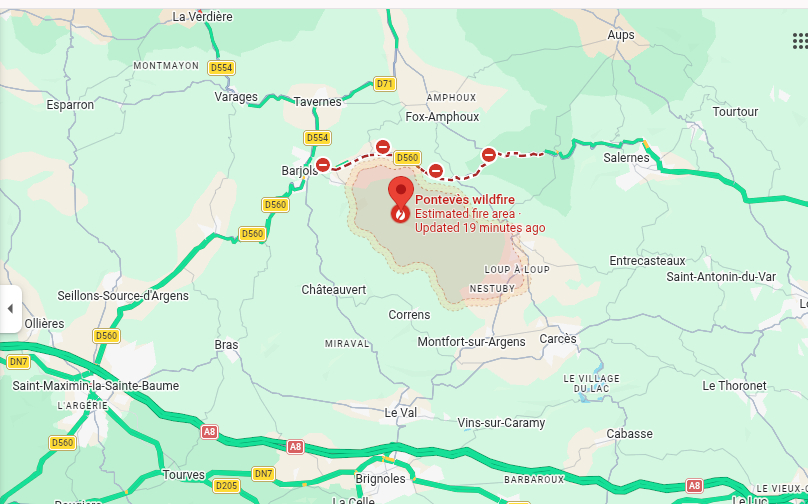
Google maps with wildfire information
FR-Alert – France also has an emergency text alert system known as FR-Alert, which is used for major incidents including terror attacks, chemical leaks and, in some cases, wildfires.
The text message is sent to all phones within the emergency zone, including foreign ones, unless you have specifically disabled FR-Alert notifications.
It makes a loud text alert sound, even if your phone is set to silent, and sends a text message with details of the emergency and instructions on what, if anything, you need to do.
READ ALSO: FR-Alert: How France’s emergency text alert system works
The Local – you can also get updates in English from The Local – head to our Wildfires section for the latest information.
READ ALSO: MAPS: Where are all the wildfires and warnings in France right now?
Go bag
If you are close to an area where a wildfire has been declared, you should keep a close eye on developments via the apps, local news and the social media channels of the local préfecture and mairie (most French local government offices have a Facebook page, although some also use X or Instagram).
READ ALSO: French vocabulary to understand wildfire warnings and evacuations
You may also want to pack a ‘go bag’ with crucial items in it like your passport, documents and any vital medication, just in case you need to evacuate quickly.
If an evacuation is required, you will receive a message via the FR-Alert system or be told to evacuate by local officials or firefighters or – if you are staying in a hotel or campsite – by staff members.
If you are told to evacuate, then do it. Deaths during wildfires are thankfully rare in France; the most recent death occurred in 2025, of an elderly lady who had declined to be evacuated.
Do not pause to try and protect your property or pack a full suitcase, winds can change, and fires can spread very rapidly.
If you are told a road is closed due to a fire, then do not try to drive down it, even if it seems a long way away from the blaze.
Travel disruption
Even if you are not close to a wildfire, you may experience fire-related disruption.
Severe fires often cause road closures due to risk from either the fire or the smoke, while rail services may be suspended in fire zones.
For example, during the fire in the Forest of Fontainebleau, south of Paris, one of the major motorways south of the capital was closed for several days, while high-speed TGV trains departing Paris were also halted.
A blaze close to Bordeaux airport on July 21st caused the cancellation of dozens of flights due to the risk from plumes of smoke near the runway.
Wildfire prevention
Around 90 percent of wildfires in France are caused by human activities, many of them unintentional.
During the summer, make sure to follow wildfire advice and avoid risky behaviour like having BBQs in forests or open countryside. If you smoke, be sure to very carefully dispose of cigarette stubs.
Littering can also cause wildfires – the sun can refract through glass to cause a spark – so make sure you take any rubbish home with you. And be careful when parking vehicles to ensure that a hot exhaust pipe/tailpipe is nowhere near parched vegetation, as this too can spark a fire.
If you own property in France, make sure you follow the official advice on wildfire prevention such as trimming vegetation, clearing waste ground and having a supply of water ready for firefighting.
READ ALSO: Wildfire prevention: The legal obligations for French property owners