
Crawford and Mercado have been real-life BFFs since working together as story artists on Kung Fu Panda 2. And after recently working on two sequels, The Croods: A New Age (which Crawford helmed and Mercado was head of story on) and the Oscar-nominated Puss in Boots: The Last Wish (which both co-directed), the pair was eager to take on an original project.
“We wanted to do something original, but really original in every sense of the word. So building a story around friendship, and our friendship, seemed the best place to start,” Crawford says.
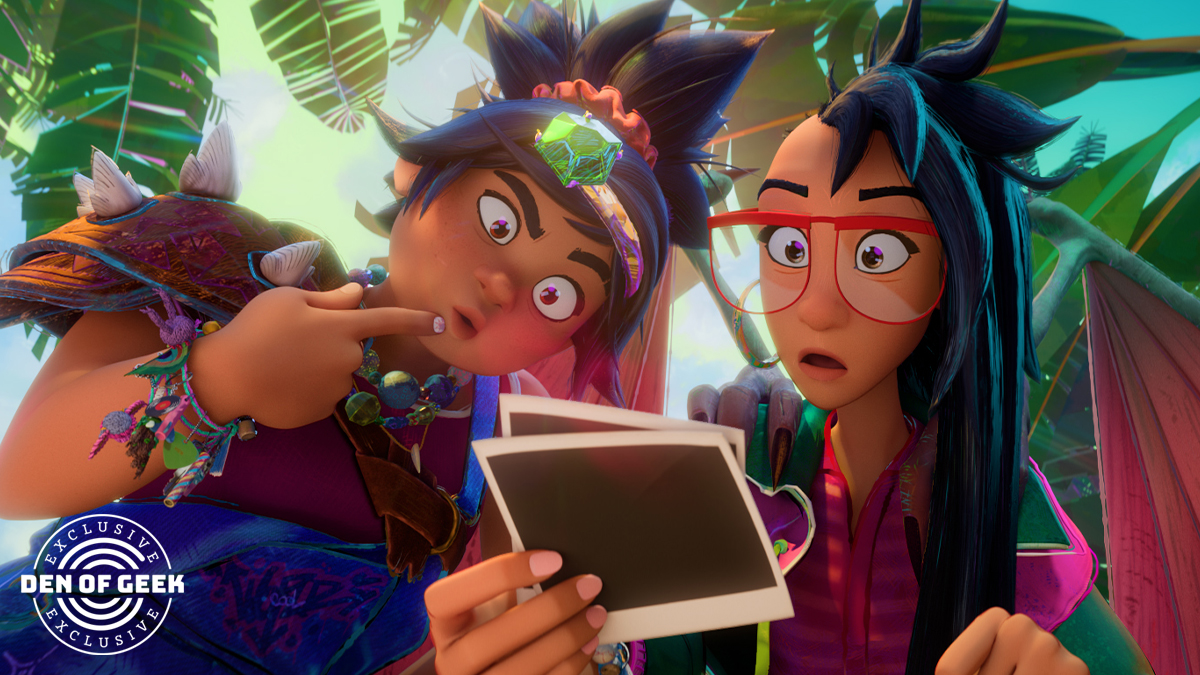
That onscreen camaraderie also involves similarly creative spirits as personified by Jo, a livewire, and Raissa, a smartypants. They’re introduced as almost instant besties after bonding during a trip to the principal’s office in grade school. Jo even gives Raissa a friendship bracelet as a token of their newfound connection. Soon enough, they’re each other’s source of comfort, freedom, and security. In the totally tubular era of gifted mixtapes, they get close while imitating Arnold Schwarzenegger and Carl Weathers’ iconic Predator handshake at the video store, accidentally operating a retro jeepney, chronicling their canon moments through Polaroids, and adding matching charms on their bracelets. But most of all, they obsess over a tale from Jo’s grandmother (Dolly de Leon) about Nakali: a fantastical realm of monsters, spirits, and demons.
Magic with Authenticity
The directors drew inspiration for their heroines from the Filipino women in their own families.
“For Jo and Raissa, they are heavily inspired by the strong women in our lives, especially my sister and my cousin,” Mercado says. Even their mannerisms and features would be incorporated and used in the animation. Crawford attributes Raissa’s often irked expressions to his wife, who is Filipino. Meanwhile, Mercado’s sister’s facial scar became part of Jo’s character model. But the film is ultimately brought to life by H.E.R. and Soberano, who imbue passion and naturalism in their performances.
Forgotten Island also marks the first Western animated film to be set in the Philippines, not just for DreamWorks but for all of Hollywood. To tackle the setting, Mercado, who is Filipino-American, drew from his memory and experiences of visiting the country in the ‘90s for family vacations, growing up with Catholicism, and attending parties. He and Crawford wanted to make sure the culture was naturally illustrated, detailing its gags, lifestyle, and wardrobe without overexplaining any of it.