
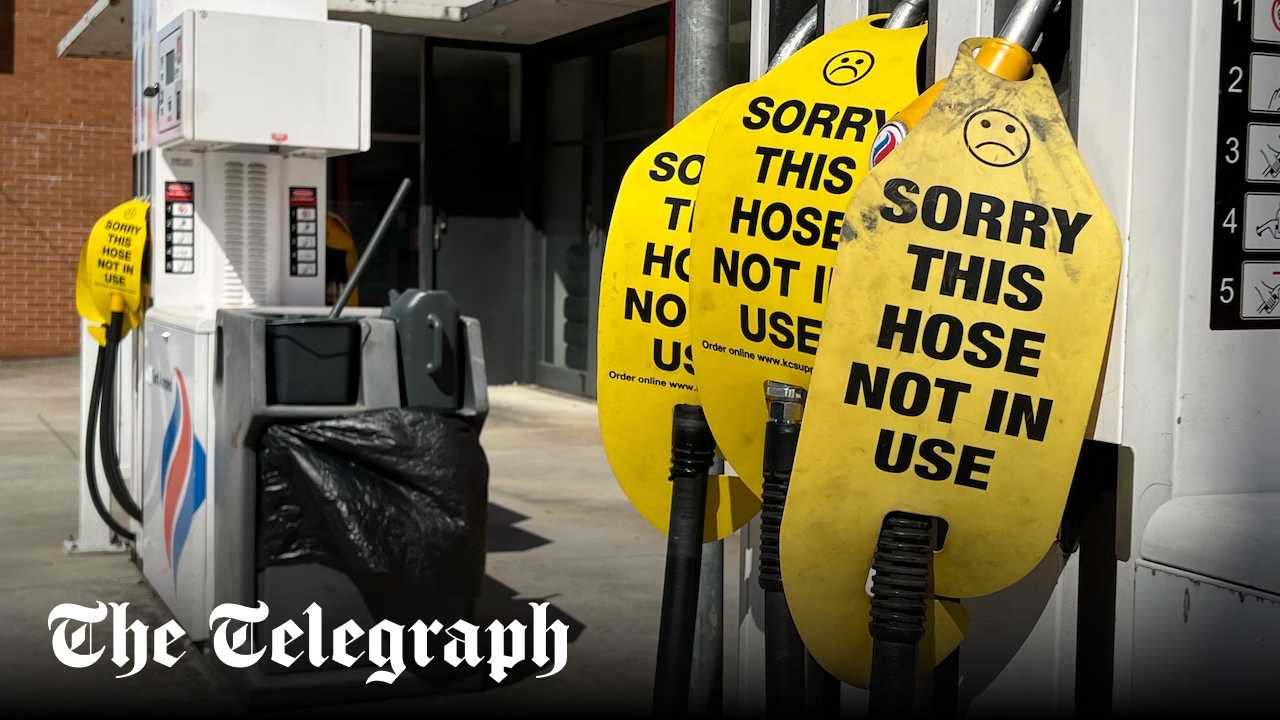
Australians had told themselves that “there would always be someone else, somewhere else, who would sell us what we needed cheaper than we could make it ourselves”.
Britain has similarly run down its oil refining capacity. After the refineries at Grangemouth and Lindsey closed last year, only four plants remain, down from 18 in the 1970s.
They face high energy and carbon costs, which make it hard for them to compete in global markets.
Australia would still need to import most of the crude oil used in the new refinery. But crude can be stored or stockpiled for longer than petrol or diesel.
Stephen Wilson, of the Institute for Public Affairs think tank, said policymakers would need to make sure a new refinery could hold its own against Asian rivals.
“Debacles like [hydropower project] Snowy 2.0 undermine investors’ confidence that Australia has the wherewithal to deliver major projects on time at a competitive cost,” he said.
Perdaman, the potential builder-operator, is already throwing up a urea plant in the Pilbara to tackle farmers’ fears over fertiliser supplies, which have also been squeezed by the closure of the Strait of Hormuz.
Supported by A$475m in government loans, that plant will open in the middle of next year. Its envisaged capacity of 2.3 million tonnes could replace about two thirds of Australia’s annual fertiliser imports.
Mr Albanese’s push for a new refinery comes as the Iran war also spurs previously reluctant Australians to embrace electric vehicles.
Chinese EV maker BYD came within 243 cars of outselling Toyota in June. The Japanese company, which makes mostly petrol and hybrid cars, has been Australia’s best-selling marque for more than two decades.