
“If you ask me what I came into this world to do, I will tell you. I came to live out loud.” —Emile Zola
I met a young man some years ago who told me that he’d always wanted to be a teacher and speaker, but spent so many years “biting my tongue” that he literally had a pronounced scar on the tip of his tongue, like a big callous, from where he’d bitten it repeatedly.
Whether your own yearning for self-expression involves teaching, dancing, leadership, community-building, or running a restaurant, the hunger is the same: to get what’s on the inside out. To make the invisible visible, to speak your mind, to let your cats out of the bag. And you’re driven to sate this innate hunger to be true to yourself as the most naturally expressive of creatures, for the sheer pleasure and self-satisfaction of it, and to make contact with the larger hive—to be heard, seen, witnessed.
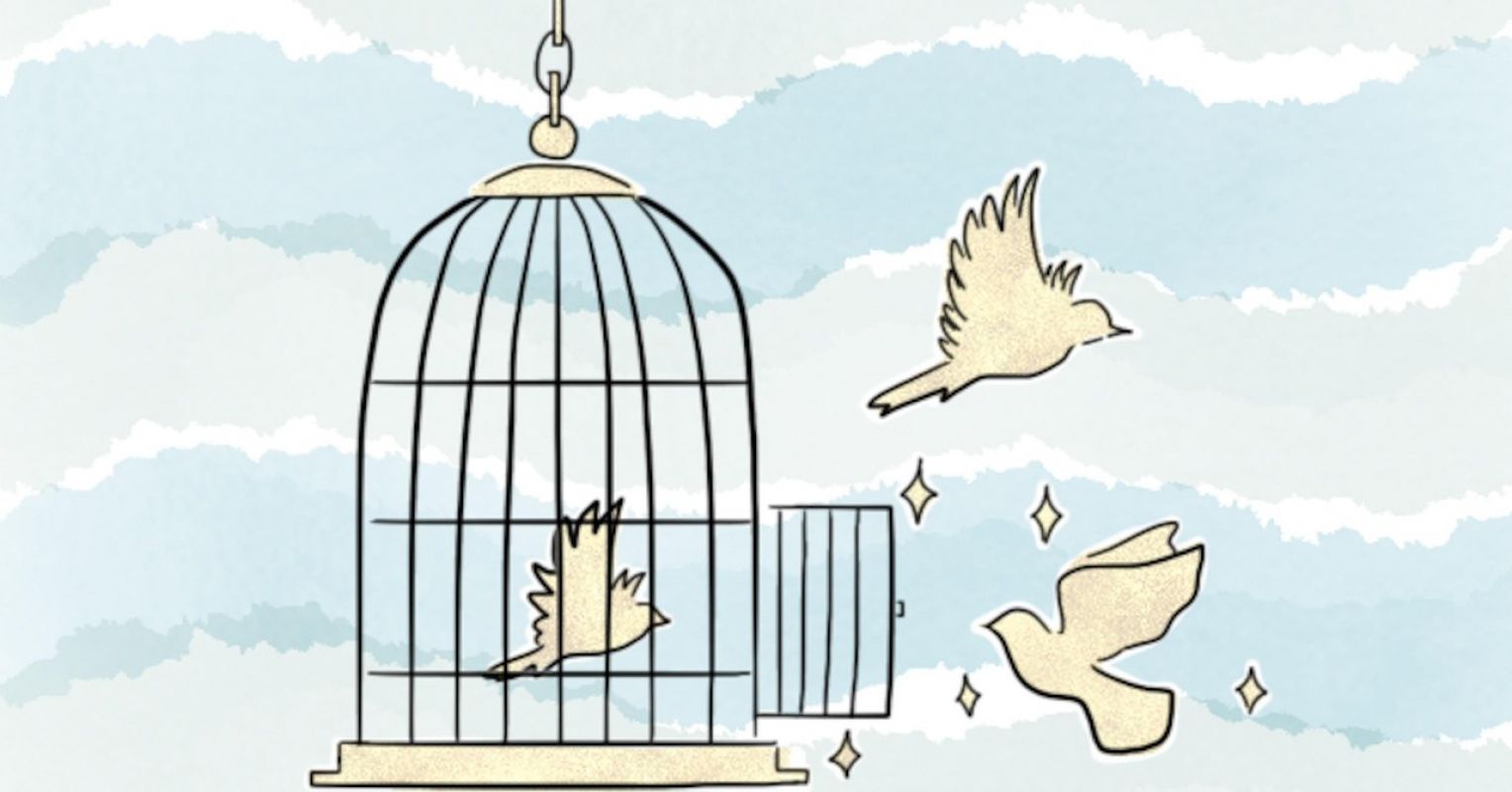
In a sense, everything you do is an expression of who you are, from the shoes you wear to the way you raise your children, spend your time, solve your problems, react to suffering or joy, and do the work you do. The question is, are these expressions of who you really are, which is a centrifugal force pushing out from within, a bird flapping against its cage?
When performance artist Nina Wise asks students what brings them to her improv classes, they talk of something missing in their lives, a longing to rekindle self-expression, spontaneity, and play—the turbines of creativity. They want to lift the lids they’ve clamped over their lives, beneath which are great balls of fire—energy, emotions, expressiveness, passion, contribution.
What they’re ultimately after, she says, is “delivering the truth.” And whether you deliver it through words, images, or sounds, through art, innovation, or improvisation, you release the heat of the spirit and say yes to what wants to emerge in your life.
To express means to push outward, to press into being: not just to transmit but to reveal, the way tears reveal grief and dreams reveal desires. Expression is e-motion. It’s pro-creation. It’s giving birth not only to your passions, visions, and talents, but to yourself, unearthing and sharing your deepest authenticity, if not the deeper voices that want to speak through you, which are also trying to push their way into the world—your Buddha nature, your Christ consciousness, your True Self.
And if your true self isn’t being expressed, it’s likely being suppressed or repressed or depressed, which all mean the same thing—pushed down. And what’s pushed down doesn’t tend to obediently stay down. It tends to come up somewhere else in your life, urgent and rebellious.
If delivering the truth has its risks, so does not delivering it. Passions unlived, gifts ungiven, creative urges chloroformed, even secrets unspoken, are things you’re withholding or restraining, and they tend to build up a charge that needs discharging.
And discharging it can be flat-out healing. Social psychologist James Pennebaker, a pioneer of writing therapy, found that expressing your thoughts and feelings about an event (or even trauma) brings on healing, from a drop in blood pressure and heart rate to a boost in immune function and general outlook.
The world, however, and your own psyche, aren’t always so friendly to “delivering the truth,” and frankly, life can be so full of deterrents to self-expression and authenticity that what we casually refer to as “normal” behavior could really be seen as a state of arrested development. To be sure, self-expression doesn’t happen without continual negotiation between bridle and spur, inhibition and exhibition.
I run into this regularly in my freewriting practice, which I do to keep the creative machinery oiled and generate material. What I’m attempting to do is stream-of-consciousness writing, taking as my mottos “garbage is good” and “quantity leads to quality.” But I’m seldom able to overcome the bad habit of editing while I write, the critic effectively steaming up the creator’s glasses during the act of creation.
Creativity Essential Reads
Sometimes I come around. I turn to the critic and say: “You. Out. When the creator is finished, then you can come in and do your thing, but not until then. Otherwise, I’m driving with one foot on the gas and the other on the brake, and it’s having a constipating effect on my work. It’s the opposite of free-writing.”
If you’re not used to expressing yourself, though (creatively or emotionally), then you’re probably going to have to start by forcing yourself. To get up from the couch, put on some music, and dance. To write poetry on restaurant napkins and sing in the shower. To take your poems and jokes out to open-mic night. To try telling a loved one what’s really on your mind. That is, start with the subtlest impulses to express yourself, and build from there.
And if you want a visual aid to understand how bridle and spur, brake and accelerator, operate in your life, consider this exercise: Have a friend interview you on camera about the level of self-expression in various arenas of your life—creative, vocational, social, and romantic. Touch on the dreams or disappointments you have around them, what you’re doing versus what you’d like to be doing, the pros and cons of your various choices, and even what advice you receive from your body, mind, and spirit.
The point is to get you talking freely for at least half an hour.
Then get a group of friends together on a Friday night, make popcorn, watch the video together, and let them give you feedback on what they see. Because what you’ll see will be an outpouring of raw data about how you truly feel about your involvements and creativities, or lack thereof, and your level of authenticity and self-expression. You’ll see changes of posture, gesture, energy, and expression. You’ll see the lights come on in your eyes when you’re impassioned, and go out when you’re not. And you’ll see what’s on the inside that wants out.